Sermon: “Re-Membering Jesus” (Acts 1:1-11) [5/29/2022]

It happened again.  Though we’ve sworn a million times that it wouldn’t… It.  Happened.  Again.  What are we doing?  As a human race, where are we going?  Why do we say, “Never again,” but do nothing to make sure these senseless shootings never happen again?  A quote by theologian Miroslav Volf has been making the rounds this week:  “There is something deeply hypocritical about praying for a problem you are unwilling to resolve.”  Yes.  What are we as a country–what are we as a faith community–doing to limit access to guns?

I began pastoring full time June 1, 2001.  Three months later, 9/11 happened.  December 14, 2012, the Sandy Hook Elementary shooting happened in Newtown, Connecticut.  June 17, 2015–Mother Emanuel Church in Charleston.  June 12, 2016–the Pulse nightclub in Orlando.  November 5, 2017–First Baptist Church in Sutherland Springs, Texas.  Two weeks after my last pastorate began, the Parkland school shooting happened.  Since I became your pastor six weeks ago, there have been mass shootings in Buffalo, a California church, and now in Uvalde.  In some ways, it feels like my ministry has been what happens between terrorist events.  Kathryn recently read three years of my blog.  (Y’all should give her combat pay for that. 😉  She observed how often my sermons addressed mass shootings.

And here’s one more to add to the list.    

I’m angry!  Are you?  I’m also flirting with despair.  Are you?  All the statistics show that the one thing that makes a difference in a country’s level of gun violence is access to guns.  And yet, we continue to go in the opposite direction.  

Nine-eleven happened on a Tuesday.  As a brand new pastor trying to figure out what to say the following Sunday, I talked to two more experienced colleagues, neither of whom was serving a church at the time.  Each one gave the same response:  “I’m glad I’m not preaching this week.”  I was on my own.  I don’t remember what I said, but we got through it.

Here’s the thing that’s so hard about dealing with avoidable tragedy as a faith community:  As people of faith, it’s our job to hang onto hope.  That’s what the story of resurrection is all about–holding hope in the face of trauma and systemic evil.  But…it’s just so hard to hold hope when we do nothing about senseless evil.  And yet, that is our only faithful response, even to the most horrific of events:  hope.

But how do we get there?  How do we get to hope after Tuesday’s horrific school shooting in Texas?

Today’s story from Acts takes place on a day giddy with hope.  The resurrected Jesus has been hanging out with his followers for 40 days.  It’s been just like the old days, except way better!  The Jesus they had lost had returned to them.  What joy it had been to be led again by their teacher!  The world must have looked pretty rosy as they climbed the hill outside of Jerusalem.

They gather around Jesus as they had so many times before, ready for his teaching.  Jesus promises his followers the gift of the Holy Spirit.  Then Jesus says, “You will receive power when the Holy Spirit comes upon you.  And you will be my witnesses in Jerusalem, in all Judea and Samaria, and to the ends of the earth.”  Then–WHOOSH! Jesus flies off into the sky and a cloud takes him out of their sight.  No doubt, jaws were scraping the ground.  “What just happened?  Jesus left again?  Now what are we going to do?  Jesus!  Don’t leave us again!”

Jesus flying up into the ether, yeah.  I guess that’s dramatic…but it isn’t the most important thing that happens in this scene.  The most important part of this story, the thing that makes the birth of the church possible, the thing that keeps hope going, happens next.  Listen.

“While he was going and they were gazing up towards heaven, suddenly two people in white robes stood by them and said, ‘Why are you looking towards heaven?”

It’s a good question.  Jesus told them to go back to Jerusalem, but they’re still staring at the sky.  Jesus told them to wait for the gift of the Spirit, but they’re still staring at the sky. Jesus  told them to be witnesses in Jerusalem, Judea, Samaria and to the ends of the earth, but they’re still staring at the sky.  “Why are you looking towards heaven?” the be-robed people ask. 

Imagine we’re those disciples.  We followed Jesus and learned from him.  We lived through his violent death, then rejoiced in his resurrection.  What joy it’s been to spend these last 40 days with him.  Then we follow Jesus out to the hill, ready for another teaching.  He says something about the Spirit, whatever that is, then Whoosh!  He flies up into heaven.

So, we’re all staring at the sky with our jaws dropped wondering what in the world has just happened, when into the stunned silence, someone speaks.  What are we going to do?  We’re staring into the ether, flabbergasted, and someone on the ground speaks.  What will we do?  We’re going to lower our heads and look for who’s speaking, right?  We’re going to shift our gaze from the sky to the ground, from heaven to Earth, from what was to what is becoming.

And that is what makes Pentecost and the birth of the church possible–the shifted gaze from the Jesus they knew // to the world he was sending them to love; the shifted focus from the ephemeral things of heaven to the hard realities of life on Earth; the shift from looking only to Jesus to now looking to each other…because in each other is where Jesus lived now, right?  Jesus’ disciples were now Jesus to, for, and with each other.  That was a key source of hope for them. 

A key source of our hope–even in these troubling, traumatic times–a key source of our hope also is each other.  We, too, are Jesus to, for, and with each other…and to others, as well.

What does being Jesus to, for, and with each other mean in the face of another mass shooting?  How do we hold hope with each other now?

First, we must take action.  Hope stays alive only when we work to fulfill it.  If you have ideas for specific actions we might take in response to the epidemic of gun violence in our country, please send them to me or to Kathryn.  I’ll include a list in this week’s Tuesday Museday.  One of the things I’ll be doing is attending a “Call to Conscience” gathering for clergy at Bethel Missionary Baptist Church on Friday.

The other thing we can do, the thing we MUST do, is to continue to nurture and live what is best about humanity.  Please don’t diminish the importance of being kind to others.  Even when we’re mad enough to spit nails, as people of faith–as members of the human race–it’s our job to see others, all others, as human beings, as beloved children of God.  If we lose that, if we lose the ability to see every human being as a beloved child of God, then violence wins.

September 17, 2001, the Monday after preaching my sermon in response to 9/11, I read about what the rabbi of a synagogue in New York did in Shabbat services that weekend.  When I read it, I thought how absolutely fearless he was.  That rabbi sang, “What a Wonderful World.”   

My first thought was, How could he sing “What a Wonderful World” after what had just happened?  My second thought was, How could he not sing it?

How can we not sing it today?   (Sing, “What a Wonderful World.”) https://www.youtube.com/watch?v=A3yCcXgbKrE

Posted in Uncategorized | Leave a comment

Sermon: “Do We Want to Be Made Well?” (John 5:2-9) [5/22/2022]

On a visit to Jerusalem, Jesus stops by the BethZatha pool.  On five porches surrounding the pool lie people in need of healing.  Ancient versions of this story explain that “an angel of God went down at certain seasons into the pool, and stirred up the water; whoever stepped in first after the stirring of the water was made well from whatever disease the person had.”

As Jesus surveys the crowd, he spots a man who’d been lying at the pool for a long time, 38 years, John tells us.  Jesus approaches the man and asks:  “Do you want to be made well?”

On the face of it, the question is absurd.  Do you want to be made well?  You’re an invalid, literally lying on the brink of healing for nearly 4 decades without receiving it, when this stranger walks up and asks if you want to be made well?  Of course, you want to be made well! 

Perhaps it’s because the answer is so obvious that the man doesn’t answer the question.   Instead, he explains why he hasn’t been healed.  ‘Sir, I have no one to put me into the pool when the water is stirred up; and while I’m making my way, someone else steps down ahead of me.’  

So, some questions.  How had the man lived on that porch for 38 years?  How did he obtain food?  How did he receive shelter from the elements?  Why was no one else with him?  Why didn’t someone else who saw him there not help him?  Why hadn’t he figured out in 38 years how to get himself into the pool?

It’s easy to get stuck in pain, isn’t it?  Because of bone spurs on both heels, I was unable to walk without pain for a decade.  I’ve been a walker my whole life.  As a kid, Walkin’ Lawton Chiles was a hero!  I love being able to get myself from one location to another!  And walking in the out-of-doors does more for my mental health than just about anything.  Not being able to go for walks for ten years was hard.  It changed my quality of life.

Did I want to be made well?  Absolutely!  But after talking with a podiatrist and learning what fixing my feet would involve, I wasn’t sure I wanted to do it.  Removing the bone spurs required detaching the Achilles tendon, then reattaching it.  I’d be non-weight-bearing for a couple of months.  Full recovery would take a year.  Then I’d have to go through the process all over again with the other foot.  

For the longest time, I couldn’t imagine how to do the work needed to heal.  I tried months of PT–which didn’t help.  I tried to wish the pain away, to pretend it wasn’t there.  That didn’t work, either.  Then I tried making my peace with the fact that this was just how I was meant to live–in pain, not walking long distances.  The price of the healing process was too high.  Jacob wrestled with God and limped the rest of his life.  Maybe that was my fate, too.

Yes.  It’s easy to get stuck in pain.  It’s easy to become mired in our wounds…not because we LIKE the pain and the wounds, but because they are familiar.  And because the prospect of going through the healing process is too overwhelming.  Too scary.

When I told a clergy friend about my feet, regarding surgery she said, “You know it’s a matter of when and not if, right?”  That’s when I knew my resistance to the foot surgeries wasn’t smart or healthy.  I suddenly realized how tired I’d grown of lying on the porch on the brink of healing without receiving any.  I scheduled the surgery.  That was in 2016.  Three years later, August 2019, I had the other foot done.  

It was on a hike at Craggy Mountain near Asheville in August 2020 that it hit me:  I was a walker again!  For the first time in ten years, I wasn’t having to think about every step I took, calculating how much it would hurt.  I was simply walking the trail, enjoying a beautiful summer day in the mountains.  A thrill ran up my spine when I realized that–at last–I had my life back.  I had MY life back.  Because I’m a walker.

I need to be clear here.  Not everyone has the luxury of receiving surgeries that will heal their bodies.  I realize how fortunate I am that those surgeries were available to me.  I tell this story to share how difficult it was to decide to do the work of healing.  For me, choosing not to engage in the healing process left me in pain.  For a long time, because the cost of healing seemed too high, I chose to suffer.  I thought that was my only option.  Once I decided to engage in the healing process, I was able to let go of my suffering and re-enter the life I was meant to live.  I was, once again, my true self.

That’s my story.  What’s yours?  Is there some pain you’re clinging to because the cost of healing seems too high?  Do you have wounds that you’ve simply learned to live with because they’re familiar, because you fear bigger wounds if you give yourself over to the healing process?  Does allowing your suffering to continue feel safer than opening yourself up to the vulnerability required to engage in the healing process?  Do you worry that if you start crying, you’ll never stop?

And what of our country?  I quoted a devotional writer this week who suggested that the last couple of years, our country has been in a protracted nervous breakdown.  It feels like an apt description.  Hate-mongering.  Government assaults on bodily autonomy.  Legalized discrimination.  Over 1 million people dead from Covid…and millions more left to grieve their loss.  And, though it’s hard to believe it could get any worse, the escalation of gun violence.  And our Earth…what has our greed done to our Earth, that now is in dire need of healing?  (Class)

And what of the wounds in our own UCT community?  We have lost beloved members… some to death, others to a shifting of their faith journey.  For much of the last two years, we lost the most basic source of healing this community provides– simply gathering together for worship.  We’ve been grateful for the ways Zoom has helped us connect–and we’re glad for the people with whom Zoom has helped us connect who aren’t able to come to 1834 Mahan Drive– but Zoom is not the same.  Seeing each other, talking with each other, hugging each other…  Not being able to do that for so long has created deep wounds for all of us.

In some ways, the pandemic has sent all of us to the porch by the pool.  Until now, we’ve been lying at the pool’s edge, unable to get ourselves into the healing waters.  

I wonder if now is the time–for our country, for us as individuals, for our UCT community, as we continue our resurrection journey…Might now be the time to make our way to the pool’s edge and– finally–slip in?  Might now be the time we bring our wounds to this community for healing?  Might now be the time when we hear Jesus’ call to take up our mats and walk and we do it?

Pools at Warm Springs, GA

Here’s an image of another healing pool–the pool at Warm Springs, Georgia.  Somehow, minerals in the water at Warm Springs ease the effects of polio.  President Franklin Roosevelt experienced relief from the polio paralysis he contracted as a young man.  As President, except for 1942, Roosevelt visited Warm Springs every summer.

The pool at Warm Springs wasn’t healing only for the first person who entered the water.  The healing in that pool was there all the time for anyone who entered it.  The healing didn’t happen all at once.  I don’t know that people took up their mats and walked, but healing did come.

And healing didn’t come only from the minerals in the water.  Healing also came from the community created by those who came to the pool each day.  At that pool, no one had no one.  Everyone had everyone else in the pool.  They had each other.  The minerals did their part to heal.  The community they created did its part, too.        

The story of Jesus healing the man who’d been sick for 38 years is pretty spectacular… but here’s another way to imagine this story.  Imagine that all the people on those five porches at Beth-Zatha Pool started talking with each other, like the people did at Warm Springs.  And what if, as they talked, they began to plot and scheme together?  And what if in their talking and scheming they found a way for all of them, every last one of them, to jump in the water at exactly the same moment?  If they all touched the water at exactly the same moment, what could God’s Spirit have done but to heal every last one of them?  Now, that would have been spectacular!  I think God would have giggled a little if that had happened.  

Do we want to be made well?  Does our country want to be made well?  Do we as individuals want to be made well?  Do we as a church community want to be made well?  If so, how might we help each other heal?  How might we act each other into wellbeing?  How might we bind each other’s wounds?

In the name of our God, who creates us, redeems us, sustains us, and hopes for our wholeness.  Amen

Kimberleigh Buchanan  © 2022  (2021)

Posted in Uncategorized | Leave a comment

Sermon: “ARE All Welcome?” (Acts 11:1-18) [5/15/2022]

Last week, we heard the story about Peter going to Joppa and raising Dorcas from the dead.  Grieving their beloved friend, mourners showed Peter all the garments Dorcas had made and told him about all the acts of charity in which she’d been involved.  

You know there must have been a party after Dorcas’ resurrection!  Her friends probably hugged on her and cried and laughed, then pulled her over to the sewing circle so they could get back to work.  Others likely were relieved to have Dorcas’ leadership restored to their outreach programs.  Dorcas probably thought–Now, that was one good nap!

No doubt, the raising of Dorcas had a deep impact on Jesus’ followers in Joppa.  Which makes you wonder:  What impact did his raising of Dorcas have on Peter?

The next part of Peter’s story begins with a man in Caesarea named Cornelius.  Cornelius was a Gentile, which means he was NOT of the Jewish faith.  

Some background.  In the church’s early days, there was great debate about who could be a follower of Jesus.  Because Jesus was Jewish, many people–like Peter–thought following Jesus was a Jewish thing.  Many resisted sharing the good news with people who weren’t Jews.  So, when the message comes to Cornelius, it’s a big deal.  The deal grows bigger when Cornelius is told to send people to Joppa, get Peter, and bring him back to Caesarea.

As the contingent heads to Joppa, Peter goes to the roof of the house where he’s staying to pray.  He has a vision.  In the vision, the heavens open and a sheet containing “all kinds of four-footed animals, as well as reptiles and birds” descends.  A voice tells him: “Get up, Peter.  Make your sacrifice and eat.” “Surely not!” Peter replies. “I have never eaten anything impure or unclean.”  Peter is referring to Jewish dietary laws that determined who was in the community and who was not.  The voice responds:  “Do not call anything impure that God has made clean.”  Then the vision happens two more times.  

As he’s mulling over the vision’s meaning, Cornelius’ contingent arrive.  Peter accompanies them to Caesarea, where a crowd has gathered.  Here’s what Peter tells them. “You are well aware that it is against our law for a Jew to associate with Gentiles.  But God has shown me that I should not call anyone impure or unclean.”  “I now realize how true it is that God does not show favoritism but accepts those from every nation who fear God and do what is right.”

Whoa!  We see now that something profound has happened to Peter.  He’s gone from religiously avoiding Gentiles to seeing them as fellow Christ-followers.  Because of the things he’s experienced–with Dorcas and her friends, and in his vision–he now understands that Gentiles are just like everyone else.  They, too, need and deserve to experience God’s love.  God welcomes everyone.

So, when the Holy Spirit shows up, Peter says, ‘Surely no one can stand in the way of their being baptized with water. They have received the Holy Spirit just as we have.”  The new believers were baptized.

Just before the risen Jesus left the scene for good, he commissioned his followers.  He told them: “And you will be my witnesses in Jerusalem, and in all Judea and Samaria, and to the ends of the earth.”  How were they going to share the good news “to the ends of the earth” if they were only going to talk to Jews?  Somebody’s mind was going to have to change if the movement was going to get off the ground.  And Peter was the obvious choice.  So what if it took him three times to get the message?  Sometimes conversion takes a while.

Some of you might be thinking, What?  Is she saying we need to work on welcoming people?  But that’s who we are!  We say we welcome everyone…and we do!  It’s in our mission statement!  Just look at who’s here today in this room!  All ARE welcome here!

Oh, yes.  I know we take our ministry of extravagant hospitality seriously.  Allen and I have been blessed over and over again by your warm, heartfelt, authentic welcoming of us.  Drawing people in and accepting them for who they are…that is part of our DNA.  

But just because we decide to welcome everyone doesn’t mean it’s always easy or comfortable.  When the first trans person came to one church I served, it took us a while to get comfortable with her presence among us.  That church also wrestled with how to welcome a child who was autistic.  All of the churches I have served have wanted to welcome people of all races, but sometimes struggled to extend a truly authentic welcome.  

The gap between wanting to welcome everyone and actually welcoming everyone is wider than we’d sometimes like to admit.  In talking with one parent of a trans child, they said that, in their minds, they’d always welcomed folks who were trans.  If a trans person said they were trans, this person accepted that as that person’s reality.  

But when their child came out to them as trans, it was a whole other thing.  Before their child came out, their acceptance of folks who are trans was theoretical.  Now, it was real.  This parent had to work things through in their own mind, which they did.  But it took some work.  

The Benedictines have a name for that work–conversatio morum, “conversion of life.”  It means that if we are to grow and thrive, we must stay open to the conversion process.  Extending radical hospitality to others requires continual conversion. 

Reading on, we see Peter’s conversion deepening when he defends his inclusion of Gentiles to Jewish believers in Jerusalem.  When they heard that Gentiles were receiving the gift of the Holy Spirit, they immediately formed a committee, discussed it at length, and decided to censure Peter when he came to town.  Their accusation:  “You went into the house of the uncircumcised (the Gentiles) and ate with them.” 

In response to the criticism, Peter relates the story of what happened to him in Joppa, then in Caesarea.  “As I began to speak, the Holy Spirit came on them as it had come on us at the beginning.  If God gave them the same gift God gave us who believe in Jesus Christ, who was I to think that I could stand in God’s way?”

Peter simply tells his critics the story of what has happened.  We’re told that “when they heard this, they had no further objections and praised God, saying, ‘So then, even to Gentiles God has granted repentance that leads to life.”

Peter’s conversion led to more people being welcomed into the community.  His telling the story of the Holy Spirit’s gift to the Gentiles helped others change their minds about who was in and who was out, as well.  

So, yes.  We do everything we can to welcome everyone here at UCT, but here’s what I wonder.  And I just got here, so this is an honest question.  Have we finished our welcoming work?  Is it enough to say every week, “You are welcome here?”  Is it enough to declare it in our mission statement:  “All are welcome?”  Is it enough to sing a pretty hymn, “All are welcome?”

Or might there be more work for us to do, as individuals and as a community?  Is extending extravagant welcome like flipping a toggle switch–We didn’t welcome everyone, but now we do?  Or does becoming truly welcoming take a lifetime?

Here’s the story of one church’s hospitality conversion experience.  The church in East Lyme, Connecticut “was next door to a group home for adults.”  One day, one of the residents “came in and sat down before worship.  She was painfully overweight and wore clothing that didn’t fit.  She hadn’t bathed and couldn’t breathe or move comfortably.  She didn’t speak or make eye contact with anyone.

“From the beginning, she tried the congregation’s patience.  More than once she forgot where she was and lit up a cigarette right there in the pew.  Her medication prevented her from being able to follow the order of worship.  She fell asleep during sermons.  Her breathing problems escalated and became loud snoring problems.

The visitor became a topic of conversation at Council meetings.  ‘She doesn’t belong here; she couldn’t possibly be getting anything out of it so heavily medicated.’  ‘I’m tithing to this church, and she’s just giving pennies…she shouldn’t be allowed to ruin it for everyone.’  Some observed that she ate too many cookies at coffee hour.  They worried that she was a deterrent to other visitors.  

“Finally, an exasperated council member said she’d had enough of all this talk.  She announced that she would make a friend out of the troubled visitor and would hereafter be sitting next to her in church.  Understand:  this means that after more than 25 years sitting in one pew, she moved…to a different pew.  When the snoring started, the council member gave a gentle nudge; she helped the visitor find the right hymn to sing; she reminded her to put her cigarettes away and limited her to no more than three cookies in the fellowship hall.

“That small act was all the woman needed.  Soon she began talking to people; she made eye contact and learned to shake the pastor’s hand at the door after worship; her first words to the pastor were:  ‘bless you.’

“Some months later the pastor received a phone call from the woman’s social worker.  He said the woman had never been accepted by any group or able to sustain a single positive relationship until she started attending the church next door.  ‘Thank you for welcoming her,’ he told the pastor.  ‘I have never been to your church, but I know it is an exceptional place.’  

“Empowered now, the woman went on to make friends with the others in her group home and brought them all with her to church.  She had gained her whole life back, put her demons behind her, and told anyone who would listen what [God] had done for her.”  (Erica Wimber Avena, in Christian Century, January 4, 2017.  Used by permission.)

That’s just one story of how the gap between wanting to welcome everyone and actually welcoming everyone was reduced.  How might we shorten the gap here at UCT?  We’ve got a great opportunity to start the process by stopping by the kitchen after worship and helping prepare food for our neighbors across the street at City Walk.  What else might we do to demonstrate our commitment to welcoming all?

In the name of our God, who creates us, redeems us, sustains us, and hopes for our wholeness. Amen.

Kimberleigh Buchanan  ©2022

Posted in Uncategorized | Leave a comment

Mother’s Day Prayer (5/8/2022 version)

Holy One, It’s Mother’s Day.  Chances are good we’ve got some feelings about that…

Some of us feel gratitude:  for excellent mothering we have received– from birth mothers, adoptive mothers, grandmothers, surrogate mothers, and as one child said, “twin mommies.”   Bless all who feel grateful today, God.  GM/HP

Some of us feel deep joy:  the new mothers, those who have been given another year with an aging mom.  And though they’re the tiniest bit annoying, what with all that picture-showing, the grandmothers and great-grandmothers.   Some of us feel joy for technological advances like in vitro fertilization and for processes like adoption and foster parenting.  Some of the mothers among us feel great joy because we love our children so much and are so very proud of them.  Bless all who feel joy today, God.  GM/HP

Some of us feel guilt today:  for not being the best mother we could be… for not being the best daughter or son we could be…for something we can’t even name…  For all who feel guilty today, God, ease the weight of their guilt.  Surround them with your grace.  Remind them they are loved.   GM/HP

Some of us are angry today:  because we didn’t get the mothering we needed… because our children don’t always appreciate what we do for them… because we feel called to be mothers, but our bodies or circumstances have prevented that from happening… For those who are angry, God, help us learn from our anger, to understand the hurt that causes it, and to move forward in strength and love and insight.  GM/HP

Some of us feel sad today….because we never had a mother…or did have a mother who couldn’t seem to love us…or do have a mother whose dementia is taking her from us one memory at a time…  Some of us are sad because our mothers have died, or are alive but have never felt their full worth…  Some of the mothers among us are sad because they have lost their children in one way or another.  And some women who aren’t able to have children– having worked through their anger– now are feeling sad.  Holy One, please comfort all who come to this day with sadness.  GM/HP

Oh, mothering God…how do we pray about the draft decision leaked from the Supreme Court?  How do we respond with resolve and with love to the continued assaults on women’s bodies, on women’s lives?  Help us, God.  Please help us know how to respond.  What will it mean to leave a legacy of love in these circumstances?  GM/HP

(Whisper)  Some of the mothers among us are so exhausted by their mothering they have now fallen asleep.  Give them pleasant dreams, God.   GM/HP

Some of us—women who have NOT been called to be mothers—are wondering just why this prayer has gone on so long.  What’s the big deal?  Bless us, too, God.  Affirm our decision not to have children.  Bless all the ways we have given and are giving the best of ourselves to others by means other than parenting.  GM/HP

That last group is right, God—this prayer has gone on a long time.  And, long as it is, it likely still hasn’t given voice to all the feelings present today.  In the quiet, Holy One, surround us with your love and care as we share with you all our feelings–all our joys, all our concerns, all of ourselves with you.  In silence, hear us.  (Silence)  GM/HP

Holy One, some of us call you Father;  some of us call you Mother;  and some of us don’t call you anything because we’re so confused about you most of the time….Thank you for answering our prayers– no matter where we are on our theological journeys.  Thank you for loving us, for nurturing us, yes, thank you for mothering us.  We are your beloved children…and we are grateful.  With open hearts and deep joy, we offer this prayer.  Amen.

And now, we join our hearts and voices together as we pray the prayer Jesus taught, part of his legacy of love…Our Creator…

Posted in Uncategorized | Leave a comment

Sermon: “Creating a Legacy of Love” [Acts 9:36-43] (5/8/2022)

Last Fall, when Kathy Heinz let me know the UCT Search Committee wanted to meet with me, I did what you all probably did when I became your pastoral candidate:  I stalked you.  That stalking process included searching for United Church in the Tallahassee Democrat.  There, I found an article about the quilt you made and auctioned off in support of Restorative Justice work last Fall.

I was struck by a quote from Janice McClain, one of the quilters.  Of the quilting, she said, “In this way, a bit of my love will live longer than I will.”  In this way, a bit of my love will live longer than I will.  Isn’t that beautiful?  It reminds me of a line from the Indigo Girls’ song, “The Power of Two”: If we ever leave a legacy, it’s that we loved each other well. 

That might be a good way to describe our work as a community of Jesus-followers:  creating a legacy of love.  A legacy is what you leave behind after you’re gone.  Sometimes, it refers to monetary gifts.  We are blessed and grateful when people remember UCT in their wills.

But legacy goes much deeper than simply leaving money behind when we die.  Legacy has to do with how we’ve lived our lives, what we’ve done, as poet Mary Oliver says, with our “one wild and precious life.”  When I hear you talk about Agnes Furey, when I read Wildflowers in the Median, the book Agnes co-authored with Leonard Scovens, when I hear about the profound work you’ve done with Restorative Justice…Though I never got to meet her, I know:  Agnes Furey has left a legacy of love in this congregation and in the wider community.

In today’s Scripture story, a beloved member of a community of Jesus-followers in Lydda dies.  Based on the community’s response to her death, I suspect Dorcas was a lot like Agnes–a wise, beloved, and loving one in their midst.

Luke tells us Dorcas was devoted to good works and acts of charity.  When she becomes ill and dies, her friends take her body upstairs and wash it, preparing it for burial.  When Peter arrives from Joppa, he’s taken to the room upstairs.  The widows stand beside him, weeping and showing him tunics and other clothing that Dorcas had made while she was with them.  

Come with me to that upper room.  Let’s stand among the women, distraught over the loss of their friend.  It’s likely that the others sent for Peter because he’d been present for several bodily resurrections already.  Perhaps they hoped he could raise Dorcas, too.

But here’s what’s interesting…Dorcas’ weeping friends don’t ask Peter to bring their friend back to life.  Instead, they show him garments Dorcas had made, the seams she’d stitched with her own hands, the materials she had created to assist in her good works and acts of charity.  

In this poignant gesture–showing Peter the garments Dorcas had made–we see the women’s deep grief.  It’s as if they are saying, “Look what we have lost!”  At the same time, we see Dorcas’ legacy…her legacy of love.  This is who Dorcas was.  With her death, we have lost so much.  In talking with some of you, I hear a similar sentiment about Agnes.  Oh, my.  I do wish I could have known her!

I would be remiss if I didn’t say that Peter raised Dorcas from the dead.  She came back to life.  In that season of resurrection after Jesus’ resurrection…yeah, it’s an appropriate story for Luke to include in his book about the birth of the church.

But there’s something about Dorcas’ resurrection that’s a little, what?  Unsatisfying.  When our loved ones die…they don’t return to life, do they?  Those loved ones are gone.  And they just keep being gone.  And their gone-ness breaks our hearts a thousand times a day.  Sometimes, all we can do is clutch a garment they made… or wore…and feel the emptiness of their absence.

Once the initial waves of raw grief pass, when the veil of sadness lifts a bit, then we begin to see all our loved one left behind…the pieces of their love that outlive them…their legacies of love.

Which makes you wonder…What legacy of love are we creating here at UCT and in the wider Tallahassee community?  As I read through UCT’s history and hear your stories about this community’s devotion to good works and acts of charity–like, feeding the residents at City Walk next week–your legacy of love already has a really good start.  People feel welcomed and loved in this space.  We will do well to celebrate the legacy we’ve been creating since our church began in 1975.  

So, the question for us today isn’t, “How do we start a legacy of love?”  The question for us today is, “How will we  build on that legacy?”  How might we–as a community–ensure that our love outlives us?  

Vibrant communities intent on thriving must keep that question in front of them every second of every day.  Because just when you answer the how-do-we-share-God’s-love question for one set of circumstances, those circumstances change, right?

And, let me tell you, we’ve got some circumstances going on these days, don’t we?  War in Ukraine.  Laws in our own country against bodily autonomy, including for women and people who are trans.  Continuing oppression of people of color in our country.  Continuing oppression of people who don’t fit the hetero norm.  

(By the way, I know I’m supposed to be wearing a white stole in the season of Eastertide.  I want you to know that I’m wearing this rainbow stole because every time I step into this pulpit, I want to say gay.  As a cic-gender, white, straight woman, I want everyone to know that I am an ally.  Every time I step into this pulpit, I want people who love differently than the hetero norm to know that God loves you…just as you are.  Amen.  Which means, so be it.)

Oh, we’ve got some circumstances going on these days.  We can’t even do math in the state of Florida any more!  God help us.

Yes.  God, help us.  Help us–in the midst of all the assaults on human dignity going on these days, help us, as a community of Jesus-followers, to create a legacy of love.  (Invite children and parents to come forward.)  Help us to continue working to create a world that welcomes every single one of these little ones.  Give us the courage and imagination we need to respond to assaults on human dignity.  Help us to help our planet heal from our assaults on it so that it will be a safe and healthy place for these little ones to live and grow and thrive.  Help us, God, help us…help us in everything, everything, every single thing we do to create a legacy of love.  In the name of the one who showed us best how to create a legacy of love, Amen.

Music for Reflection:  Little Children, Welcome

Kimberleigh Buchanan  © 2022

Posted in Uncategorized | Leave a comment

Sermon: “Feed My Sheep” [John 21:1-19] (5/1/2022)

What do you do when life keeps throwing you curveballs, when you wake up every day to a new reality?  After settling into a pattern of working with Jesus to teach and heal, suddenly–boom!  Jesus is arrested and executed.  Then, as you’re trying to wrap your head around that reality–boom!  The word comes that Jesus is alive again.  Then, back in the upper room–boom!  Jesus appears alive again to you and your friends.

For Peter and the other disciples those first days after Jesus’ resurrection, it probably was like a bomb going off every day.  Boom!  It reminds me of a recent service where one of our young ones kept dropping their bottle on the floor–Boom!  Every time, people nearby jumped.  Yeah.  It must have been a little like that for the disciples.  Boom!  Trying to adjust to a new reality every day?  It must have been exhausting.  

What’s the one thing you long for when life keeps changing, keeps throwing you curveballs?  You want something familiar, right?  Something you don’t have to think about.  Something you just do because your body knows how to do it.  The familiar comforts us.  

Which might be why Peter says, “I’m going fishing.”  He was a fisherman.  Catching fish is what he knew.  Before Jesus called him to “follow me,” Peter made his living fishing.  When push comes to shove, when life hands you one change too many, going back to work that is familiar–yes.  It’s comforting.  So, Peter goes fishing..and takes a few of the other disciples with him.

But maybe during those three years of following Jesus their fishing technique had gotten rusty.  Peter and the others “fished all night and caught no fishes.”  Then someone (whisper, It’s Jesus) appears on the shore and asks how their fishing is going.  “Zero, Beach Person.  We’ve caught zero.”  The person on the beach tells them to cast their nets on the other side of the boat.  The abundance of fish swimming into the nets nearly overwhelms them.

That’s when someone adds two and two and comes up with four.  “It’s Jesus!”  Boom!  Peter is so excited he dives into the water and swims toward Jesus, leaving his companions to haul in the nets heavy with fish.  No worries, though.  Peter makes up for it later when Jesus asks them to bring some fish to the breakfast he’s prepared.  Peter hauls the whole net-full all by himself.

Two-plus years into the pandemic–that we might be able to call an endemic now?–two years after an onslaught of curveballs, of working every day to adapt to new realities, perhaps we can relate a little to where the disciples were that night fishing in their boat.  How many times in the last two years have you said, “Nope.  That’s it.  I can’t make one more change.  Just give me the TV remote and a carton of cookies and cream ice cream and leave me alone.”?  

Yes.  The familiar brings us comfort.  And short respites where you aren’t having to do anything new are healthy and important.  In the context of faith, we call that practice Sabbath.  But… growth –for individuals and for communities–growth requires change.  Adapting to new realities–that’s what it means to be alive.

If adapting to new realities is a sign of life, then we’re full of it!  (Full of life!)  We’ve been through so many changes; we’ve had to adapt to so many new realities, sometimes daily.  And, y’all.  As a congregation, you have done an amazing job of adapting to new realities the past two years.  For a congregation to get itself through a pandemic without pastoral leadership for most of that time?  That’s part of why I accepted the call to be your pastor.  Because there is something vital, something phenomenal in the DNA of this congregation.  You can adapt.  You want to grow.  You want to thrive.

And…with all the changes that have happened in the last two years–especially, the times we haven’t been able to meet together…meeting together is what churches do, right?  Robbed of that?  Yeah.  All faith communities have and continue to struggle with how to nurture community in ways other than physically meeting together.  But now?  We’re getting closer to how things used to be.  The temptation, of course, is simply to do things how we’ve always done them.

But here’s the thing.  Sitting in our old fishing boat…casting our nets the same way we’ve always cast them…doing things the way we’ve always done them…many of those techniques no longer work.  We can work as hard as we know how doing what we’ve always done–things that worked very well in the past–and then, at the end of the day, have nothing to show for it except sad, droopy, empty nets.

Church is changing.  The biggest change, perhaps, is the way in which we’ve expanded our understanding of “congregation.”  Congregation used to refer to people who came to the church building on Sundays and attended gatherings during the week in person and served others in the wider community together–in person.

Now, some people who used to attend worship faithfully in person attend faithfully online.  Others have found us online and have never–maybe never will–set foot on our property.  For everyone joining us virtually today, we’re glad you’re here!  The Board of Stewards now meets in person once a quarter, then by Zoom the other other months.  Some committees, I suspect, will continue to meet online, simply because it’s easier.  It also helps the planet by reducing carbon emissions.

What does this more expansive understanding of “congregation” mean for us, a church intent on growing and thriving?  After all that’s happened in the last two years–the pandemic and, now, a new pastor, how do we figure out how to do and be church now?  

Maybe we can do what the disciples–Peter, in particular–do:  follow the risen Jesus.

After serving the disciples breakfast–which includes both fish he provided and fish they brought themselves–Jesus takes Peter aside for a private conversation.  The last time Jesus and Peter interacted was just before Jesus’ death…that’s when Peter denied knowing Jesus three times, even as Jesus was being led to his execution.  When the cock crowed–the sign Jesus told him would signal his denial–Peter realized what he’d done and wept bitterly.

John doesn’t tell us why Jesus asks Peter three times whether he loves him.  One tradition holds that, in asking the question three times, Jesus is inviting Peter to confess his love for Jesus three times, thus neutralizing each denial.  There’s something about that interpretation that feels right.  Chances are good that Peter had some residual baggage from his denial of Jesus.  Clinging to that old baggage was going to hold Peter back from doing the new work that needed to be done.  Perhaps in asking the questions, Jesus was inviting Peter to release the old baggage so that he’d be better prepared to help Jesus’ followers after Jesus left them.  

As we seek to find our way forward, to reinvent our faith post-pandemic, I wonder if we have any old baggage?  We’re human beings.  And not only are we human beings, we’re also part of a community–OF COURSE, we have baggage!  What baggage do we need to let go of in order to free ourselves to find our way forward as a faith community?  I just got here, so I’m not going to hazard any guesses about your baggage.  I am acquainted with my own baggage… It’s a tall task, isn’t it?  Letting go of baggage.  But, oh, if we can, it will free us!

Free us to do what?  “Feed my sheep.”  “Feed my lambs.”  “Feed my sheep.”

This was Jesus’ point, the point of the whole morning with the disciples:  to give them a new vision, new marching orders, a new way to follow him.

Let’s think about this a minute.  Jesus was raised from the dead, right?  Surely, he could have etched a message in the tomb’s stone wall on his way out, right?  “Disciples’ To-Do List:  Feed my sheep.  Feed my lambs.  Feed my sheep.”  He probably could even have etched those little check-off boxes to the left of each task.

But that’s not what Jesus did…because finding their way, living into their new reality, figuring out a new way to follow Jesus in their changed circumstances…it takes time to do that, doesn’t it?  It takes time to assess all the changes, to jettison our baggage, and to envision what following Jesus will look like now…and into the future.

So.  Here we are.  Two and a half weeks into our journey together as pastor and congregation, two years into our life-altering journey with Covid, on the brink of a whole new way of following Jesus.  What’s our vision for moving forward?  How will we feed Jesus’ sheep now?  Two times this month we’ll LITERALLY be feeding Jesus’ sheep.  How else might we heed Jesus’ call to feed his sheep?  Which techniques will continue to work?  Which tried-and-true techniques that used to work will leave us with sad, droopy, empty nets?  Who will we be now, United Church?  Who will we be now, Jesus-followers?  Who will we be now that Jesus is risen and living among us?

What are we going to do now with these nets we’re holding in our hands?  

In the name of our God, who creates us, redeems us, sustains us, and hopes for our wholeness.  Amen.

Kimberleigh Buchanan  © 2022

Posted in Uncategorized | Leave a comment

Sermon: “Come on in My Kitchen…” [Luke 24:13-35] (4/24/2022)

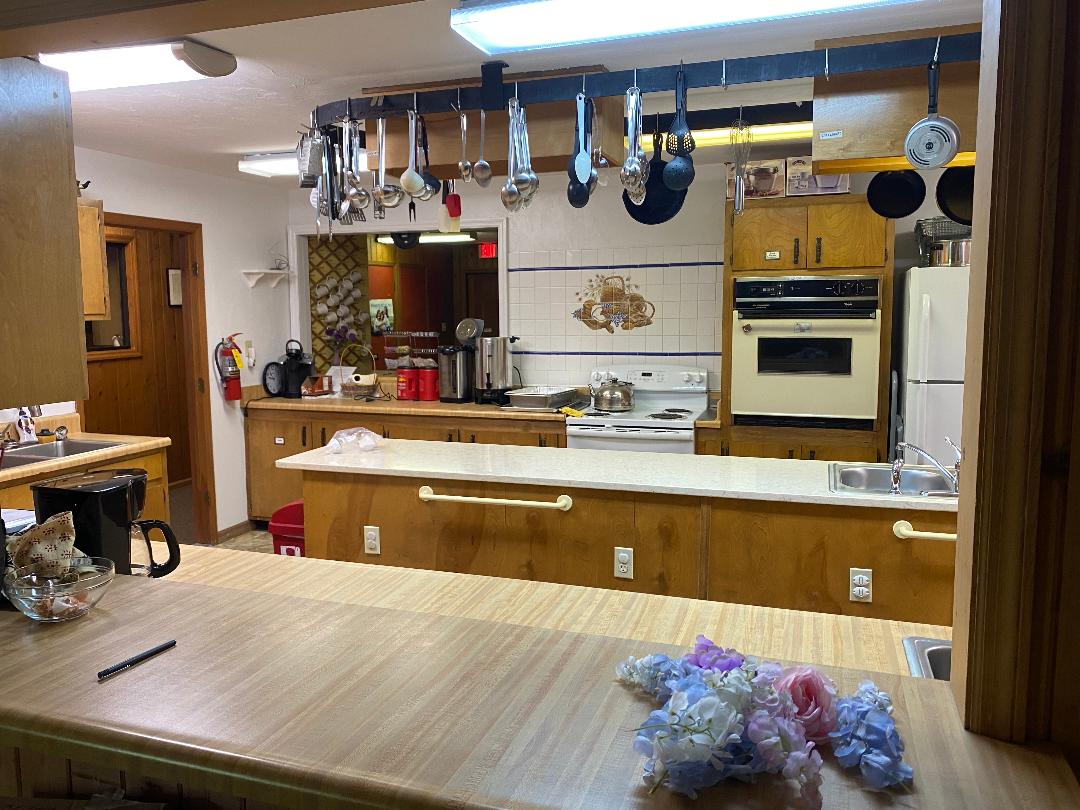
How well do you know this kitchen?  For instance, do you know how many ovens are in this kitchen?  (Responses)  Let’s see…

Yes!  Three.

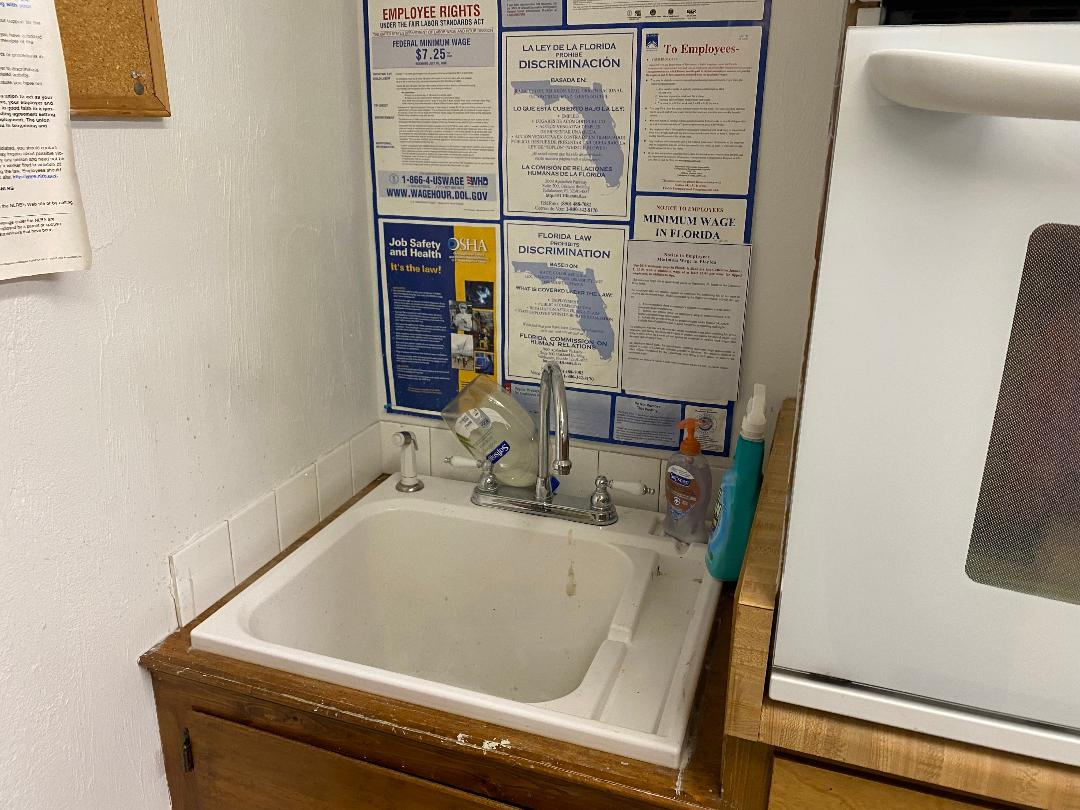
How many sinks are in this kitchen?   (Responses)

What about this one?

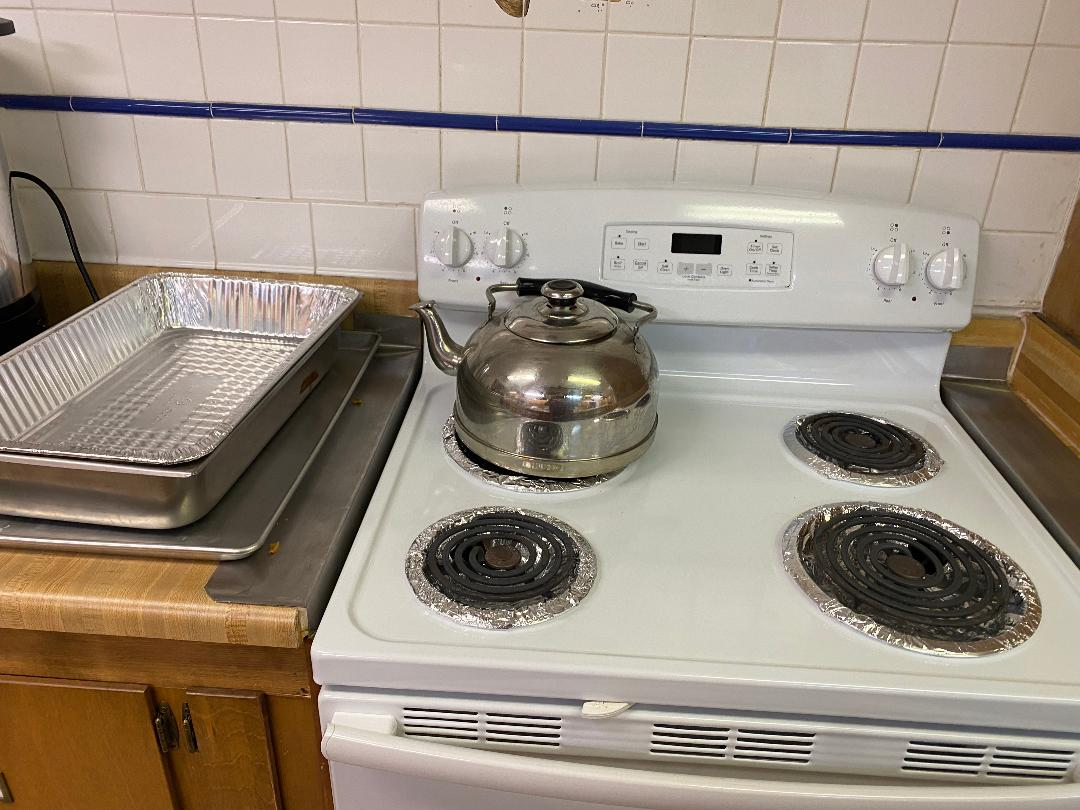
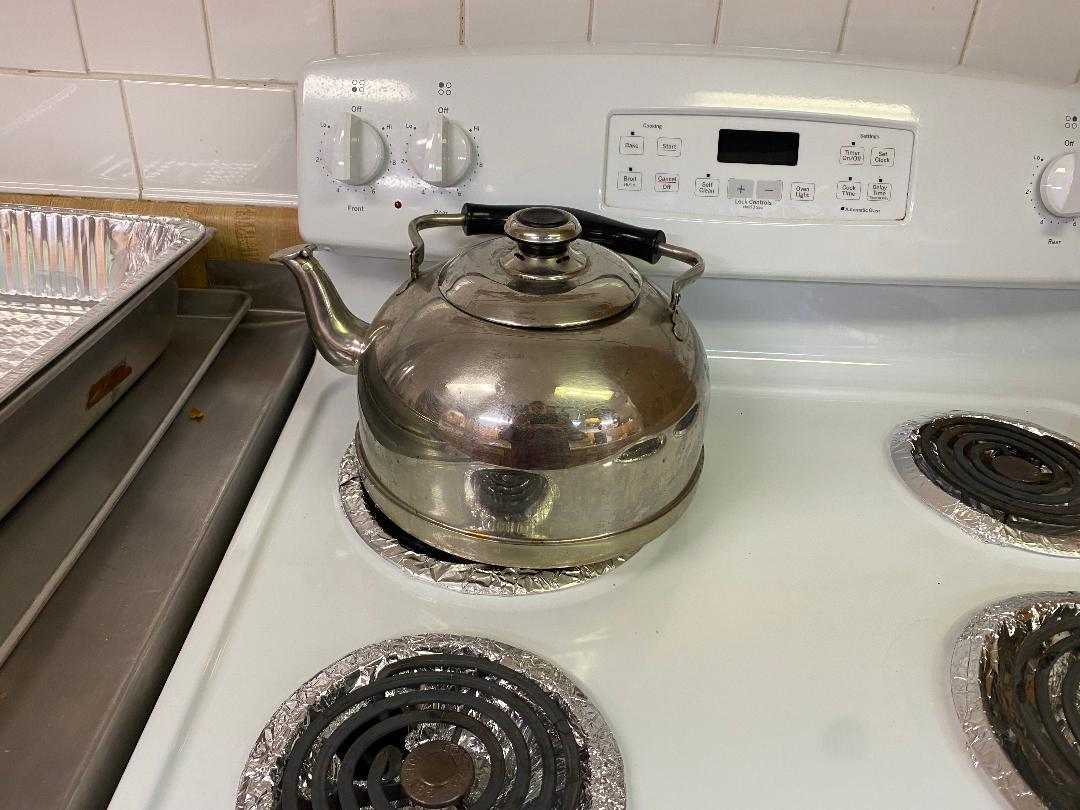
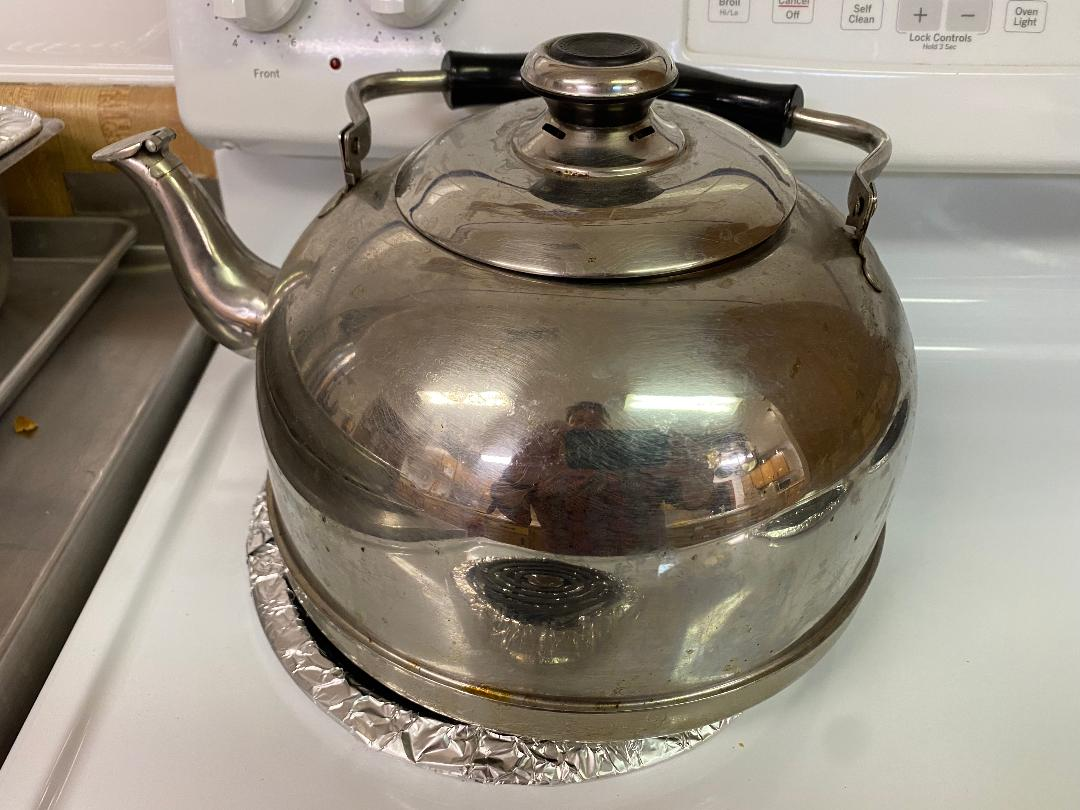
And did you know that our kitchen here at UCT is the home of…

The world’s…

Largest…

Tea kettle?  Sing:  I’m a little teapot…NOT!

How many dishwashers are in our UCT kitchen?  (Responses)

Yeah, there’s this one.  But looking out today, I’d say we have about 60 dishwashers.  See you after the potluck!

Monday night, I attended the Community Action Committee’s meeting.  Among the items discussed was UCT’s food ministry.  I learned that, back in the day–before the Kearney Center was created–every third Sunday after church, UCT folks would gather in the kitchen, cook a meal, and take it to the shelter for the residents there.  Once the Kearney Center was built, though, meals had to be prepared on site.  Many people participated in preparing those meals, but as one person said, “It just wasn’t the same as preparing the meals here in our UCT kitchen.”

We have signed on to serve residents at Grace Mission on the fifth Sunday of the month.  (Note:  May has five Sundays.  Get ready!)  As we talked, someone mentioned the meal–and the dyed Easter eggs–that were taken to the folks at City Walk across the street the day before Easter.  That led to an idea:  Why not cook a meal for the folks at City Walk once a month–the third Sunday, like we used to do?

That’s when Jesus showed up.  (Don’t you just love when Jesus shows up at committee meetings?)  Somebody said:  “I have something to say.  God radiates out of the kitchen when we’re preparing a meal.  When UCT is in the kitchen cooking, God is there.”  Another person mentioned the issues City Walk is having with the city.  Then they said, “Our job isn’t to get into the political hoopla.  Our job is to feed the hungry.”  “Yes!” the first person said.  “Let’s feed our neighbors!”

You’ll be hearing more soon about how you can help with our efforts at feeding the hungry.  Stay tuned.

I haven’t been here long, but here’s what I’ve learned about UCT–from that amazing Saturday morning brunch prepared by Charlotte Curtis, to the BOS meeting catered by Sonny’s my candidating weekend, to the world’s largest tea kettle, to the potluck after church today, to that amazing conversation Monday night–food is central to this congregation…and not just because we like to eat. 

Food is central to this congregation because you–we–get it.  All of us are hungry, right?  Hungry for nourishment.  Hungry for wellbeing.  Hungry for community.  Food not only meets our physical needs, but somehow, in food, God shows up…especially, when we eat together as a community.  

When the CAC member said, “When we cook together in the UCT kitchen, God shows up…”  I remembered Luke’s story about the walk to Emmaus.  Two of Jesus’ disciples are headed home Easter night.  As they walk, they’re still processing all that’s happened in Jerusalem…Jesus’ death, then the reports of his resurrection.  A stranger joins them…asks them what they’re discussing.  “Are you the only person in Jerusalem who doesn’t know what’s happened?”  They tell Jesus the story, though they don’t yet see that it’s Jesus.

When they finish the story, Jesus reminds them of their own scriptures and of how what has happened in Jerusalem fulfilled what was in the scriptures.

When they arrive at their house in Emmaus, Jesus makes to move on, but the two invite Jesus to stay.  It’s when they gather for a meal, when Jesus breaks the bread, that the disciples’ eyes are opened–JESUS!  As soon as they recognize him, poof!  He’s gone.

But for that moment, the moment they gathered at the table, the moment he broke the bread…yes.  That’s when God showed up.  Holy things happen when we prepare food and, especially, when we eat it together…or serve it to people who are truly hungry.  Something happens.  God shows up.  Somehow, filling our stomachs opens our eyes.

I have a song to share with you.  It’s one I wrote with a friend at songwriting camp in 2014.  The camp was led by John McCutcheon at the Highlander Education and Research Center outside of Knoxville, Tennessee.

Highlander was created in the 1930s as a place to support groups that were trying to organize. The focus at first was helping coal miners in Appalachia.  In the 50s, the focus shifted to offering support for workers in the Civil Rights Movement.  Highlander is the place where Rosa Parks learned practices of nonviolent resistance.  Highlander also is the place where “We Shall Overcome” became the anthem of the Movement.  It was the tiniest bit daunting to try to write songs at the place that incubated “We Shall Overcome!”

One of our assignments was to find a partner and write a song for Highlander’s kitchen staff. When John dismissed us to go write, I bee-lined it to a woman who already had produced an album. I figured she could whip out a song lickety-split. I wasn’t proud. I was happy to ride her coattails. Trouble was, Katie had been planning to ride my coattails…which means that it took us a very looooooong time to write the song.

Rushing to finish the song before presenting it to the group, we wildly threw out ideas. We didn’t have a set melody yet because Katie—wonderful singer that she is—hadn’t sung it the same way twice. I did have some chords laid down—pretty much the only ones I can play…so those were set. We decided that she would sing and I would play. Then, two minutes before class, we realized we only had half a chorus. Yikes! Katie said, “Let’s just sing it twice!”

We rushed into class and—eager to do the song before we forgot it— volunteered to go first. We did. And discovered that—after all the angst—we liked the song. Whew!

The next day, four songwriting pairs from the group gave a mini-concert in the dining hall. We sang to an audience of two—cooks Betty, an older white woman, and Isis, an African American woman in her late 50s, early 60s. By the end of the last song—Katie’s and mine—Isis was in tears. Katie ran over and hugged her.

It was a humbling experience. What creative—and compassionate—foresight for John to suggest that we write songs for the kitchen staff! The kitchen staff in most conference centers isn’t even seen much less sung for.  The assignment to write a song for the kitchen staff invited us to see, really see, the people who prepared our food. When Isis cried, we realized just how important it was for her to be seen. It also helped us see that anything we do—writing songs or anything else—anything we do is an opportunity to give to and see others.

We didn’t fully understand the impact our songs had on Isis until the next morning. When I walked into the dining hall for breakfast, Isis was–there’s no other word for it–preaching. “I don’t how many of you follow the Bible,” she said. “But in there it talks about how Saul was all crazy in his head and how David’s music soothed him. That’s what music does! It soothes us.”

I could tell that Isis was just getting started, so I asked a friend for some paper and a pen and began dictating.  Isis said: “I’ve been cooking and cleaning since I was knee-high to doing something” When she said that, John leaned over and said, “Write that down. That’s good.”  Isis had to leave school in sixth grade to care for her family. She never went back.

By the time she was 50, Isis had built up a lot of resentment about having to cook and clean her whole life. She bore that resentment until the 102 year old woman she’d been caring for said this: “Isis, you’re the best housekeeper and cook I’ve ever had.  In fact, you’re what’s kept me alive the last 5 years.  Listen, do you mind if I go on and die?”  She knew Isis depended on the income and wanted to be sure she’d be okay if she no longer had the caretaking job.

Not long after that, the woman greeted Isis one morning by saying: “Today’s the day.  I don’t want to read. I don’t want to do my crossword puzzle. I don’t even want to watch Judge Judy. I think today’s the day.”  And indeed it was. Isis served lunch, the woman ate it, then quietly slipped away. Isis told us: “That woman helped me see that I’m very good at cooking and cleaning. Since then, I haven’t been resentful.”

Something happens in the kitchen, doesn’t it?  Something happens when we cook together and eat together and serve the hungry together.  Something profound, something holy happens…When we cook together, when we eat together, God shows up.

Song:  “Feed Our Bodies, Feed Our Souls”  by Kim Buchanan and Katie Oates

Kimberleigh Buchanan  ©2022

Posted in Uncategorized | Leave a comment

Sermon (Easter, First Sunday at UCT!): “Easter Stories” [Luke 24:1-12] (4/17/2022)

United Church in Tallahassee

What brings you here today?  Is this the one day each year you come to church?  Or maybe you come to church every week, rain or shine.  “What?  Today’s Easter?  Cool.”  Or maybe you bought a new hat last September and have been waiting for months to show it off.  Or maybe you came to check out the new pastor.  (I’m cool with that.  I’m here to check you out, too.  😉  But my name is on the sign now.  No turning back!  😉

Have you ever heard the term “Chreaster?”  It describes folks who come to church two days a year–Christmas and Easter.  When asked why some people only come to church on Christmas and Easter, one person said, “Because those are the only parts of the story they know.”

Which is why I consider Chreasters rock stars!  Chreasters come for the two hardest parts of the Christian story!  Virgin birth?  Bodily resurrection?  Yeah.  That’s dicey stuff.

So…what brings you here today?  What is your Easter story?

The Easter story of Mary of Magdala, Joanna, and Mary, the mother of James, begins this way.  On the first day of the week, at the first sign of dawn, the women came to the tomb bringing the spices they had prepared.

Just two days before, in what must have been a deeply traumatizing event, Jesus, their beloved teacher, had been executed.  As the Sabbath approached, a tomb was hurriedly secured.  Jesus’ body was laid in the tomb and a stone rolled over the entrance.  Then, despite their shock, terror, and grief, Jesus’ followers must have done what they did every Sabbath–very little.

We get no info from any of the Gospel writers about what that Sabbath day was like.  So often, when someone we love dies, we keep the grief at bay with busywork.  Jesus’ followers didn’t have that luxury.  Work was prohibited on the Sabbath.  All that was left to them were their thoughts, their thoughts and their Sabbath practices….The lighting of the candle.  The familiar prayers.  The meal.  All of it done together with family and friends.    

It might seem strange to say it, but that Sabbath day must have been a gift to Jesus’ followers, gut-wrenching, yes, but also a gift.  Left to their thoughts–and no means of distracting themselves–the reality of what had happened had the chance to sink in.  At the same time, though, they were able to lean into the familiar rituals of the Sabbath.  In the midst of their trauma and grief, they had the meal and the prayers, the companionship of family and friends, to ground them, to help them as they adjusted to their new reality–a world without their beloved Jesus. 

As the sun rises on the third day after Jesus’ death–the signal that Sabbath was over– Luke tells us that Mary, Mary, and Joanna “bring the spices they had prepared.”  So, when had they prepared them?  If they leave the minute the Sabbath ends and the spices already had been prepared, they must have started the preparations immediately after Jesus died.  And being from out of town, they likely had to run quickly to a merchant Friday afternoon, buy the spices, prepare them, and set them aside until the Sabbath was over.    

Okay.  So, your beloved teacher Jesus has just been executed.  Would you have had the presence of mind to go buy death spices?  Maybe you would have.  Me?  I probably would have been sitting in a corner sobbing somewhere.  But…this isn’t my Easter story.  This is the Easter story of Mary, Mary, and Joanna.  Let’s get back to it…

They bring the spices to the tomb…and find the heavy stone rolled away.  They’d come to prepare Jesus’ body for burial, but Jesus’ body wasn’t there.  As they puzzle over this unexpected turn of events, two figures appear.  Terrified, the women bow to the ground.  

The figures speak.  ‘Why do you search for the Living One among the dead?  Jesus is not here; Christ has risen.  Remember what Jesus said to you while still in Galilee–that the Chosen One must be delivered into the hands of sinners and be crucified, and on the third day would rise again.’  

One of them, let’s say Joanna, hits her forehead with the heel of her hand and says, “Wait a minute.  THIS is what he was talking about?”  With this reminder, Luke tells us, the words of Jesus came back to them.

The three women rush back into town, find the 11 and tell them what has happened.  Actually, Luke tells us that “the other women also” told the 11….so, on the way into town, Mary, Mary, and Joanna must have first stopped by the house and told the other women their story.  The telling must have taken, because the women believed them.

But when all the women tell the 11 their Easter story, the disciples don’t believe them.  The story seemed like nonsense (one translation calls them “idle tales”) and they refused to believe them.  A group of men “refusing to believe” the stories of women?  Yes.  We could have some conversation about that…and perhaps will at some point.  

But this isn’t the story of the 11, is it?  This is the story of the two Marys and Joanna… The two Marys and Joanna experience something profound that Easter morning.  What else could they do but share the good news with others?  The fact that the 11 don’t believe them doesn’t change their story at all.  The women’s story is their story, their Easter story.  The 11 are living their own Easter stories.  Each of them will tell their stories in their own ways based on their own experiences.

At the end of today’s story, Luke gives us a quick glimpse of Peter’s Easter story.  Listen.  Peter got up and ran to the tomb.  He stooped down, but he could see nothing but the wrappings.  So he went away, full of amazement at what had occurred.

I don’t know about you, but I grew up with this idea that there was only one Easter story and if I didn’t believe the one Easter story, pretty much, I was going to hell.  But right here in Luke’s account of Easter morning, we encounter at least three Easter stories–the one experienced by the two Marys and Joanna, the one experienced by ten of the disciples, and the one experienced by Peter.  

The truth is, we all have Easter stories….and chances are good they’re all different.  Were we to gather on the porch after worship and tell each other our Easter stories, my guess is we’d be surprised at how different all our stories are.

So, what’s your Easter story?  What role does a risen Jesus play in your life?  

I want to tell you about my hat.  This hat belonged to a friend of mine named Ellie.  Ellie died last November, All Souls Day, of metastatic breast cancer.  She was 86.

Ellie was a hat-wearer…all kinds of hats, except maybe church lady hats.  After Ellie died, her hats were distributed to some of her friends.  I picked this one, in part, because it was purple.  Ellie adored the color purple.  It also just “felt” like Ellie to me.  Ellie’s partner, Bev, told me about a time when Ellie had loaned her the hat for a white water rafting trip.  When the raft hit a rough patch, Bev went over.  She wasn’t nearly as concerned for herself as she was for Ellie’s beloved hat.  “Ellie’s hat!” cried.  It was saved.  It was drenched, but it was saved.

 For much of her life, Ellie tried to live the narrative others had created for her.  She married, had three children.  Later in life, though, Ellie began living her most authentic narrative.  She came out as a lesbian.  Eventually, she found the first love of her life, Jeannie.  They were the first gay couple in the state of California to have their union blessed by 70+ renegade United Methodist clergy.  The ceremony took place in an arena.

By the time I knew Ellie, Jeannie had died and she and her new beloved, Bev, had moved to Asheville.  The thing that struck me about Ellie is that she was always and only her true self.  Once, when she was headed to Cherokee to do a little gambling, I told her I would pray for her.  When she came back–reporting her losses–she asked me never again to pray for her gambling.  I didn’t.  With Ellie, there was zero pretense.  She lived her life focused on justice, advocacy, and compassion.  Ellie inspired many of us only to be our true selves, too.

Ellie’s Easter story led her to live her one true life.  What is your Easter story?  What does a living Jesus mean for you?  How might you live out your Easter story?  How might we as a community of Jesus’ followers live out our community’s Easter story?  How might we, as individuals and as a community, live our one true life?

Christ is risen!  Christ is risen indeed!  This is my story, this is my song!

In the name of our God, who creates us, redeems us, sustains us, and hopes for our wholeness.  Amen.

Kimberleigh Buchanan ©2022 

Posted in Uncategorized | Leave a comment

Reflection: Maundy Thursday [4/14/2022]

What a week it had been–the joyous crowds ushering you into Jerusalem for the Passover festival.  Teaching, healing, worshiping in the Temple, mobbed by crowds everywhere you went.  

And a mounting tension…something you couldn’t put your finger on, but knew in your gut was coming…something evil, unavoidable.  

The religious authorities had been hounding you for months// really, since your ministry began.  As pawns of the Roman government, it made sense that the Pharisees, Saducees, and scribes would find talk of establishing a new kingdom threatening.  And Judas…something was off with Judas.  Since arriving in Jerusalem, he’d been even more secretive than usual.  

So when you gather with the twelve in the borrowed upper room for the Passover meal…whether through imprisonment or assassination, you sense it could well be the last time you’ll experience the Passover meal with these friends.  You’ve been teaching for all you’re worth for three years now, desperate to open the minds and hearts of at least these twelve to God’s deepest hopes for them and for the world.

Not to put too fine a point on it, the twelve have been slow on the uptake.  You tried to show them a world where all were equally loved by God, then John and James come looking for special seating in the afterlife.  Another prophet is sharing the good news down the street and, because it’s not you, your disciples ask if they should rain down fire on the prophet.

This could be the last meal.  Maybe not, but it could be.  If it is, what will you say?  What one thing can you say that might, just might, stay with them…and take root…and change them…so that they might, just might, change the world?

Here’s how John, dear John, will remember your words later.  “My little children, I won’t be with you much longer.  You’ll look for me, but what I said to the Temple authorities, I say to you:  where I am going, you cannot come.  I give you a new commandment (novum mandatum):  Love one another.  And you’re to love one another the way I have loved you.  This is how all will know that you’re my disciples:  that you truly love one another.”

As the silence deepens, as the words hover in the air, something settles inside you…yes.  Yes.  That’s what everything means…everything you’ve taught, everything you’ve done, every law in the Torah, every sign from God…all of it, all of it, all of it, when distilled, means this:  “love one another.”  Love one another.  Love one another.

Posted in Uncategorized | Leave a comment

Sermon (Last Sunday at FCUCC, Asheville): “Peace I Leave with You, My Friends” [John 20:19-23] (3/13/2022)

First Congregational, UCC, Asheville, North Carolina

Hi.  It’s hard to believe our time together is ending.  Things were so different–in our church and in the world–four years ago, when I became your pastor.  But the crucible of the pandemic has clarified many things.  For me, clarity has come around the need to be closer to family.  As it turns out, there’s also a church close to my family–United Church in Tallahassee, Florida–that will be a great fit for ministry.  In addition to being just 2 and a half miles from the state capitol–which, if you’ve been keeping up with the news, needs a lot of help–I’ll be baptizing four little ones on Easter Sunday.  I am eager to begin my work with the UCT congregation.

Which in no way diminishes the profound sadness I feel in leaving First Congregational.  We have accomplished some good things together, not the least of which is getting through a pandemic together.  The Arts and Social Justice ministry also is a significant accomplishment.  Do be sure to check out the “Feeding our Neighbors” art gallery exhibit this month.  Being your pastor, working with our phenomenal staff…it has been a profound blessing.  I am grateful to you.  I want to thank you for the ways you have invited me to be your pastor, for the ways you have participated in our ministry together.

In her visit with folks during Rap with the Rev her last week with us as Admin, someone asked Casey to name her hope for First Congregational.  Her response:  “I hope peace for you.”  When she said it, I realized that that’s my hope for you, too.  I hope peace for you.

Three days after his death, Jesus’ disciples are cowering in a locked room when the risen Jesus appears to them.  His first word to them is:  Peace be with you.  It’s a good bet that peace was far from what they were feeling.  They’d been traveling around with Jesus, teaching, healing, sharing God’s love, when Boom!  He’s arrested, then executed.  If Jesus could be executed on trumped up charges, what might to happen to them?

A few days after I sent the letter announcing my resignation, someone emailed me and used the word “trepidatious.”  Yes.  This time of transition might feel trepidatious.  You might be wondering what’s going to happen to you and to the church.  

As I leave you, I want to say, Peace be with you.  You are a strong congregation.  You will figure this out.

After showing the stunned disciples his hands and his side, the disciples rejoice that Jesus is again with them.  At that point, Jesus says again, “Peace be with you.”

In the days to come, as you work together to find your way forward, I encourage you to remind each other that “peace is with you.”  No matter what’s happening, all shall be well.  All shall be well.  And, as Jesus did with the disciples, you might have to say it more than once.

Jesus’ next words to the disciples also are good words for us to hear:  “As my Abba has sent me, so I send you.”  Pastoral transitions can be hard.  Even as we deal with all the trepidatious-ness, though, one thing does not change–the work to which we are called.  In the grand scheme of things–the grand scheme of God’s kin-dom–a pastoral transition is a tiny thing.  The big thing for us is continuing to do the work to which we are called–feeding the hungry, clothing the naked, working to create a more just society, sharing God’s love with the least of these.  As I leave, and as you enter a period of transition, remember that the work to which we are called is still there, waiting for us to engage it.  

As I leave–as God is sending me–God also is sending you…to do the work to which you have always been called.

After Jesus reminds the disciples of their call to the work of God’s kin-dom, he breathes on them and says, “Receive the Holy Spirit.”  Breathing in and breathing out at the beginning of the service…It’s quick.  It’s simple.  And it’s become an integral part of our worship together.  Some of it, I think, is simply the physical power of breath. Re-oxygenating our blood increases our focus.  Some of its importance, I suspect, comes from the fact of the pandemic.  If it’s taught us anything, the pandemic has taught us just how precious a gift breathing is.

As I leave, I remind you to breathe…and even more important, I remind you to breathe together.

As Jesus breathes the Holy Spirit on them, he says to the disciples, If you forgive the sins of any, they are forgiven them; if you retain the sins of any, they are retained.  In the service of farewell we’ll be doing in a minute, we will ask each other to forgive the mistakes we’ve made in our relationship as pastor and congregation.  That might be the most important part of the liturgy, the most important thing we do all day (besides party!):  to forgive each other.

Our time together hasn’t been perfect; no ministry is.  We have made mistakes.  But here’s the thing.  If we hold onto those mistakes, if we bear grudges, we won’t be able to do the important work to which we’ve been called.  It’s telling that the first instruction Jesus gives the disciples after commissioning them is to forgive.  Perhaps that’s because clinging to our resentments hamstrings us in our work for the Gospel.  Resentment can lead to bitterness.  It’s hard to share God’s love when you’re bitter.

The other thing that’s telling is that Jesus doesn’t call on the disciples to forgive until after he gives them the gift of the Spirit.  This is good news.  It means that, when it comes to the hard work of forgiveness, we don’t have to go it alone.  God’s spirit will help us.

As I leave, I encourage us (including me) to forgive mistakes we have made with each other.  If we do, it will free us up to do the work of God’s kin-dom…which is the whole point, right?

As I leave, I have three final things to share with you.

First, be brave…especially when it comes to your interactions with each other.  I know.  Speaking the truth in love to each other is hard, hard, hard.  It’s way easier to talk about someone to another person than to speak directly to the person you have an issue with.  I encourage you to be brave in your interactions…and help each other to be brave, too.  True community depends on honest and open communication.

Second, be kind.  This First Congregational community is such a gift!  Just look at all these beautiful people!  Each one is a beautifully-created beloved child of God.  I encourage you to remember that in your interactions with each other.

My last word to you is this:  be playful.  Sometimes–especially, in stressful times, like pandemics and pastoral transitions–playfulness gets shoved to the back burner.  And yet, playfulness, light-heartenedness..it’s what makes living fun, right?  That’s why we do all the hard work, why we attend so intentionally to the ways in which we follow Jesus…we do it all because being human should be fun, joyous!  I pray playfulness for you.

Be brave.  Be kind.  Be playful.  I suspect that tending to courage, kindness, and playfulness will go a long way in nurturing peace among you.

And so, as I leave, as, as the Quakers say, way closes on our ministry with each other, that is my final word to you, that is my deepest hope for you:  peace, peace, peace.

In the name of our God, who creates us, redeems us, sustains us, and hopes for our wholeness.  Amen.

Kimberleigh Buchanan  © 2022

Posted in Uncategorized | Leave a comment