Sermon: “Just Food” [Luke 4:1-13] (3/6/2022)

Uncle Bobby Joe had the gift of food.  He could cook up a mess of just about anything and feed a crowd of just about any size.  When Uncle Bobby moved back to the family farm and designed his mobile home, he deleted the living room to accommodate a long dining table.  Yes.  He designed his home around the table.  In order to have a living room, he had to build an addition (which, by the by, would accommodate even more seating for meals).

Uncle Bobby knew the power of food to bring folks together.  Part of the draw of moving to Florida for Allen and me is getting to gather around Uncle Bobby Joe’s table at least once a month to eat with family.  He’s gone now, but his table lives on.  

Food.  It’s just food.  And yet, it’s so much more, isn’t it?  Without food, we die.  Without healthy food, we cannot thrive.  With unhealthy food, we do great harm to our bodies.  Food is, literally, the stuff of life.

In Luke’s gospel, when Jesus is baptized, he hears the words, “You are my beloved child, with you I am well-pleased.”  Luke tells us the experience fills Jesus up with the Holy Spirit… which sounds like a good thing… But when Jesus, full of the Holy Spirit, returns from the Jordan, he is led by the same Spirit into the wilderness, where for forty days he’s tempted by the devil.  He eats nothing at all during those days.  At the end of it, he’s famished.    

It’s when he’s famished that the devil begins testing Jesus…promising him all the kingdoms in the world and all power, if Jesus will but renounce God.  When Jesus passes the test and rebuffs the devil’s offers, the tempter leaves him until an opportune time.

Most religions include practices of fasting.  It’s considered a means of accessing spiritual enlightenment.  Was Jesus able to pass the devil’s test because his lack of physical nourishment sharpened his spiritual acuity?  Perhaps.

The invitation this Lent is to contemplate–and experience–the connection between physical hunger and spiritual hunger.  Why is food a central theme in religious experience?  What’s the big deal about food…both physically and spiritually?  And, more to the point, what’s the connection between physical sustenance and spiritual sustenance?  Answers to these questions will unfold over the next six weeks.  The invitation this Lent is to open our minds and hearts–and stomachs–to whatever this season might offer to our imaginations.  

Food.  It’s just food.  And yet, it’s so much more…especially, when you don’t have any.  When it comes down to it, choosing to fast is a privilege.  Choosing to fast is a gift.  What about those for whom fasting is not chosen?  

Global Citizen is a nonprofit whose mission is ending world hunger.  According to Global Citizen, 795 million people do not have access to enough food to survive and thrive in the world.  66 million of these people are children, and hunger prevents them from achieving their full potential in school.  Globally, that’s one out of nine people who do not get enough food to live the life they want. And the majority of the world’s hungry live in developing countries–where 12.9 percent of the population struggles with hunger, while other regions of the world waste billions of tons of food each year.  In Sub-Saharan Africa, one out of four people is hungry.

https://www.globalcitizen.org/en/content/food-hunger-issues-explained/

Of course, it’s not only people in other countries who are hungry or food insecure.  A few statistics from the United Way:  (1) One in 8 families in America is hungry. That’s 12.3% of all U.S. households.  (2) 48% of college students in America are food insecure.  (3) 15% of people in rural areas are hungry.  (4) 60% of households led by older Americans must choose between buying groceries or paying utility bills.  https://www.unitedway.org/blog/5-surprising-facts-about-hunger-in-america#

The saddest thing about hunger in the world and in our country is that there’s enough food in the world to feed every person.  So, what’s the problem?

Part of the problem is poor agricultural practices that have led to a sharp reduction of nutrients in soil.  Climate change also is a problem, especially for subsistence farmers in places like sub-Saharan Africa.  Food distribution processes also prevent many people from receiving the food they need.

I wonder, though, if the problem with hunger in our world isn’t so much a matter of science or distribution methods.  I wonder if the problem of hunger in our world and our country is a spiritual one.  As Dom Helder Camara, a priest in El Salvador, said, “When I give food to the poor, they call me a saint.  When I ask why they are poor, they call me a Communist.”

When we feed the poor here in Buncombe County, we are doing good work.  Some might even call us saints.  But when we ask why there are hungry folks…here in beautiful Asheville, North Carolina?   I wonder what they will call us then.

In 1845, Frederick Douglass took a tour in Europe in an effort to drum up support for the cause of the abolition of slavery.  Douglass was a gifted speaker, who shared with audiences his own horrific experiences of slavery.

When Douglass arrived in Ireland, the poverty he saw stunned him.  He wondered why he was asking such an impoverished people for money to support abolition efforts in the United States.  

The great potato famine, it’s called.  A blight obliterated potato crops for years.  The Irish people starved.  Between 1845 and 1849, at least 1 million people died.  Another million immigrated to other countries.  What happened to cause the famine?

From 1801 until it gained independence in the early 20th century, Ireland was effectively a British colony.  Ireland had representatives in Parliament, but most of those representatives were British gentry who had purchased land in Ireland.  

When the potato blight came, the British government was slow to respond.  A few tariffs were lifted, but little else was done.  In fact–and this is stunning–Ireland “continued to export large quantities of food, primarily to Great Britain, during the blight. In cases such as livestock and butter, research suggests that exports may actually have increased during the Potato Famine. In 1847 alone, records indicate that commodities such as peas, beans, rabbits, fish and honey continued to be exported from Ireland, even as the Great Hunger ravaged the countryside.”  https://www.history.com/topics/immigration/irish-potato-famine#:~:text=The%20Irish%20Potato%20Famine%2C%20also,over%20the%20next%20seven%20years.

Was the devastation of the potato famine caused by a natural disaster?  Though the blight was real, mass starvation could have been avoided with compassionate action by the British government, action that never came.  In 1997, Prime Minister Tony Blair issued a statement offering a formal apology to Ireland for the U.K. government’s handling of the crisis at the time.  

Kindred Spirits sculpture in Midleton, County Cork, Ireland

In the town of Midleton, County Cork, Ireland, stands a sculpture titled, Kindred Spirits. The circle of large silver feathers commemorates a stunning act of kindness by members of the Choctaw tribe in the United States in 1847.  Just 16 years after they’d been forcibly relocated by the US government through “The Trail of Tears,” members of the Choctaw nation–themselves suffering poverty–sent $170 (the equivalent of $5000 today) to Ireland.  The funds were distributed by the Quakers, who served the Irish people during the famine.

The Choctaw people might have been poor, but they were not poor in spirit.  Their spirits were just fine.  Their spirits were just.  They had a little, so they shared a little.  The powers that be in the UK weren’t poor, but their inaction in the face of such horrific suffering showed just how impoverished their spirits were.

A couple of years ago, the Hopi and Navajo people were suffering tremendously because of the pandemic.  A GoFundMe plea went out.  Irish donors contributed generously to the fund.

One of those donors, Sean Callahan, said, “I’d already known what the Choctaw did in the famine, so short a time after they’d been through the Trail of Tears.  It always struck me for its kindness and generosity and I see that too in the Irish people. It seemed the right time to try and pay it back in kind.”  https://www.nytimes.com/2020/05/05/world/coronavirus-ireland-native-american-tribes.html

Cassandra Begay, communications director for the fund-raiser, said this, “The Choctaw ancestors planted that seed a long time ago, based off the fundamental belief of helping someone else.  It is a dark time for us. The support from Ireland is phenomenal.”

Food.  It’s just food.  And yet, it’s so, so, so much more.  

In the name of our God, who creates us, redeems us, sustains us, and hopes for our wholeness.  Amen.

Kimberleigh Buchanan  ©2022
Posted in Uncategorized | Leave a comment

Sermon (Transfiguration): “Mountaintop Clarity” [Luke 9:28-36] (2/27/2022)


I grew up in North Central Florida, near Gainesville.  The terrain there is flat.  Very flat.  As a child and teenager, I grew up longing to live in the mountains.  So, for college, I moved to Shawnee, Oklahoma…which also is flat.  After college, I taught school in Lawton, Oklahoma.  Flat.  BUT…there’s a wildlife refuge near Lawton that includes one of the oldest mountain ranges in the country, the Wichitas.  The tallest of those mountains is Mt. Scott.  Every chance I got, I’d drive out to the Refuge and drive to the summit of Mt. Scott and take in the beauty of the view from the mountain top.

After seminary in Louisville, Kentucky, I moved to Atlanta.  The foothills of the Appalachians were just an hour or so north of us.  Again, we took every chance we could to go to the mountains.  There’s just a way you feel in the mountains that you don’t feel anywhere else, isn’t there?

So…you can imagine my joy when I was called to serve as your pastor four years ago.  Finally!  My childhood dream of living in the mountains was coming true!  Not only was I being called to serve with a phenomenal congregation, that congregation was located in one of the most beautiful spots in all the world.

The last couple of weeks in worship, we’ve been wrestling with parts of Jesus’ Sermon on the Plain. “Blessed are the poor.”  “Woe to you who are rich.”  “Love your enemies.”  A lot of the sermon also is included in Matthew’s Gospel.  (The Gospel writers likely drew from the same source.)  Matthew’s version is called the Sermon on the Mount.  Matthew’s Gospel was written for a Jewish audience.  People of Jewish faith would respond favorably to a teacher who goes up a mountain, sits down, and teaches.  

Luke’s gospel was written for a Gentile, or non-Jewish audience.  The Jesus they would respond to wouldn’t be apart from and above them on a mountain.  The Jesus to whom Gentiles would respond would be down on the plain right in the middle of them.  Not proclaiming from the top of Mt. Mitchell, but amongst them in Swannanoa Valley.  

While most of Jesus’ ministry in the Gospel of Luke happens on level places (including tables!), hills and mountains also play an important part in the narrative.  Several times, Jesus goes up mountains to pray and rest.  Just before the Sermon on the Plain, he asks the twelve disciples to join him up the mountain and commissions them.

Now, 8 days after delivering the sermon, Jesus takes 3 of those disciples, Peter, James, and John, up a mountain…for one of the most puzzling scenes in all of Scripture.  They’ve gone up to pray, and perhaps to rest (Luke notes that Peter, James, and John are “weighed down with sleep.”).

While Jesus prays, “the appearance of his face changes; his clothes become dazzling white.”  Then Moses and Elijah show up and start talking with Jesus about his “departure (aka, death), which he was about to accomplish at Jerusalem.”

Peter, James, and John see Jesus with Moses and Elijah…and it’s clear the sight has made an impression on them.  Peter blurts out that they should build three tabernacles to commemorate the experience.

Instead of building materials, God sends a dense cloud.  Have you ever had a dense cloud descend on you while on top of a mountain?  It’s disorienting…it erases everything you know except what is literally right in front of you.  Jesus and the three enter the cloud.  While in the cloud, they hear these words, the words spoken at Jesus’ baptism:  ‘This is my Chosen One; listen to him!’

This is my chosen one…the one whose life (and, soon, death) will fulfill the promise of the law (Moses) and the prophets (Elijah). 

Though Peter, James, and John d0n’t understand it at the time–they don’t utter a word about it when they come down from the mountain–What happens on that mountain is key.  Though clouded in mystery at the start, further reflection must have led to greater clarity.  If they’d stayed silent, we wouldn’t have the story today, right?  The fog must have lifted at some point.  At some point their trip to the mountain top must have clarified things for them about their lives and ministry.

I have loved living in the mountains!  I have loved serving with you all in ministry.  But after four years of reflection, clarity has come:  It’s time for me to leave the mountains.  It’s time for me to return to the flatter terrain of Florida (though Tallahassee is one of the hilliest places in Florida!).

It’s also time for me to move closer to my extended family.  When we lived in Atlanta, Allen’s family was an hour away.  Having family that close grounded us.  Except for Mom, who moved here three years ago, Allen and I have no family here.  The pandemic helped us realize how much we long to be closer to family.  

When a church in Tallahassee opened up–which is just an hour from my extended family and an hour and half from my brother, sister-in-law, and nephew Lachlan–I felt led to apply.  Last Sunday, United Church in Tallahassee voted to call me as their pastor.

As I said in a letter to you this week, the Search and Call process in the UCC requires that the process be private.  That privacy protects the pastor and all the congregations involved.  The downside of the privacy of the process is that it can feel very abrupt when a pastor announces to her current congregation that she’s leaving.  If it has felt that way to you, I am sorry.  I wish I could take that hurt away.

As I make my way down from the mountains, here are some things I want you to know.  First, I have loved serving as your pastor.  We’ve accomplished a lot together, not the least of which is still being together two years into the pandemic!  Since March 2020, we’ve had to re-think how we do church more times than I can count.  But we’re doing it.  It kind of feels like a miracle.  We continue to welcome new people into the congregation…which also feels miraculous.

We’ve added some terrific new staff members, many of them in the last year–Eric, Kathleen, Chuck, Amanda, and Andrew.  Oh, these people have and will serve you well!

Most of all, I will treasure the ways you have invited me into your lives and have allowed me to be your pastor.  That is a profound gift that I will treasure.

Pastoral transitions, as many of you will know, take time and include many steps in the process.  The Board and Personnel Committees already have begun planning to ensure a smooth transition with worship leadership, pastoral care, and supervision of staff.  I have no worries at all that you all will do just fine in this transition period.

But what do we do in the pre-transition period?  Things are kind of awkward right now, aren’t they?  Perhaps like the awkwardness that led Peter to blurt out his idea about building tabernacles on the mountain.  “Not knowing what to say,” we also might blurt out things we haven’t fully thought through.

Here’s what I will say…I think we need to blurt whatever we need to blurt…as long as we are kind to each other.  There’s no script already written for how we should say goodbye to each other.  We’re making this up as we go.  The important thing for the next two weeks is to say what we need to say so that our leave-taking will help us do what it’s intended to do–say our goodbyes to each other so that I can move on to pastor another congregation and you can move on to welcome a new pastor.

Still, it’s awkward, isn’t it?  So, maybe in the midst of our awkwardness, we can do what Jesus, Peter, James, and John did in the midst of their awkwardness after experiencing whatever that was on the mountain top–they came down the mountain and kept doing what they were called to do…being with people, helping them, healing them.  

Lent will provide good opportunities to continue being with, helping, and healing people.  The theme for Lent is “Hungry for Resurrection.”  Thanks to the good work of our Benevolence Team and photographer Farhad Kanuga–whose work will be displayed in the art gallery in March–the invitation is to reflect on the relationship between physical hunger and spiritual hunger.  Each Sunday during Lent, as an act of worship, we will be invited to bring food resources to the table to help various non-profits in town provide food to people who need it.

What happened on the mountain top when Jesus was transfigured–that was pretty amazing, awesome, glorious.  But look what Luke writes after Jesus heals a man’s son after coming down from the mountaintop:  “All were astounded at the greatness of God.”  Whether in the mountains or on the plain…wherever we are, whatever we do…if we stay focused on the work to which we are called, the work of healing the world, all will continue to be astounded at the greatness of God.

May that be our goal in all our times–the happy times, the sad times, the awkward times–may everything we do at any time continue to astonish the world at the greatness of God’s love.

In the name of our God, who creates us, redeems us, sustains us, and hopes for our wholeness.  Amen.

Kimberleigh Buchanan  © 2022

Posted in Uncategorized | Leave a comment

Sermon: “Love Your Enemies” [Luke 6:27-38] (2/20/2022)

This is one of those passages we’re supposed to read metaphorically, right?   Jesus didn’t really mean to turn the other cheek when someone strikes us, did he?  He didn’t mean that when someone takes our coat we should actually hand over our shirt, too, did he?  And surely, surely, he didn’t mean to love our enemies, like, our real enemies, like, out-and-out, dyed-in-the-wool bad people…did he?

Over the centuries commentators have tried to make this text easier to digest…like, saying that “turning the other cheek” would make the person hit you in a way that would be demeaning for him; or giving someone who wants your coat your shirt, too, as a way to embarrass her.  I get where people are going with all those exegetical gymnastics…they want to downplay what they see as weak responses to bullying and violence.  No one wants to be a doormat.  Everyone wants to feel strong.  

But what if Jesus meant exactly what he said?  What if he really is calling us to a life of intentional non-violence?

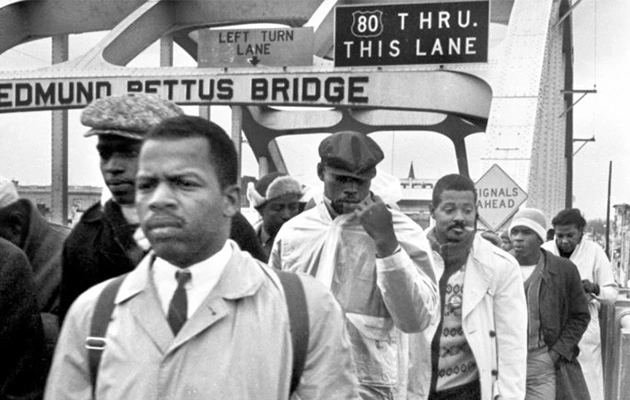
In his comic book memoir March, the late US Congressman John Lewis described the training he’d received in non-violence, training based directly on today’s Gospel Lesson.  “The hardest part to learn,” Lewis writes, “the hardest part to truly understand, deep in your heart, was how to find love for your attacker.”  “Do not let them shake your faith in nonviolence,” they were told.  “Love them!”  (March, 29)  Love your enemies.

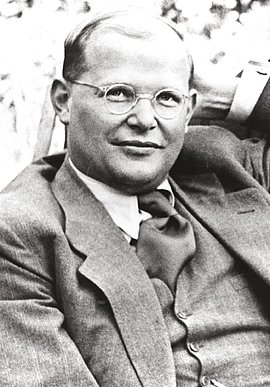
Love.  Your enemies.  Act your enemies into wellbeing.  So what if you love your friends and family, those people who love you back? Jesus says.  What more have you added to the world by doing that?  In The Cost of Discipleship, Dietrich Bonhoeffer says it this way:  “We can love our kith and kin, our fellow citizens and our friends, whether we are Christians or not; there is no need for Jesus to teach us that.  He takes that kind of love for granted.”  (152)

Bonhoeffer goes on to remind us that, by its very nature, discipleship calls us to go beyond what is expected.  If we only do what is expected, nothing changes.  The world remains exactly the same.  If the world is to change, if we are to build God’s kindom on earth, if we are to make God’s dreams for the world come true, we have to go beyond what the world expects…

What does that mean in terms of loving?  For Jesus, a love that goes beyond what’s expected is a love that extends to the person who doesn’t love you back—your enemy.  Loving those who love you back, that’s nice, its’s important, but it isn’t the kind of love that characterizes discipleship.  True discipleship calls us to an even more profound love, a love that reaches out to the one mired in hatred.

But why?  Why love those mired in hatred, especially when that hatred is directed at us?

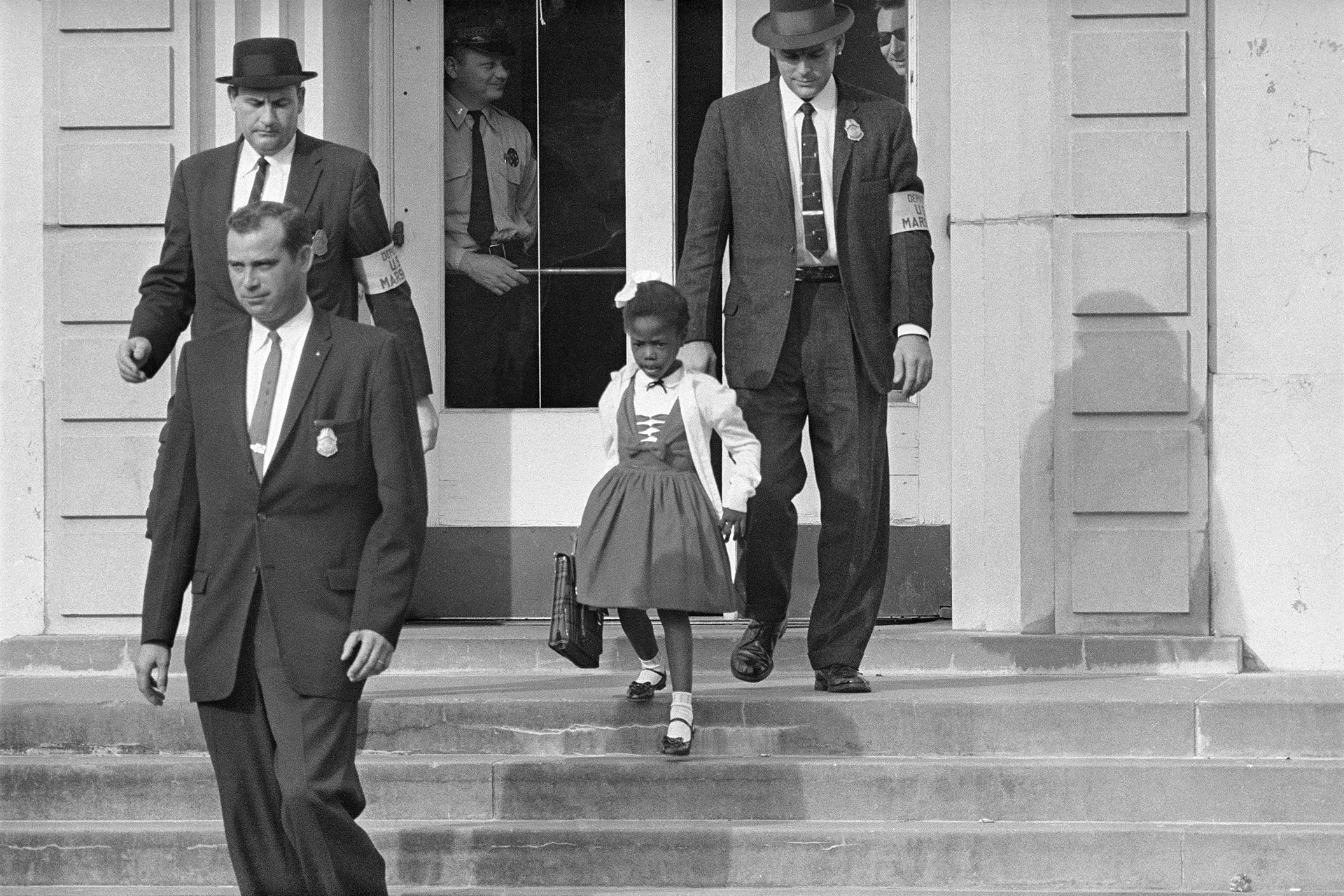
When six year old Ruby Bridges integrated William Frantz Elementary School in New Orleans in 1960, parents of all the other children kept their children home.  Every day, federal marshals escorted little Ruby to her classroom, protecting her from the large, angry mob assembled each day at the school’s entrance.

         One morning, Ruby stopped and faced the screeching crowd.  Watching from the window, Ruby’s teacher thought she saw her speak to the crowd.  When asked later what she said to them, Ruby said, “I was praying for them.”  When asked why she was praying for people who were saying such mean things, Ruby said, “Well, don’t you think they need praying for?”

Even at the tender age of six, Ruby Bridges got what Jesus was trying to teach his disciples about loving our enemies and praying for those who persecute us.  We love our enemies because they need our love.  Folks who are mired in hatred don’t have access to their full humanity.  Part of what it means to be human is to recognize the humanity in others.  If we are unable to recognize the humanity in others, our own humanity is diminished.

So, when Jesus calls us to love our enemies, he’s calling us to act them into wellbeing and thus to affirm their humanity.  And what happens when we affirm the humanity of our enemy?  Our own humanity is strengthened.

I do need to offer a caveat.  Loving our enemy doesn’t mean to put our lives at risk.  The call to “turn the other cheek” has been used way too often to encourage people—especially women—to stay in abusive relationships.  Sometimes the best way to love our enemy, the best way to act them—and ourselves—into wellbeing, is to remove ourselves from the situation.  Following the way of non-violence only comes after making a conscious choice to engage it, not because we don’t feel like we have a choice.

So, Jesus said a lot of annoying things during his three short years of ministry…This might be the most annoying of all.  Love our enemies?  But if, as Bonhoeffer suggests, Jesus’ sermon can be summed up in the single word of love, then perhaps the kind of love Jesus is talking about, the kind of love that comes from God, the kind of love that’s unique to God, is the love that is capable of extending to enemies.

            Which begs the question:  Can we truly know the love about which Jesus speaks without loving our enemies?  When that question first came to me, it jarred me to my core.  I’d always assumed that loving my enemies was a nice thing to do on occasion, an add-on to the very good discipleship work I was already doing .  But if the love God offers, the love Jesus showed us is characterized by loving our enemies, then it follows that I can’t know fully God’s love until I love my enemies.

But what if I can’t?  What if it’s just too hard to love my enemies?  Clarence Jordan offered a great way of understanding this.  He saw loving our enemies as the final stage of the process of spiritual growth.  The first stage is unlimited retaliation (“You hurt me, I’ll crush you…just because I can.”).  The second is limited retaliation (“an eye for an eye”).  The third is limited love (“Love your neighbor [that is, people like us] and hate your enemy.”).  The last stage is unlimited love (“Love your enemies and pray for those who persecute you.”)

Our affinity for any given stage in the development of retaliation/love identifies our level of spiritual maturity.  Jordan explains:  “To talk about unlimited retaliation is babyish; to speak of limited retaliation is childish; to advocate limited love is adolescent; to practice unlimited love is evidence of maturity.”  (Sermon on the Mount)

If loving our enemies is something we’re growing toward, then—Whew!—it’s not a deal-breaker if we can’t love all our enemies right this very minute.  Jesus isn’t going to kick us out of the disciples club if we’re still working on it.  

Dietrich Bonhoeffer was still working on it his first trip to the United States in 1930-31.  Among his close friends at Union Seminary in New York was a student from France named Jean Lasserre.

In 1931, the two friends went to see the movie, All Quiet on the Western Front.  Bonhoeffer biographer, Eric Metaxas, calls the film a “searing indictment” of World War I, the war in which the friends’ home countries, Germany and France, were bitter enemies.

In one scene, a young German soldier, left alone in a trench, brutally stabs a French soldier who crawls into the trench with him.  Overcome by the horror of what he’s done, the young German “caresses the dying man’s face, trying to comfort him, offering him water for his parched lips.”  ‘I want to help,’ he says.  ‘I want to help.’  “After the Frenchman dies, the German lies at the corpse’s feet and begs his forgiveness.  He vows to write to the man’s family, and then he finds and opens the man’s wallet.  He sees the man’s name and a picture of his wife and daughter.”

“The sadness of the violence and suffering on the screen brought Bonhoeffer and Lasserre to tears, but even worse to them was the reaction in the theater.  Lasserre remembered American children in the audience laughing and cheering when the Germans, from whose point of view the story was told, were killing the French.  For Bonhoeffer, it was unbearable.  Lasserre later said he could barely console Bonhoeffer afterward.”

Dietrich Bonhoeffer

“Lasserre spoke often about Jesus’ sermon and how it informed his theology.  From that point forward it became a central part of Bonhoeffer’s life and theology, too, which eventually led him to write The Cost of Discipleship.”  (2302)

Love your enemies.  Love.  Your enemies.  Act your enemies into wellbeing.  Annoying?  Yes.  Difficult?  Oh, yes.  Mind-boggling and gut-wrenching?  Yes. And Yes.  Necessary for fully grasping what it means to be a follower of Jesus?  (Sigh.)  Yes.  Yes.

In the name of our God, who creates us, redeems us, sustains us, and hopes for our wholeness.  Amen.

Kimberleigh Buchanan  © 2017

Posted in Uncategorized | Leave a comment

Sermon (UCT!): “Standing on a Level Place” [Luke 6:17-26] (2/13/2022)

So…hi.  How good it is to be gathered this morning…just worshiping together…you not checking me out….me not checking you out…  Isn’t that nice?

Who are we kidding?  Of course, we’re checking each other out…because the relationship between a pastor and congregation is important, right?  The work of faith communities–sharing the message that “God loves you SO much” with others, especially with those who’ve never heard that message before–or who have heard the opposite message–the work of faith communities is critical to healing the world, which means we need to make sure we’re on the same page–or, this is a UCC church, so at least in the same chapter– right?  

Think about that….  If we’re all on the same page–or in the same chapter–about sharing the good news of God’s love, there’s nothing we as a community wouldn’t be able to do together in our work of healing the world.  Can you imagine?

So…let’s talk about that for a minute, this work of healing the world.  Today’s Gospel story gives us one of the best road maps in Scripture for healing the world:  the Beatitudes.  Blessed are you who are poor, for yours is the kin-dom of God.  Blessed are you who are hungry now, for you will be filled.  The woes are a tad uncomfortable–Woe to you who are rich, for you have received your consolation… Still, it’s easy to see how much we could learn about healing the world from spending time with these verses.   

And that might be something we want to do in the future.  Today, though, I invite us to step back and take a look at what led to the moment Jesus shared the Beatitudes with the people, on why he chose to share his sermon, as Luke tells us, on a level place.  The story thus far…

Once upon a time, Jesus gets born…Herod’s bounty on baby boys sends Jesus, Mary, and Joseph as refugees to Egypt.  Once Herod’s threat is gone, the family returns to Nazareth, where Jesus grows up.  

As an adult, Jesus finds his way to the Jordan River, where he gets baptized by his cousin John.  In baptism, Jesus gains clarity about who he is.  God’s Spirit says:  “You are my child; with you I am well-pleased.”  The time of testing in the wilderness right after his baptism gives Jesus further clarity…this time about the work to which God is calling him.  

As Jesus emerges from the wilderness–certain of himself, certain of his calling–his ministry in Galilee begins.  Word starts getting around about this new, exciting teacher.

As the buzz begins, Jesus returns home to Nazareth, where, of course, the home folks ask him to read Scripture at synagogue on the Sabbath.  Jesus reads from Isaiah:  The Spirit of God is upon me, because God has anointed me to bring good news to the poor, to proclaim release to the captives, recovery of sight to the blind, to let the oppressed go free.  This Scripture has been fulfilled in your hearing.

The hometown folks are impressed.  All speak well of him and are amazed at the gracious words that come from his mouth.  Yay!  But then they say it:  “Isn’t this Joseph’s son?”  We watched little Jesus grow up here.  Who is he to say these things to us?  

That’s when Jesus tells them: “No prophet is accepted in their hometown.”  He also tells some stories where the people who are healed are foreigners, people not like us.

For the hometown folks, that’s the last straw.  Do you remember what happens next?  When they hear Jesus say he’s come to share the good news of God’s love with people outside their faith, people not like them, “all in the synagogue were filled with rage.  (Have any of you been on the receiving end of your home congregation’s rage?)  Jesus’ home congregation got up, drove him out of town, and led him to the brow of the hill on which their town was built, so that they might hurl him off the cliff.”  Jesus–being Jesus–simply “passes through the midst of them and goes on his way.”  Welcome home, Jesus!

Unfazed, Jesus goes down from Nazareth, which is at a higher elevation, to Capernaum, which is on the coast of the Sea of Galilee.  He teaches, heals, collects disciples, and steps away a couple of times to pray and rest.

As Jesus draws larger crowds, the religious teachers start showing up…like when the friends of a paralyzed man lower him through a roof so that Jesus can heal him.  When the man is healed, Jesus tells him to go on his way, because his sins are healed.

The religious teachers object.  Who is this man to forgive sins?  Only God can do that!  Jesus says he’s come, not for the righteous, but for those in need of redemption, not for the healthy and thriving, but for those who are sick and need healing.

And, just like with his hometown folks, that’s a problem for the religious establishment.  Offering healing to people not like us?  It’s just not done!  It’s easy to beat up on the religious authorities, but I think in their own minds and hearts, they were doing what they thought was right.  They simply suffered from a lack of imagination.  They couldn’t imagine God’s love and healing extending to the people Jesus was starting to hang out with.

Like, you’re not going to believe this, but tax collectors, fellow Jews who had become agents of the Roman government.  How could Jesus possibly call a tax collector to be his disciple?  How could he share a meal at a tax collector’s house with a whole crew of tax collectors?  The religious authorities really couldn’t imagine that! 

After hanging out with the tax collectors, Jesus continues teaching and healing…  then goes up a mountain to pray.  He calls his twelve disciples to join him there.  

After that, Jesus comes down with them and stands on a level place, with a great multitude of people… and lays the best sermon in all of Scripture– maybe of all time–on them.

But why share the best news of all time–that God loves every person so much, that God hopes for the wholeness of every person–why share news like that on a level place in the midst of a multitude of people?

In Matthew’s Gospel, when Jesus preaches this sermon, he goes up a mountain, sits down, and begins to speak…like a rabbi.  Maybe even like Moses.  The Jewish audience to whom Matthew’s gospel was written would have responded well to a rabbi-Moses-like Jesus.  

But Luke’s Gospel was written to a gentile audience….to people on the margins of the religious establishment.  Those folks had never felt like they were part of the religious community.  If they were going to believe the message was for them, the message would have to be brought to them.  That’s what Jesus does.  He comes down to a level place and meets the people where they are. 

And as he preaches on the level place to people on the margins, I suspect his own experiences of marginalization were on his mind…Maybe Jesus preaches his sermon on a level place because he knew what it was like to be a refugee…maybe Jesus preaches on a level place because he had received God’s acceptance of him in his baptism…maybe Jesus preaches on a level place because he knew what it was like to be rejected by his own faith community… maybe Jesus preaches on a level place because he knew what it was like to be rejected by the religious authorities…maybe Jesus preaches on a level place because he enjoyed hanging out with tax collectors and such…maybe Jesus preaches on a level place because he’d looked into the eyes of every person who’d asked for healing and had seen there both desperation and beauty…

Maybe Jesus preaches among the people on a level place because his life had taught him–when it comes to God’s love, we’re all the same.  When it comes to who deserves homes and food and freedom to be themselves, we’re all the same.  When it comes to fulfilling God’s dreams for the world, it’s going to take every last one of us–the people like us and the people not like us…the people who have it together, the people who don’t have it together…the people who worship God, the people who don’t worship at all…the people who conform to hetero- normativity, the people who love in other ways…

Wednesday, Allen and I drove to Tifton.  My brother’s 14 year old came out as trans last year.  We had planned to go to court with Lachlan Thursday morning to be there when his name changed legally.  Wednesday afternoon we learned the newspaper that was supposed to run an ad about the name change failed to run it, which means Lachlan’s court date has been postponed.

Lachlan’s parents–my brother Brad and his wife Kym–are terrific.  Still, raising a trans child in South Georgia isn’t the easiest endeavor, right?

I put out a call on Facebook for my friends–trans folks and allies–to share words of encouragement for Lachlan and his parents.  I want both Lachlan and his folks to know that they are not alone.  People all over the country are thinking of them and praying for them and supporting them.  My heart is so full.

After reading the outpouring of support for a 14 year old trans boy none of them knows, I wondered how different the world would be if every trans child and their parents received this kind of love.  How different might the world be if every person of color, every refugee, every differently-abled person, every starving child, every person who struggles with addiction…… what might happen to this world if every person received support for who they are?  What if every person who suffers and is desperate for healing receives it?  What if every person who needs food or shelter or justice or compassion receives it?

And what if, what if, what if…what if we, church and pastor together, might bring this healing to the world?

In the name of our God, who creates us, redeems us, sustains us, and hopes for our wholeness.  Amen.

Kimberleigh Buchanan  ©2022
Posted in Uncategorized | Leave a comment

Sermon: “From Confession to Call” [Isaiah 6:1-8] (2/6/2022)

Scripture is full of call stories.  When God has ideas for bringing healing to the world, who’s God gonna call?  No.  Not those guys.  Or women.  God’s gonna call some human beings.

In the 6th century BCE, the people of the place formerly known as Judah were in desperate need of healing.  Their country had been defeated and many of their inhabitants had been taken away to a foreign country in captivity.  God called Jeremiah to speak God’s healing word to the people.

Jeremiah objected.  “I’m way too young for this, God.  What will I say?”  God told Jeremiah,  Do not say, ‘I am only a boy,’ for you shall go to all to whom I send you, and you shall speak whatever I command you.  Then God touched Jeremiah’s mouth and said, “Now I have put my words in your mouth.”  Jeremiah doesn’t respond, but the next 52 chapters record his many years of speaking God’s healing word to the people.

Two centuries earlier, what happened to Judah had happened to the northern kingdom of Israel.  When Israel was falling apart, then defeated by the Assyrians, God chose Isaiah to speak God’s healing word to the people.

Isaiah’s call story differs a bit from Jeremiah’s.  Jeremiah’s call happens in an intimate encounter with God.  Isaiah’s happens…well, let’s look at Isaiah’s call.

“In the year that King Uzziah died…” that’s when things started going downhill fast for the people of Israel.  The situation was dire.  Everything the people had known was about to change.  They needed a word from God, a word of direction, a word of healing.  They needed a prophet.  God chose Isaiah.

In the year that King Uzziah died, I saw God seated on a high and lofty judgment seat, in a robe whose train filled the Temple.  Can you imagine?  Imagine it here, our sanctuary filled with just the train of the divine robe… 

In fact, God is so big, seraphs/angels/messengers are there to announce the divine presence. Holy, holy, holy! they cry.  All the Earth is filled with God’s glory!  The doorposts and thresholds quake at the sound of their shouting, and the Temple fills with smoke.

A little intimidating, to say the least.  How does Isaiah respond?  He says, “Woe is me, I am doomed!  I have unclean lips, and I live among a people of unclean lips!” 

Nearly every call story in Scripture begins with reticence to accept the call.  In fact, that’s one of the signs that the call is real–the prophet’s doubt that he or she can fulfill the call.  The source of Jeremiah’s doubt was his young age.  

Isaiah’s doubt stems from something else.  “I have unclean lips…”  “Isaiah’s doubt doesn’t seem to be rooted in feelings of inadequacy, as Jeremiah’s was, so much as in guilt.  When Isaiah says he has unclean lips and lives among a people of unclean lips, he’s acknowledging his own sin and the corporate sin of the people he lives among”…sins that have led to the dissolution of their country.  (Feasting on the Word)  

Reading the rest of the book of Isaiah, those sins become apparent:  the people have failed to care for the least of these.  In Isaiah 58, the prophet writes:  Is not this the fast that I choose:  to loose the bonds of injustice, to undo the thongs of the yoke, to let the oppressed go free, and to break every yoke?  Is it not to share your bread with the hungry, and bring the homeless poor into your house; when you see the naked, to cover them, and not to hide yourself from your own kin?  The call to do these things suggests that the people, including Isaha, had failed to do them.  That failure was a source of their sin.

Have you ever felt God calling you to something and been reticent to accept the call?  What reasons have you given?  I don’t have time?  I’m too young?  I’m too old?  I don’t have a good speaking voice?  Or maybe your excuse has been similar to Isaiah’s.  Oh, the things I’ve done, and failed to do!  The way I’ve treated–and neglected–people.  After the things I’ve done–and not done–how could God possibly use ME to do anything good in the world?

Confession.  They say it’s good for the soul.  Last week, in Faith Exploration, we listened to an interview with Archbishop Desmond Tutu about the Truth and Reconciliation Commission in South African in the 1990s.

The TRC was created shortly after legal apartheid ended.  During apartheid, native South Africans were treated heinously by white South Africans.  As a way to move toward healing for their country, the government created the TRC so that people who had perpetrated the harrowing crimes could confess…and so that recipients and loved ones of those crimes could hear the confessions.  If the perpetrators confessed to the TRC, amnesty would be granted.

Archbishop Tutu and others were disturbed by the government’s refusal to make apologizing a requirement for amnesty.  But as he witnessed confession after confession for three years, the Archbishop saw the wisdom in not requiring apologies.  He said that nearly every person who confessed a crime, in the end, did offer an apology to the person harmed or their loved ones.  He also said that the vast majority of those receiving an apology accepted it.  Had apologies been required by law to receive amnesty, the authenticity of those confessions might have been suspect.  As it was, apologies that were offered were seen as authentic and sincere.

Do you remember when the TRC was going on?  At the time, I remember thinking, How could they possibly do that?  Why would Black and white South Africans put themselves through the grueling process of re-telling such horrific stories?  It’s clear, though, that confession was good for the souls, not only of perpetrators, but also of recipients of violent treatment.  Confession was good for their country’s soul, as well.

Makes you wonder what might have happened to our own country if Reconstruction had included a Truth and Reconciliation Commission.  Just a thought.

So, Isaiah confessed his guilt, his complicity in the sins of his country, the lack of care for the least of these that had led to their country’s demise.  How could he possibly speak for God?

One of the seraphs responds to Isaiah’s confession by flying to him, “holding an ember which it had taken with tongs from the altar.  The seraph then touches Isaiah’s mouth with the ember.  “See,” it said, ‘now that this has touched your lips, your corruption is removed, and your sin is pardoned.”  

That’s the point at which that Isaiah hears God’s call, “Whom shall I send?  Who will go for us?”  Because he confessed, because he received forgiveness for his sins, Isaiah is now able to respond boldly: “Here I am! Send me!”  

Sometimes, I think we forget what a powerful resource confession can be, not only for us as individuals, but also for our community.  Something changes in us when we acknowledge harm we have caused others.  Owning up to what we have done, acknowledging our own human failings, especially in our interactions with others… Confession frees us.  Confession empowers us.  And, as James will write 6 centuries later, confession heals us.  Confess your sins to one another and pray for one another, that you may be healed.  (James 5:16)  

Once Isaiah confesses his sin, he is freed to answer God’s call to him.  And he does so with gusto.  Here am I!  Send me!

What about us?  What might we need to confess to become free enough to answer God’s call with the same gusto as Isaiah?  What might we as individuals need to confess?  What might we as a community need to confess?  What new work, what new joy, what new healing might be waiting for us on the far side of confession?

How might we get to the place we can join our voices with Isaiah and say, “Here we are!  Send us?”

In the name of our God, who creates us, redeems us, sustains us, and hopes for our wholeness.  Amen.

Kimberleigh Buchanan  © 2022

Posted in Uncategorized | Leave a comment

Sermon: “The More Excellent Way” [I Cor. 13] (1/30/2022)

The last couple of weeks, we’ve spent time with the troubled church at Corinth.  Though they “had all things in common” and were trying as hard as they could to create beloved community, they’d lost their way.  Some spiritual gifts–and the people who had those gifts–were valued more than others.  Because community members and their gifts weren’t valued equally, dissensions had arisen.  Divisions had deepened.  The community needed help.

When Paul heard about the troubles at Corinth, he wrote them a pastoral letter, several letters, really.  We might not agree with Paul on everything, this is certain:  Paul had a pastor’s heart.  Believing in the Gospel and in the church’s unique ability to share it, Paul wrote to conflicted churches to help them work through their troubles.  Healthy churches, he knew, were more effective in sharing the good news of God’s love with others.

Because the trouble at Corinth centered around spiritual gifts, that’s what Paul addresses in I Corinthians 12-14.  He begins in chapter 12 by reminding the community that “to each is given the manifestation of the Spirit for the common good.”  Then he goes into that extended– somewhat silly–reflection on how the diversity of a body’s parts is what makes the body–aka, the body of Christ–work.  (Sad note:  the Jesus Potato Head in last week’s video was digitally generated.  It is not possible to buy one.  A colleague of mine said she spent, quote, “an inordinate amount of time” trying to do so online.)

Chapter 12 ends with yet another list of spiritual gifts.  Then Paul says:  But strive for the greater gifts. And I will show you a still more excellent way… Which is, like, um, Paul.  You’ve spent all this time talking about how all spiritual gifts are equal.  What do you mean “strive for the greater gifts?”  And how does striving for the greater gifts lead to a “more excellent way?” 

Here are Paul’s next words.  If I speak in the tongues of mortals and of angels, but do not have love, I am a noisy gong or a clanging cymbal.  It seems, then, that the more excellent way to which Paul calls the troubled Corinthian church is the way of love.  The greatest gift in any community is love.  If every member of the community acts with love, gives their gifts in love, and receives the love of the other members, it will dissolve dissensions and heal divisions.  If the community of Jesus’ followers are to share God’s love with others outside the community, that love must begin at home.  When Paul resurems his reflections on spiritual gifts in chapter 14, he begins, Pursue love…

So, at the heart of Christian community is love.  That’s not a new insight, not at all.  Of course, love is at the heart of what it means to be a community of Jesus’ followers.  After all, we call it “beLOVED community.”

But understanding, even believing in beloved community isn’t the same thing as living it, is it?  In his classic work, Life Together, Dietrich Bonhoeffer wrote, “The person who’s in love with their vision of community will destroy community.  But the person who loves the people around them will create community everywhere they go.”  The health of our community depends not on what we think about community, though how we think about it is important.  The true health of a community is measured in how its members love each other.

So…how are we doing at loving each other, at acting each other into wellbeing?  How might we–right now, today–“pursue love,” as Paul suggests?

The first thing, of course, is to identify all the ways our community has “pursued love” in the past.  The creation of this congregation in 1914 was an act of love.  It provided a forward-thinking alternative to most of the faith communities in the area at the time.  In the 1950s and 60s, the community extended its love into the wider community by advocating strongly for the work of desegregation.  And, of course, this community continued extending its love into the wider community in its work on behalf of marriage equality in the 2000s.

This community has, from the start, been grounded in love.  And like most communities, there also have been times when the love was not as loud.  In the written history of our church, the first church split happens on p.8…that was about the decision to purchase the property on Merrimon.  There have been other times in the community–some of you will remember them– when divisiveness seemed much more present than love.

Even so, the love was always there.  The love is still here.  Even in the hard times, even when Covid sends us back into isolation, this community has remembered love… Love is what always helps us get back to living joyfully as the body of Christ.  Love is, to quote Paul, the more excellent way.

Last week, I shared the story of this stole, my ordination stole.  Each scrap of material represents a congregant in the church that ordained me.  This stole reminds me of the people in that community and of the love and support they offered.

After worship last week, standing in the narthex, Mary K reminded me that the quilted banner hanging there was created in a similar way.  As I understand it, as a way to celebrate the church’s centennial, congregants were asked to give pieces of material.  Those scraps of material were quilted and crafted into this beautiful banner.  I believe the work was done by Diane Sanders.

When I hear some of you speak about this banner, I hear love.  A lot of love.  I’ve often wished I’d been here for the grand celebration you all had in 2014.  It’s clear that 2014 was a high point for the First Congregational community.  Love abounded!

What about now?  What might a banner we create today look like?  How might we create the space in our community for even more love to abound?  How might our community–today, right now–how might we “pursue love” here at First Congregational United Church of Christ?

These are honest questions …which means I don’t have answers to them.  The only way to answer these questions is to work together to find them.  So, Church, how will we pursue love?

Answering open-ended questions like that requires imagination.  And so, I end today with an invitation to imagine how our community might pursue love.  We’ll do that by meditating on the 2014 banner and hearing again Paul’s reflections on love.

If I speak in the tongues of mortals and of angels, but do not have love, I am a noisy gong or a clanging cymbal. And if I have prophetic powers, and understand all mysteries and all knowledge, and if I have all faith, so as to remove mountains, but do not have love, I am nothing. If I give away all my possessions, and if I hand over my body so that I may boast, but do not have love, I gain nothing.

Love is patient; love is kind; love is not envious or boastful or arrogant or rude. It does not insist on its own way; it is not irritable or resentful; it does not rejoice in wrongdoing, but rejoices in the truth. It bears all things, believes all things, hopes all things, endures all things.

Love never ends. But as for prophecies, they will come to an end; as for tongues, they will cease; as for knowledge, it will come to an end. For we know only in part, and we prophesy only in part; but when the complete comes, the partial will come to an end. When I was a child, I spoke like a child, I thought like a child, I reasoned like a child; when I became an adult, I put an end to childish ways. For now we see in a mirror, dimly, but then we will see face to face. Now I know only in part; then I will know fully, even as I have been fully known. And now faith, hope, and love abide, these three; and the greatest of these is love.

Let us pursue love….the greatest gift.  Let us pursue love…and find the more excellent way.  Let us pursue love…love…love…

In the name of our God, who creates us, redeems us, sustains us, and hopes for our wholeness.  Amen.

Kimberleigh Buchanan  © 2022

Posted in Uncategorized | Leave a comment

Sermon: “Finding the More Excellent Way” [I Cor. 12:12-31a] (1/23/2022)

I know.  Potato Heads to illustrate Paul’s letter to the Corinthians?  That’s a child’s toy!  It kind of makes sense, though, when you think about what Paul was trying to communicate to the divided church at Corinth.

The church had hit a rough patch.  A few years into their new life together, dissensions had sprung up.  Factions had formed.  Some people’s gifts were valued more highly than others’.  Somewhere along the line, the community had gotten off track…a track that was leading to a trainwreck if something didn’t happen quickly.

And so, Paul goes “back to the very beginning…a very good place to start.  When you read, you begin with A-B-C.  When you sing, you begin with Do-Re-Mi.”  When you live in Christian community, you begin with the image of the body.  

So, Paul starts at the very beginning and reminds the Corinthians that just as the body is one and has many members, and all the members of the body, though many, are one body, so it is with Christ.  Then he gets carried away.  If the foot were to say, ‘Because I am not a hand, I do not belong to the body’, that would not make it any less a part of the body. And if the ear were to say, ‘Because I am not an eye, I do not belong to the body’, that would not make it any less a part of the body.

Then he just gets silly.  If the whole body were an eye, where would the hearing be? If the whole body were hearing, where would the sense of smell be?  This is where I’m pretty sure that if Paul had had a 1st century version of Potato Head, he would have used it to good effect.  Didn’t you love that “all ears” Potato Head?

Somehow, at Corinth, one Potato Head with all its diverse parts in their places and working together had turned into a collection of Potato Heads, each populated only with “parts like us.”  All Ears Potato Head.  All Eyes Potato Head.  All Mouths Potato Head.  Paul’s letter urges the Corinthians to remember the gift of their diversity, to reunite as one community, celebrating every member, and living in the unity of God’s spirit.

Paul takes the Corinthians back to the very beginning and spells it out for them again, almost, as if they were children.

Or did he?

In the 1st century, Romans ruled Palestine.  Roman society was highly structured, hierarchical.  The image of the body was often used to illustrate that hierarchy.  The most important part of the body–the head–represented Caesar, the Roman ruler.  Other parts of the body were assigned other values until the least part–maybe the little toe–was on the very edge of society.

When Paul invites the Corinthians to think again about how they’re doing community, he uses this familiar image of the body…and upends it.  He takes an image commonly used to illustrate social hierarchy, and uses it instead to demonstrate radical equality.  Listen.

The eye cannot say to the hand, ‘I have no need of you’, nor again the head to the feet, ‘I have no need of you.’ On the contrary, the members of the body that seem to be weaker are indispensable, and those members of the body that we think less honorable we clothe with greater honor, and our less respectable members are treated with greater respect; whereas our more respectable members do not need this. 

Paul spends a lot of time here talking about the little toe…or whatever member seems most insignificant.  Little toes are important to the body.  Give the little toe some credit now and then, right?  Acknowledge the little toe and the important role it plays in the community.

But Paul isn’t only asking the Corinthians to celebrate the diversity of the community’s gifts and to remember the little toes.  He goes further and suggests that divisions in the community have arisen because they haven’t seen or celebrated the seemingly less important members of the community.  God has so arranged the body, he wrote, giving the greater honor to the inferior member, that there may be no dissension within the body.  

Wow.  Let that sink in a minute.  According to Paul, the cause of dissension within the body is failing to give greater honor to the inferior member.  The cause of dissension within the body is failing to acknowledge the importance of even the weakest member.  The cause of dissension within the body is failing to see every single member as vital to the healthy functioning of the body.

When Christian communities re-create the structures that exist in society–as the Corinthian church had done–dissension is created.  Paul reminds the Corinthians that Beloved Community is different from society.  In the Beloved Community, every single person, every single gift is valued equally.  If all the gifts, all the people aren’t valued equally, the body of Christ doesn’t work.

What happens when all the members of the body are valued equally?  More from Paul.  God has so arranged the body, giving the greater honor to the inferior member, that there may be no dissension within the body, but the members may have the same care for one another.  If one member suffers, all suffer together with it; if one member is honored, all rejoice together with it.

When the body functions well, it’s because all the members are working together.  And when that happens, “the members may have the same care for one another.  If one member suffers, all suffer together with it.  If one member is honored, all rejoice together with it.”

Doesn’t that sound great?  To be part of a community where all the members have the same care for one another?  Where people suffer with us when we are suffering?  Where people rejoice with us when we rejoice?  

The good news today is that we can create–and deepen–exactly that kind of community.  In fact, that’s the kind of community to which God calls us.  All it takes is looking at each other, seeing each other.

This afternoon will give us a great opportunity to see each other.  Because of Covid numbers, our Annual meeting is being held on Zoom.  One the one hand, that’s a bummer.  On the other hand, it’s a gift…because we will be able to see each other’s faces, moreso, even than if we were to meet in person.

Here’s an invitation.  At today’s Annual Meeting, look at every face on Zoom and see it.  Look at the diversity of people, the diversity of gifts, and see them.  Imagine us working together as a single body, living as Beloved Community, drinking of the one Spirit, suffering with each other, rejoicing with each other, and doing everything within our power as a community to heal the world.

If we do that, I expect we’ll find the path to a still more excellent way.

In the name of our God, who creates us, redeems us, sustains us, and hopes for our wholeness.  Amen.

Kimberleigh Buchanan ©2022

Posted in Uncategorized | Leave a comment

Sermon: “Beloved/Community” (MLK Weekend, Zoom) [I Corinthians 12:4-11] (1/16/2022)

In an essay titled, America is Falling Apart at the Seams, New York Times columnist David Brooks worries over the sharp decline in civility in our country.  Wreckless driving is on the rise.  Instances of violence on airplane flights are up.  Teachers face a rising tide of disruptive behavior.  Suicides and drug use have increased sharply.

Brooks names the “usual suspects” of societal and cultural causes of incivility–social media, the former president’s permission-giving, and the sharp decline of church in society, to name three. In the end, he wonders if the core of our incivility problem is more spiritual or moral.  Brooks admits to having no answers.  “I just know the situation is dire.”  

Reading this article as your pastor, I wondered:  If the core of our national incivility problem right now is spiritual, how might our church contribute to healing it?  

For most of my ministry, I’ve talked about Beloved Community–the societal call first announced by Dr. Martin Luther King, Jr,–and an individual church’s community as two separate things.  About four years ago, I began to see that individual church communities and the Beloved Community Dr. King envisioned aren’t separate, but intricately interrelated.  That being the case, how might our church help to heal incivility in our nation?

David Brooks mentioned the sharp decline of churches in society.  Do you ever wonder why?  Might it be because church communities, too, are “falling apart at the seams?”  Are churches also losing a sense of cohesiveness and solidarity?   Are conflicts within churches sending a message to those outside the church that churches don’t have it all together?

If people in faith communities don’t tend to their own communities, if they don’t tend to how they talk with and treat each other, if they can’t have hard conversations with each other and still love each other, they won’t have much to offer to the work of healing of the world.  

Part of what helped me to see the connection between church communities and the Beloved Community was reading the first few chapters of the Book of Acts.  After Pentecost, the faithful began worshiping and eating together and “having all things in common.”  Interspersed between descriptions of this new church’s community life, Peter and John venture out into the wider community, preaching to and healing all who come.  After venturing out, they always come back to the church community.

This back-and-forth dance–faith community-wider community-faith community-wider community–suggests that how a congregation does community and how that community creates Beloved Community in the wider world are of a piece.

Though Paul wasn’t on the scene until later, reading his letter to the Corinthians it’s clear he understands the connection between how a congregation does community and its ability to create Beloved Community.

Paul was concerned about the church in Corinth.  The people had divided themselves into factions…people with fewer resources were getting sidelined at communion…people with some gifts were given more power than people with other gifts…

Paul saw that the church at Corinth was failing at community…which meant they also were failing at creating Beloved Community outside the church.  So, he writes them a letter, a primer on community.  

It’s easy to beat up on the church at Corinth, but remember–they were just getting started. They were trying to do church right after it was born.  Of course, they were going to get some things wrong.  Of course, they were going to need some guidance.  How grateful they must have been to have someone spell things out for them so clearly.

As I think about our First Congregational community–all congregations, really–we’re pretty much where churches in the first century were:  the way we do church is being re-born.  We’re having church on Zoom today…I rest my case.  😉  

First century churches were trying to figure things out at the get-go.  We are trying to figure out how to do church in complex new realities created by the pandemic.  Like first century churches, we’ve gotten some things wrong.  Also like first century churches, we’ve gotten creative and have gotten a lot of things right.  

So…if we want to strengthen our church community so that we can, in our new reality, work more effectively to build the beloved community Dr. King envisioned, what might we do?

In an essay titled Staying at the Table: A Spirituality of Community, Parker Palmer wonders if part of what contributes to communities’ struggle to live authentically in community is clinging to  idealized understandings of what community is.  Sometimes, we assume community will be like the Garden of Eden–perfect.  Or sometimes we imagine community as the new Jerusalem described in the book of Revelation–a reconstituted perfect community.  I share with you now Palmer’s reflections.

“The experience of community,” he writes, “is nothing like the garden or the New Jerusalem.  Not, at least, after the first few weeks!  Many people experience an initial euphoria, but soon “the honeymoon is over.”  Euphoria fades and dies.  We begin to realize that all is not harmonious here; that it is not entirely safe to be naked with each other; that even if our old tears are wiped away, there are new ones to be wept.

“As the euphoria dies, as our images of community crumble, several options open up to us.  Some people simply abandon their hopes for community and return to isolation and individualism.  But they go back to that condition with the added burden of disillusionment and cynicism; the community that once existed for them as a beckoning dream no longer exists at all. Other people choose to stay in community – sort of – but withdraw their hopes and enthusiasms and energies, eventually creating the kind of community that Revelation calls “lukewarm.”  This is the condition of many of our churches, I think.  People have dealt with their disillusionment by “sort of” staying in community with each other, but not at any depth of investment or risk.

“Then there is a third option we might take following the death of euphoria, the crumbling of our utopian images.  That is to keep on keeping on; to press deeper into the experience of disillusionment to see what it has to teach us; to abandon our romantic images of community and look for new images that have the power to explain what is happening and to help us deal creatively with it.

Palmer offers a new image of community:  The Last Supper. 

“Here is Jesus,” Palmer writes, “who has been pouring out his life for the people seated around the table. Now he has brought them together in the universal rite of friendship, family, and hospitality –breaking bread together and passing the cup.  And what do these people do?  First, in response to Jesus’ claim that one of them will betray him, they deny that any such thing is possible: “Not us, Lord, not here, not in this nice church!”  Having taken care of that, they move to an argument about who is the greatest among them! As someone has suggested, they probably went on to quibble over who would pay the bill.

“What does Jesus do in the midst of all of this?  Being fully human, he must have been tempted to get up and leave – just as you and I are when our romantic images of community fail. But Jesus does not leave.  Instead, he keeps breaking the bread and passing the cup.  Both here and in the rest of his story Jesus demonstrates his commitment to staying at the table.

“If we are to follow Jesus, we must try to stay at the table with our own communities, in our own churches and elsewhere. 

“How did Jesus manage to stay at the table?  What was his “secret”?  It was the same “secret” that Jesus taught throughout his ministry – put ultimate reliance not on yourself or on others but on God alone.  Jesus was not shocked or undone by the dissolution of community that he saw at the Last Supper.  He knew human nature, he knew our weakness, and the disciples only demonstrated what he already knew.  But Jesus knew something more.  He knew that there is a God who is with us more fully than we are with each other, a God who will keep us together if we only will place our trust in God and not in our own togetherness.

“We will always be disillusioned by community.  But in the spiritual life, disillusionment is a good thing: it means losing our illusions about ourselves and each other.  As those illusions fall away we will be able to see reality and truth more clearly. And the truth is that we can rely on God to make community among us even – and especially – when our own efforts fail.  

“And here is the paradox: as we become disillusioned with community and more dependent upon God, we also become more available for true community with each other.  But now we are different.  Our eyes have been opened and we have no more romantic illusions. Seeing ourselves and each other clearly, yet seeing God’s continual healing presence among us, we can begin to experience the fruits of the Spirit with each other: love, joy, peace, patience, kindness, goodness, and gentleness.”

As it turns out, Palmer’s reflections aren’t just about how to do community; he also shows us a way to gain communal clarity, which is our community’s focus this year.  Part of gaining clarity is giving up our romantic illusions about community.

That is my prayer for our community this year…that we give up our romantic illusions about who we are as a community, that we put our trust in God so that we can be brave enough to see things as they really are, that we become very clear about all our strengths and all our “growing edges” (as we used to say in seminary)…It’s my prayer that we do these things because our FCUCC community needs it.  It’s my prayer that we do these things because the world needs us.  It’s my prayer that we do these things because the only way we’ll be able to create Beloved Community outside our community is to keep working at it inside our community.

May it be so.  May it be so.  With God’s help, may it be so.

In the name of our God, who creates us, redeems us, sustains us, and hopes for our wholeness.  Amen.

Kimberleigh Buchanan ©2022
Posted in Uncategorized | Leave a comment

Sermon: “De-Baptism?” [Luke 3:21-22] (1/9/2022)

There’s a new trend in Italy:  de-baptism.  By the time they reach young adulthood, many people who grew up in the Catholic Church are ready to leave.  In September 2019, 25 year old Mattia Nanetti had reached that point.  He found a form online and filled it out.  “Two weeks later, a note was put next to his name in the parish baptism register, formalizing his abandonment of the Catholic Church.”  (Christian Century, December 15, 2021, p.18)

Have you ever thought of doing that?  Getting de-baptized?  Have you ever looked at the church–perhaps the church in which you grew up–and said, “Forget it?  The church has gotten so far from Jesus, I just give up.”

To be honest, I’ve done it myself, contemplated de-baptism.  It gets a little complicated for someone like me, though, who’s been tripley baptized.  Which baptism would I give back?  Would I have to fill out three forms, once for each baptism?  

What is the big deal about baptism?  It’s one of two sacraments we celebrate in the UCC.  The other is communion.  Sacraments are rituals that take us to thin places.  Through rituals and materials of Earth, something of God becomes more real, clearer…that’s what sacraments do.  So, what of God becomes more real, what becomes clearer in our baptisms?  Do our baptisms bear any meaning for us, or might we, too, be ready for de-baptism?

This morning in Faith Exploration, we looked at how each Gospel writer tells the story of Jesus’ baptism.  Matthew and Mark show us Jesus’ baptism.  We see John lower Jesus into the Jordan River, Jesus come back up, a dove descend, and a voice say some version of, “This is my beloved child, with whom I am well-pleased.”  Luke relates Jesus’ baptism after the fact.  It’s in his after-baptism prayer that God calls Jesus beloved and says God is well-pleased with him.

That part of the story of Jesus’ baptism–God claiming Jesus as his beloved child…God saying how well-pleased God was with Jesus just as he was?  That’s what happens to all of us in baptism.  When we’re baptized, God claims us as God’s beloved child.  God tells us God is well-pleased with us, just as we are.

I want to ask all those de-baptizers–Do you really want to give that up?  Do you really want to throw away the symbol of God’s deep and abiding love for you?  God’s acceptance of you just as you are?

I realize, though, that I’m asking the question out of my individualist Protestant upbringing.  My individualist, BAPTIST upbringing, to be precise.  I grew up in a tradition that focused on what happens to the individual believer in baptism–whether it’s getting saved or…avoiding hell fire…or accepting God’s love for us as God’s beloved children… There’s a tendency in Protestant traditions of seeing baptism as a ritual in which an individual participates.

Since most of the de-baptizers in Italy are Catholic, I suspect their motivation for de-baptism isn’t disconnecting from God, but from the Catholic Church.  In Catholic tradition, baptism means you’re part of the church, you’re part of the institution, you’re part of the wider community.  For many people, that connection to the institution of the church no longer sustains them.  From that perspective, de-baptism makes sense.

The sticky wicket for me when discerning whether to seek ministerial standing in the UCC was infant baptism.  Baptists practice believer’s baptism, which means you aren’t baptized until you, as an individual, make a conscious decision to do so.  In infant baptism, babies are baptized into a community, a community that pledges to help the parents nurture their child into the Christian faith until the children can choose the path for themselves.  That’s what happens at Confirmation.  We experienced it last Fall with Gaven, Ethan, and Byron.

An interesting note in the article about de-baptism… Some theologians suggest that de-baptism–erasing one’s baptism–isn’t actually possible.  “Daniele Mombelli, professor at the Catholic University of the Sacred Heart in Milan, says it’s not possible to ‘erase the baptism, because it’s a fact that historically happened, and was therefore registered.”  So, while the procedure does  “formalize the person’s abandonment of the church,” it can’t change history.  The baptism happened.  That historical fact can’t be erased.  

At some point, parents of those who were baptized asked the wider church community to receive their baby into membership and help them to nurture faith in their child.  The one who was baptized can abandon the community, but for the community to abandon the one who was baptized?  That’s a whole different thing.

I’ve already mentioned one difference between Luke and Mark and Matthew–Luke doesn’t show us Jesus’ baptism; Luke reports it after the fact.  There’s another difference in Luke worth noting.  It has to do with how Luke fromes the story.  Listen.  When all the people were baptized, Jesus also came to be baptized.  

Instead of framing Jesus’ baptism as a one-on-one encounter with John the Baptist, instead of focusing on Jesus’ individual experience of baptism, Luke frames Jesus’ baptism in the context of the community.  When all the people were baptized, Jesus–just like everyone else in the community–also came to be baptized. 

The rest of this month, this season of light, as we begin the journey with our community star word “clarity,” we’re going to focus on Beloved Community.  As we seek clarity on what Martin Luther King, Jr.–and the Apostle Paul–among others, meant when they talked about beloved community, as we seek clarity about our own beloved community here at First Congregational, we’ll do well to think more about our baptisms as a communal ritual.  Baptism isn’t just something we do as individuals; baptism is the ritual by which we followers of Jesus enter into the beloved community.

A story from Will Willimon illustrates what I’m talking about.  A college student home on summer break stopped by to tell his pastor he’d be taking a pass on church for the summer.  “When the pastor asked him why, the young man said, ‘Well, you see, I’ve been doing a lot of thinking about religion while I was at college, and I have come to the conclusion that there is not much to this religion thing.  I have found out that I don’t need the church to get by.”

The pastor responded that he found that interesting.  “Aren’t you worried?  The young man said.  I thought you’d go through the roof when I told you.”

“No,” the older man said.  “I’m interested but not overly concerned.  I’ll be watching to see if you can pull it off.”

“What do you mean ‘pull it off?’  I don’t understand.  I’m 19.  I can decide to do anything I want to do, can’t I?’”

“I’m just not so sure you’ll be able to get away with this.”

“Why not?” the increasingly confused young man said.

“Well, for one thing,” his pastor said, “You’re baptized.”

“What does that have to do with anything?”

“Well, you try forsaking it, rejecting it, forgetting about it, and maybe you’ll find out.”

“I can’t figure out what being baptized has to do with me.”

The pastor said, “For one thing, there are people here who care about you.  They made promises to God when you were baptized.  You try not showing up around here this summer, and they will be nosing around, asking you what you’re doing with your life, what kind of grades you made last semester, what you’re doing with yourself.  Then there’s also God.  No telling what God might try with you.  From what I’ve seen of God, once God has claimed you, you don’t get off the hook so easily.  God is relentless in claiming what is God’s.  And, in baptism, God says you belong to God.”

“The boy shook his head in wonder at this strange, unreasonable brand of ecclesiastical reasoning and more or less stumbled out the door of the pastor’s study.  In a week or so, he was back at his usual place on the second pew.  The baptizers had done their work.”  (Adapted from Remember Who You Are:  Baptism, a Model for Christian Life.  Nashville:  The Upper Room, 1980.)

As baptizers, are we doing our work?  After Confirmation Sunday last October, one person told me, “I have a goddaughter.  I haven’t been doing my job!  When will the next Confirmation class be?  Will it be virtual?”  That was a baptizer remembering and recommitting himself to the work of baptism, which, in part, is the work of nurturing others in the community into faith.

As we renew our baptismal vows today, may we remember our belovedness in God’s eyes.  And may we also remember and recommit ourselves to the rest of the community of the baptized.  How might we, as individuals, act our First Congregational community into wellbeing?  And how might we, as the First Congregational community, act the world into wellbeing?

As we seek clarity in this season of Epiphany, may these be the questions that guide us.

In the name of our God, who creates us, redeem us, sustains us, and hopes for our wholeness.  Amen.

Kimberleigh Buchanan  © 2022

Posted in Uncategorized | Leave a comment

Sermon: “No Christians on Epiphany” [Mt. 2:1-12] (1/2/2022)

Whew!  We made it to 2022!  Remember where we were this time last year?  At home.  Unvaccinated.  Working to stay connected as a community without meeting together.   

Last year, you received your star words by mail.  In this relatively new tradition, everyone is given a star word on Epiphany.  It’s an invitation to reflect on that word for the coming year, to let it guide us, like the star guided the magi in today’s Gospel story.

My word 3 years ago?  Humility.  Yeah.  That was a long year.  My word two years ago was trustworthiness.  I tried to put it back and get another word, but…the word was trustworthiness.  Yeah.  Another long year.  My word this last year?  Stability.  That one’s been  more interesting…I’m still unpacking what it means.  

Last year, for the first time, we had a star word for our congregation.  Don’t say it outloud, but do you remember the word?  I’ve had the star word on my office door all year.  Mars and Gabriel, might you all go and get the word and bring it back?

While they’re doing that, let’s visit a minute with our friends, the magi.  In the Christmas story, we have shepherds and angels, animals and Mary and Joseph.  Mary and Joseph have gone to Bethlehem–as other Jews had done–to be counted in the census.  Then later, come the magi… astrologers…not Jews…probably Zoroastrians.  

It’s pretty remarkable when you think about it.  People following a star for up to two years to honor and give gifts to a baby of another faith.  So far as we know, the magi didn’t convert to Judaism on their visit.  Because of Herod’s treachery, they chose a different path …but after visiting this Jewish family, they simply returned home.    

Striking, isn’t it, that the story of Jesus’ birth begins with an interfaith encounter, a meeting between Zoroastrians and Jews?  If you add us Christians who are reading this story, the multi-faith encounter  with the story of the magi’s visit becomes even more diverse.  I’m reminded of these instructions for “how to respect other religions:  Eat together, pray together, and hold each other’s babies.”  Exactly!  

We’ve lost many beloved public figures in recent weeks–bell hooks, Betty White, Desmond Tutu…How good it was to inhabit the same planet as that compassionate, wise, and brave soul!  He will be missed.

Here’s how Archbishop Tutu described multi faith engagement. “The God who existed before any religion counts on you to make the oneness of the human family known and celebrated. God is not upset that Gandhi was not a Christian, because God is not a Christian!  All of God’s children and their different faiths help us to realize the immensity of God.”  

No faith has all the answers.  We’re all just trying to figure things out.  Religions give us language and rituals for how to understand what, ultimately, is mystery.  Our understanding broadens when we listen to people of other faiths explain life from their perspectives.

Ah!  Mars and Gabriel are back.  Do you all remember our congregation’s star word for the year?  Yes.  Redemption.  When I drew it last year, I wanted to put that one back, too.  For those of us who grew up in fundamentalist traditions, “redemption” has a lot of baggage.  In that tradition, being redeemed means getting saved from sin, which is grounded in a theology of substitutionary atonement.  For some of us, the word “redemption” sent a shiver up our spines.

But reflecting on “redemption” this last year, its meaning has deepened.  First, redeeming coupons.  That’s positive, right?  Some of us remember redeeming S and H Green Stamps.  Turning 3 books of sticky scraps of paper into a watch or a hair dryer?   Cool.  

We’ve done a little redemption here at First Congregational this year.  Look what we’ve accomplished in a very difficult year.  We’ve extended our extravagant welcome to our online community.  We’ve returned to in-person worship.  We’ve welcomed 20 new members.  We’ve hired the world’s best Music Director and organist.  As a community, we have taken one of the most arduous years on record and we have redeemed it.  

When I think of redemption, I often think of a friend of mine who used to retrieve furniture from the side of the road and refurbish it.  The results were stunning.  Tim took pieces others had given up on and brought them back to life.  That’s what we’ve done this year with our community.  We have redeemed difficult circumstances…with stunning results.

Oscar Romero

My understanding of redemption deepened even more when I read a collection of Oscar Romero’s sermons titled, The Scandal of Redemption.  Romero looked at redemption in the context of the poverty of the congregants he served in El Salvador.  He said that when the suffering poor name their suffering–and the injustices that cause it–the world can be changed; their suffering can be redeemed.  Listen:

“If we want to find the child Jesus today, we shouldn’t contemplate the lovely figures in our nativity scenes.  We should look for him among the malnourished children who went to bed tonight without anything to eat.  We should look for him among the poor newspaper boys who will sleep tonight on doorsteps, wrapped in their papers…In taking all this upon himself, the God of the poor is showing us the redemptive value of human suffering.” 

Romero goes on…“We were indoctrinating the poor when we told them, ‘It is God’s will for you to live poor and hopeless on the margins of society.’  That is not true!”  “The greatest violence comes from those who deprive so many people of happiness, from those who are killing the many people who are starving.  God is telling the poor, as God told the oppressed Christ when he was carrying his cross, ‘You will save the world by making your suffering a protest of salvation and by not conforming to what God does not want.  You will save the world if you die in your poverty while yearning for better times, making your whole life a prayer, and embodying everything that seeks to liberate the people from this situation.”

“By being born this way, Christ has a lesson for the poor countries and the humble hostels; he has a lesson for those freezing at night in the coffee harvest and those sweating by day in the cotton fields.  He is teaching them that all this signifies something and that we shouldn’t miss the meaning of suffering.  Dear brothers and sisters, if there is one thing that makes me sad in this hour of El Salvador’s redemption, it is the thought that many false redeemers are allowing the suffering that is our people’s force of redemption to go to waste.  They use the people’s hunger and marginalization for demagoguery.  The people’s suffering should not be made a motive for resentment and desperation; it should make people look to the justice of God and realize that this situation must change.”  “How I wish that child, nestled in straw and humble cloth, would speak to us this Christmas of the sublime value of poverty!” 

Reading Romero’s words, I reflected on our neighbors without permanent housing here in Asheville…the encampments that keep being cleared out, sometimes with little to no notice…the large number of people who are overdosing because of a bad batch of fentanyl…the people who suffer from the cold on Code Purple nights… We still have people coming to our doors asking for Code Purple.

When I read Romero’s words, I wonder how we might become allies with the poor in our own community.  How might we support the poor as they name their suffering?  How might we–as followers of Jesus–redeem the suffering of so many in our wider community?

I also wonder how we might work with people of other faiths to work with the vulnerable to redeem their suffering.

A church I once served participated in a program called Family Promise.  In it, faith communities in our county provided spaces for families without permanent housing to stay until they could get back on their feet.  Residents of a Muslim community in another county lived near our church.  They weren’t able to host families at their mosque, but members of that community wanted to help support families served in our county.  Because we were a smaller congregation, the women of Amadiyya community were paired with our church.

The group was led by an energetic woman named Mahmooda.  Mahmooda and other members of her community provided breakfast and lunch when we hosted Family Promise.  

At first, it was a little scary for us; we hadn’t had a lot of encounters with people of Muslim faith.  But working together on Family Promise taught us a lot…particularly, about Muslims’ strong commitment to caring for others.  For them, it wasn’t, “Oh, when I have time, I’ll serve the poor.”  It was, “We serve others.  This is what Muslims do.”  We learned so much from our friends at Amadiyya.

Desmond Tutu

Here’s more wisdom from Archbishop Tutu:  “It doesn’t matter where we worship or what we call God; there is only one, interdependent human family. We are born for goodness, to love – free of prejudice. All of us, without exception. There is greater commonality in our belief systems than we tend to credit, a golden thread expressed in the maxim that one should treat others as one would like others to treat oneself.” “God’s dream is that you and I and all of us will realize that we are family, that we are made for togetherness, for goodness, and for compassion.”

And so, as we recall the scene of the wise people of one faith holding a baby of another faith, may this be our epiphany:  “That we will realize that we–the whole human family–are made for togetherness, for goodness, and for compassion.”  That will be the magi’s gift to us.

In the name of our God, who creates us, redeems us, sustains us, and hopes for our wholeness.  Amen.

Kimberleigh Buchanan  ©2022

Posted in Uncategorized | Leave a comment