This time last year, the sanctuary was being painted…which meant that I wasn’t able to record worship services in the sanctuary. Because September is the Season of Creation, and because we live in these beautiful mountains, that wasn’t a problem for me. You might recall that I recorded from lots of places–mountains, creeks, and more than one park in the area.
In truth, having worship every Sunday of the Season of Creation outdoors might make the most sense. What better way to celebrate creation than to be out in it enjoying it? We’ll have a taste of that next week at the Campout. (If you can stay overnight, great! If not, do come join us for the cookout on Saturday.)
Awhile back, someone asked me whether church was really necessary. If we can experience God in nature, why bother with religion? I get that, especially now that I live in the mountains. It would be easy to spend every waking moment outdoors, offering my praises to God from mountaintops and streams.
So, with all this natural beauty around us, is religion necessary? As I’ve reflected on the question, I’ve decided that it sets up a false dichotomy. Why do we have to choose, religion or creation? Why not engage in spiritual practices within a community of faith AND spend time in creation, offering our explorations as prayers?
The creation story in Genesis 1 is the best case we have for living life at the intersection of religion and creation, faith and the environment.
In the late 1800s, when scholars began studying the Bible with a more critical eye, they discovered four sources that were used in creating the first five books of the Bible, the Torah. The people who wrote the version of the Torah we read today stitched together pieces from all four sources.
If you want to impress your friends, you can tell them about the JEDP theory. JED and P refer to each of the four sources–the Jahwist source (that refers to God as Jahweh), the Elohist source (that refers to God as Elohim), the Deuteronomist source (who was concerned with religious laws), and the Priestly source.
Genesis 1 comes from the priestly source, which means it was part of the community’s worship life. Did you catch the repetition in the reading? God said, “Let there be light, Let there be a dome in the sky…” And there was light; there was a dome in the sky. And God saw that it was good. There was evening and there was morning, the first day, the second day…
The repetition suggests Genesis 1 was used liturgically. Let’s try something. “God’s got the whole world in God’s hands…” “God’s got you and me, sibling, in God’s hands…” “God’s got Asheville city in God’s hands…”
What happened as we sang the song? The parts that are the same, you sang on. With each verse, you listened to hear what I would come up with, then you joined in. The format was simple and helped you to focus on this idea that God’s got our world in the divine hands.
That’s what Genesis 1 is. It provides a simple structure for organizing our celebration of creation. And I can read it by myself–have done. That’s fine…but when we read it communally, Ah! The meaning rachets up, doesn’t it? Together we are acknowledging the goodness of creation. Together we are celebrating this amazing planet God has made. And in our celebrating, as we profess our deep love for the created world, we begin making our plans for working together to act Earth and all its inhabitants into wellbeing. (Gen 1 video)
And God saw that it was good. In the beginning, God saw that it was good. I wonder what God would say now? What might we as a faith community do today to elicit a “good” from God? What might we do today to heal our beloved planet home? (“Come Home”) https://vimeo.com/583999103
On July 11, we had a congregational conversation about whether or not to invite a third party in to help us work through some conflict we’ve been having in the church. Because one of the issues we, as a congregation, have been concerned about is how we communicate with each other, on July 11th, I preached on the Scripture text that was assigned for today. The focus of the sermon was James’ line: “Be quick to listen, but slow to speak and slow to anger.” Remember that sermon? At the time I said we’d revisit the text on August 29th, the date when the passage was scheduled to be read. Today is August 29th!
So, how are we doing? In the last seven weeks, have we grown quicker to listen, slower to speak, and slower to anger? I don’t know about you, but I’ve still got some work to do. How about our community? Are we quicker to listen, slower to speak and slower to anger than we were last month?
Words have power, don’t they? The ancient Hebrews believed that once a word was spoken, it created a reality that couldn’t be undone. That’s what we learn from the very beginning of our Scriptures: In beginning, God creates with a word: “Let there be light.” And there was light. (Advertisement: Next week, the first Sunday in the Season of Creation, we’ll revisit the creation story in Genesis 1. Also during the service, we’ll incorporate some of the artwork of our featured artist next month, Sandy Herrault. Be sure to tune in.)
Words have power to create realities. “Marriage equality passes.” “Separate but equal.” “You are welcome in this place.” “I love you.” “US troops will be withdrawn from Afghanistan by August 31st.” “Evictions will resume.” “Welcome to the world, Baby Girl!”
Words have power to create realities. Every word we speak or write sets things in motion. Twelfth century Jewish mystic Hillel said, “In this moment, good and evil are perfectly balanced. Your next action will tip the scale.” If in this moment, good and evil are perfectly balanced, which way will our words tip the scale?
In his letter, James has a lot to say about words. Here’s an example from ch. 3. The message is a little subtle. No worries. I’ll explain it all in a minute.
Not many of you should become teachers, my brothers and sisters, for you know that we who teach will be judged with greater strictness. For all of us make many mistakes. Anyone who makes no mistakes in speaking is perfect, able to keep the whole body in check with a bridle. If we put bits into the mouths of horses to make them obey us, we guide their whole bodies. Or look at ships: though they are so large that it takes strong winds to drive them, yet they are guided by a very small rudder wherever the will of the pilot directs. So also the tongue is a small member, yet it boasts of great exploits.
(Okay. Here comes the really subtle part. Listen closely!)
How great a forest is set ablaze by a small fire! And the tongue is a fire. The tongue is placed among our members as a world of iniquity; it stains the whole body, sets on fire the cycle of nature, and is itself set on fire by hell. For every species of beast and bird, of reptile and sea creature, can be tamed and has been tamed by the human species, but no one can tame the tongue—a restless evil, full of deadly poison. With it we bless God, and with it we curse those who are made in the likeness of God. From the same mouth come blessing and cursing. My brothers and sisters, this ought not be so.
The tongue as “a restless evil, full of deadly poison.” Maybe I overstated the subtlety of the passage. 🙂 Words create realities. What realites are we creating with our words?
January 17, 1971, John Francis witnessed a crude oil spill of nearly a half-million gallons into the waters near the Golden Gate bridge. As John drove his car “over the Golden Gate, he felt some responsibility for the mess washing up onto the shore.” After reflecting on the spill for a year, John gave up the use of motorized vehicles. When John shared his new commitment with his community, they argued with him: giving up the use of motorized vehicles wasn’t going to help the environment. John says that, “Then, to end the almost constant bickering and arguments with my friends…I stopped speaking.” (7)
For 17 years, John didn’t utter a word. For 22 years, he walked the planet. In his memoir, Planet Walker, John reflects on silence, not so much as the absence of words, but as an invitation to listen more deeply. “Most of my adult life,” John writes, “I have not been listening fully,” (46). He goes on: “Giving myself permission not to speak, not to attack some idea or position, also gives me permission to listen fully. Giving myself this permission gives the speaker permission to speak fully their idea or position without fear of rebuttal in a way that I could not have imagined.” (46)
In the midst of conflicts–whether in a church, a family, a nation, or a circle of friends–it’s always the words we remember, isn’t it? Things that were said, the way they were said. I wonder at the end of the day, if it’s not our tongues that are the problem so much as our ears? Maybe if we focused more on listen quickly, our speech and anger would slow down on their own. Maybe. Maybe.
And why wouldn’t we want to listen more fully to each other? Look at the people around you–do you see these beautiful creatures of God? Each one, created in the image and likeness of God. Each one, full of experiences and ideas and playfulness and love and pain and joy and stories. Why wouldn’t we want to open our ears–and our hearts–to these beloved children of God? Do you see that every single person we meet is a gift to us from God? Yes. Even the grumpy ones. 🙂 In a poem about poetry, Elizabeth Alexander asks, “Are we not of interest to each other?” Are we not of interest to each other? Are we not of interest to each other?
With apologies to both James and Paul, I leave you with these words: Quick listening, slow speaking, and slow anger, abide, but the greatest of these is listening. Listening. Listen!
Silence is held.
In the name of our God, who creates us, redeems us, sustains us, and hopes for our wholeness. Amen.
In October 2001, I read an article about a 13 year old Afghan girl named Naheed. “Beating is nothing if we only can learn” is a direct quote from Naheed. So stunned was I by the statement, that I wrote a poem about it.
I thought of the poem in July 2014, when I visited Seneca Falls, New York. I was there during Convention Days, the annual celebration of the original Woman’s Rights Convention, which was held in Seneca Falls in 1848. The theme of the celebration in 2014 was a celebration of rights for Muslim women.
Elizabeth Cady Stanton’s house in Seneca Falls, NY
The processional began at Elizabeth Cady Stanton’s house. There, Stanton’s great, great, great granddaughter, Coline Jenkins, introduced the theme and a group of Muslim women who were joining us. Then Coline donned a bright blue burqa. A friend who worked for the State Department had bought it for her. Some were commenting about how restrictive the garment was. Coline said, “Ah. But I have a friend who is a teacher and she is able to hide books under her burqa.”
On a wave of pleasant chatter, the procession made its way from Stanton’s house to the First Presbyterian Church, where Alice Paul first introduced the Equal Rights Amendment in 1921.
At a gathering in the church’s sanctuary, Coline reminded us of the young girl–walking to school in a burqa–who was assaulted with acid. Coline wept.
At the Presbyterian church, an organization for Muslim women’s rights read the declaration they had written for Muslim women.
As we continued our journey from the Presbyterian Church to the Free Methodist Church–where the Woman’s Rights convention was held in 1848–Coline stopped the procession and handed the burqa she’d been wearing to a young woman who’d just immigrated to the US from Iran. Holding the burqa, the young woman paused. She said, “This is hard.” Then she told us she left Iran because she had not been able to go to school there. “I did not go to school for six years,” she said.
Our journey continued to the lawn beside the Free Methodist Church. There, we all signed the Declaration of Rights for Muslim Women.
As Coline donned the burqa outside her great, great, great grandmother’s house, I remembered the poem I’d written in 2001. Later that evening, the poem began to form itself into the song you just heard.
This week, as I watched Kabul fall and as I read about the uncertainty of what Taliban rule will mean for women and girls, I thought again of Naheed.
I began to wonder where she is now. She’d be 33 now. What is her life like now? I wrote Naheed a letter.
Dear Naheed,
Where are you now? What fruit did your learning bear? Are you a teacher? Are you a doctor? Are you a mother? Are you alive?
When I first read about you in the paper in 2001, I thought things couldn’t get worse. “Beating is nothing, if we only can learn,” you said. I had to read the statement several times for the truth of it to sink in. “Beating is nothing, if we only can learn.”
Working on a PhD in education, I could not mentally grasp that a reality existed where girls were beaten for learning, where women were stoned to death for being raped, where women were required to erase their identities with burqas. I couldn’t imagine a world worse than the one you inhabited, Naheed. My God. My God.
But today, glimpsing images from your country on all my screens, I see that it’s worse. It’s so much worse.
In part, it’s worse because now we know. Now we know what is happening. Our government suspected what is happening now would happen. Knowledge of coming disaster did not divert them from their plan.
Oh, Naheed. What have we done? What have we done?
In my scripture, it says that “God is near to the brokenhearted.” I believe that God– Allah–is with you, but, Naheed, I want so much more for you… I want freedom from fear for you. I want freedom for you to be who you are–a strong woman. I want you to vote and to learn and to teach and to drive and to walk down the street and feel the wind against your face.
Yes. That is my deepest hope for you, Naheed: That you will one day feel the wind against your face.
I pray that you will feel Allah’s nearness to your broken heart, Naheed. I pray for your wholeness. I pray for justice. I pray for wisdom to know how I and every American can act you and your country into wellbeing.
I thank God for you, Naheed, brave woman that you are. I am grateful for all you have taught me these last 20 years…for all you continue to teach me. I pray peace, salaam, shalom for us all.
************
Yes. God is close to the brokenhearted; God rescues those whose spirits are crushed. Certainly, it is our prayer that God, Allah, be near to those who are suffering in Afghanistan right now, especially girls and women.
But as a justice-seeking community of Jesus’ followers, I direct your attention to the first verse of today’s passage: The eyes of God are on those who do justice, And God’s ears are open to their cry. The just cry out, and God hears.
How will we as a community of faith respond to what’s happening in Afghanistan? Valerie Kaur suggests that one way to respond is to work for more compassionate immigration laws in our country. What other ways might we do justice, as the psalmist suggests? What will we justice-seeking people cry out to a God who, we’re assured, will hear us?
How will we act the world into wellbeing today?
In the name of our God, who creates us, redeems us, sustains us, and hopes for our wholeness. Amen.
Welcome. Welcome to worship with First Congregational in Asheville. I usually try to begin our services on an upbeat note. I’ll get there eventually today, but I want to say some other things first.
We are living in dire times. The devastating effects of climate change are killing us and our planet. We have several climate refugees in the group of new folks who have joined us. Welcome! Our fellow humans in Afghanistan, where every city except Kabul has fallen to the Taliban, are suffering terribly. The people of Haiti, who absolutely didn’t need another disaster, have been shaken by yet another earthquake. The Delta variant of Covid is knocking us for another loop. I just got word that one of my Women Touched By Grace sisters, Yolande, is in the hospital in Houston with double pneumonia because of Covid. I’m terrified for her.
Yes, we are living in dire times. AND (here comes the upbeat part) We are living in dire times AND we have a community of friends with whom to navigate them. If you’re here in the sanctuary, take a minute to look around at all these people. If you’re watching online, take a look at the backs of these people’s heads. 🙂 Or the members of the choir. Or, if there are others watching with you at home, look at them. Or maybe if you’re sitting here in the pews, you might like to turn around, maybe even stand up and turn around and wave at the camera. Go ahead and do that. We see you, online people! Well, we don’t actually SEE you. We see you metaphorically. And we’re glad you’re there.
Here’s what I’m trying to say: We have something special here in this community. We have a place to bring our questions, our joys, our griefs. We have a place where people know our names…and remember them when we wear our name badges. We have a group of friends with whom to worship and serve and march for justice and play and sing. (Personally, I think we need to play a LOT more than we have been!)
As the world goes topsy turvy, we have a community–are you hearing me? We have a community to help us stay steady and calm and to weather any storm that comes. And here’s what I want to pledge to you today–to all of you here in the sanctuary and to all who are watching online–this community will be here for you…if we can meet here in the sanctuary, we will. If we have to meet online, we’ll do that. We will do whatever it takes to keep meeting. Because this community is precious. This community is what will help us navigate the dire times in which we’re living. This is the community that will love us and pray for us and play with us and challenge us and inspire us. This community is precious.
As we breathe God’s love in and out today, I invite you to look at or think about the people who are breathing with you–people in this room, people online… and, on a personal note, please breathe for my friend Yolande in Houston.
Together, we breathe in God’s love…we breathe out God’s love…we breathe in…we breathe out…
Reflection #1
I know a nun whose drink of choice is gin. She doesn’t drink it often, but she does enjoy a gin and tonic on occasion.
For all of the good tidbits in this passage, my guess is that the words that stuck in our minds were “Do not get drunk with wine…” Oops, we might think. Too late. Or, for those of us in recovery–Oh, yeah. I get it. Or, Why in the world is this in the Bible?
My first thought when reading the next sentence– “But be filled with the Spirit, meditating on psalms and hymns and spiritual songs, singing and making music to God in your hearts”–my first thought when reading that is, Um…it’s not the same. Sing instead of drink? What kind of advice is that? Do you have to pick one or the other? Some of us are good multi-taskers; we can sing and drink at the same time!
A second reading of these two sentences reveals a deeper truth. For those who might have experienced drunkenness, what happens? It takes the edge off, right? It lays a thick blanket over whatever you’re feeling and mutes it. When we’re drunk, we’re not quite our authentic selves are we?
The author’s invitation to be filled with the Spirit, as you sing psalms and hymns and spiritual songs among yourselves, singing and making melody to God in your hearts…it’s an invitation to do the opposite. Being filled with the Spirit (and not spirits) as we make music together is an invitation to become more ourselves. To sing meditatively, quietly…so that our hearts might be open, both to ourselves, to God, and to others. It’s impossible to fight with someone when you’re making music with them. Singing meditatively, singing to God in our hearts…it heals us.
Today, even as we’re back to wearing masks and where most of our singing does need to be done in our hearts, we’re going to explore some of the ways music helps us and heals us. We’re going to start by singing together…and open ourselves to being filled with God’s Spirit.
Reflection #2
In his memoir/novel, Night, Elie Wiesel describes a scene in one of the barracks at Auschwitz. “It was pitch dark,” he writes. Someone was playing violin. “I could hear only the violin, and it was as though Juliek’s soul were the bow. He was playing his life. The whole of his life was gliding on the strings–his last hopes, his charred past, his extinguished future. He played as he would never play again…When I awoke, in the daylight, I could see Juliek, opposite me, slumped over, dead. Near him lay his violin, smashed, trampled, a strange overwhelming little corpse.”
In a lecture on the problem of evil in my systematic theology class in seminary, the graduate student who was guest lecturing asked the question: “What does Juliek’s violin represent in this scene?” My hand shot up. “It symbolizes beauty and hope, even in the midst of suffering caused by evil.” The graduate student just shook his head as if he still had so much to teach us theological neophytes. He said the scene didn’t represent hope, but rather the pointlessness of beauty in the midst of evil and cruelty. What good was Juliek’s music if he was just going to be dead the next day?
I’m still bothered by that conversation. Now as then, I am sure that grad student was wrong. Wrong, wrong, wrong. Right? I mean, right? Juliek’s holy, sacred music touched the teenager Elie so deeply that he included the scene in his book. And now we–and myriad others–have experienced that music, even after Juliek’s death. Did Juliek’s music that night mean nothing?
Back in 1989, I didn’t have access to the internet, so this week, I googled it: What does Juliek’s violin in Wiesel’s novel Night symbolize? Somebody, I don’t know who, but someone obviously very wise says Juliek’s violin is “a symbol for hope, passion, faith, and even optimism.” Case closed!
Something happens with music, doesn’t it? Something deep inside calms down (well, I guess, depending on the music ;-)). When we started singing hymns together again in May… remember how overwhelming–and healing–that was? And how about hearing the choir members singing that first hymn? We’re not sure yet if we’ll be able to keep this up, the choir singing in worship, but today it sure is nice, isn’t it?
A few months ago, I ran across a choral anthem whose beauty and simplicity knocked my socks off. I thought the choir could pull it together in no time and create a beautiful offering for us. We rehearsed it for three weeks. Then we used it as the piece for Music Director auditions. (We’ll be making an announcement soon.) We rehearsed it one more time this past week and again this morning. This piece has been worked up and over, inside out, all the way around and then some. At this rate, the choir might be able to sing two, wow, maybe even three anthems a year! Cool.
Mark Miller is one of my favorite choral composers. I met him at Wild Goose a couple of years ago. A brilliant musician with a gentle spirit. Mid-July 2015, Mark was in Montreat when he heard the news about the massacre at Mother Emanuel AME Church in Charleston. His co-collaborator, Lindy Thompson, had just written a poem, “I Choose Love” that he was inspired to set to music in response to the shooting.
So often, music says what we are unable to say. It stirs us deep inside and helps us express the inexpressible. The choir shares with you today the song Mark wrote in response to the Mother Emanuel shooting.
Prayers. Back in 2015, I wasn’t able to watch the memorial service for the 9 people slain at Mother Emanuel. When I heard about President Obama singing “Amazing Grace,” I was so sorry I missed it. What a surprise it must have been. How healing it must have been to have our President sing in his own natural voice, “Amazing Grace.” Did you see how the faces of the clergy around him lit up?
Music can heal us. It can bring us together. It can bind our hearts together as one. As can prayer. Let us pray.
Holy One, the circumstances of the world are dire. Our hearts break at all the suffering we see. It boggles our minds that human beings can be so cruel to each other. We are grateful to have a community of friends with whom to laugh, sing, grieve, and work together for justice. We are grateful that we do not have to navigate life alone. Thank you for this First Congregational community. GM/HP
We offer prayers for our fellow human beings across the globe who are suffering, especially the battered people of Haiti and Afghanistan. Regarding Afghanistan, may we learn from the devastation that’s happening there to reflect critically on the effect of actions our country takes in the world. As we are learning, our decisions can have devastating consequences for the people of other nations. Help us, Holy One, to encourage, to insist that our civic leaders only make decisions for the common good. GM/HP
We take a moment now to speak aloud–or to write in the chat–our joys, concerns, and hopes. Hear us. (Responses) GM/HP
We take a moment now to pray for ourselves. (Silence) GM/HP
When writing his Rule for community life, Benedict said communities should pray the Prayer of Jesus at least three times a day…mostly for the line that says, “Forgive us our sins as we forgive those who have sinned against us.” Hmm… Let us pray.
Offering. We have been given an abundance of riches. We’ve also been given the gift of sharing those riches with others. It is a gift to give today. We all are invited to give as we are able.
Benediction
We are living in dire times, but all is not lost, not by a long-shot. Why? To quote Amanda Gorman… Because “There is always light…If only we are brave enough to see it. If only we are brave enough to be it.” Let us go from this place and be light for the world. Amen.
Oh, how good it is to be back with you! Wayne Muller, author of the book, Sabbath, says “the Sabbath rocks us and holds us until we can remember who we are.” The time away–for a retreat with Women Touched by Grace and vacation–was that kind of Sabbath for me. I am deeply grateful for that time. Thank you. I’m also deeply grateful to be back with you.
I’m grateful, too, to be part of a community with so many gifted preachers. Many thanks to Kirstin, Brenda, and Dorri for preaching these past three Sundays. And to Andrew for planning for his absence when his grandmother died. I haven’t had a chance yet to watch the services, but I look forward to doing that soon.
On my travels, I saw some things…like TONS of RVs! Have you signed up for the RV retreat? September 10 – 12! Traveling I-40, I saw another thing, a sign posted high up a telephone pole: “Jesus saves.” Below that was another sign that read: “Money with Geico.” Jesus got a deal. Cool!
Also on my trip, I saw faces of friends I hadn’t seen in years–songwriting buddies, sisters at the monastery, some of my Women Touched by Grace clergywomen friends. If the pandemic has taught us anything, it’s that we human beings are resilient. The world throws nasty things at us and we find ways to deal with them. In the last year and a half, we’ve demonstrated some of that resilience in our efforts to stay connected, but still…being with people who love us, who remind us, by their very presence, who we are…doing without that has been hard.
Being at the monastery again, I was reminded of a central tenet of Benedictin spirituality: community–creating it with members in one’s order and then extending it to others.
It took me a while to get the Benedictine practice of community. At the beginning of Women Touched by Grace, I opted out of community activities once or twice. Seeing Sr. Luke’s face after those events let me know I’d made the wrong choice. For Benedictines, community events are community events. There are plenty of times for solitude and contemplation, but being part of a community means showing up for community events.
In addition to the commitment to community, Benedictines also take a vow of stability (which happens to be my star word for the year!). Taking a vow of stability means you commit yourself to the community no matter what… When things get hard, the vow of stability calls us to work through the hard things, to do whatever we can to act the community into wellbeing. What the vow of stability does NOT permit is leaving the community at the first hint of trouble.
If you think about it, a commitment to community without a vow of stability doesn’t make sense, does it? If members of a community don’t commit to sticking with it, even in the hard times, it won’t be possible to create a community that’s deep and authentic.
In an opinion piece titled, “What If Humans Just Can’t Get Along Anymore?” author Farhad Manjoo notes that, from the beginning, “human history has been a story about cooperation.” He writes: “Reluctantly, violently, often after exhausting every other possibility, people keep stumbling toward one another to get pretty much everything done. From the family to the village to the city, nation-state and global mega-corporation, cooperation and coordination among groups of increasing size and complexity is, for better or worse, how we all got to now.”
But now, Manjoo wonders if we as a species have lost our ability to coordinate “our actions at a scale necessary to address the most dire problems we face.” Have we gone so far down the rabbit hole of individualism and protectionism that we’ve lost our ability to work together, especially with issues like the pandemic and climate change?
I’m an optimist. I believe humanity still has the capacity and the desire to cooperate and address existential threats to our common life as Earthlings. I also believe that the only way we’ll fulfill our cooperative potential is for us to become more skilled at practicing community.
That’s where we as a faith community come in. The biggest gift we have to offer to the world is the gift of community. When a community’s members practice community with each other, when they extend hospitality to guests, that gift of community, of connection, of cooperation, ripples out to the wider community. I am convinced that as we here at First Congregational become more skilled at practicing community it. Will. Change. The world.
At one of our congregational conversations recently, I was surprised to hear someone ask, “Where in the Bible does it explain how to work out conflicts?” In my time as your pastor, that might be the first time I’ve ever heard those words, “Where in the Bible does it say…” I was surprised again when someone pulled out their Bible and read Mt. 18:15-20. Here’s what it says.
If another member of the church sins against you, go and point out the fault when the two of you are alone. If the member listens to you, you have regained that one. But if you are not listened to, take one or two others along with you, so that every word may be confirmed by the evidence of two or three witnesses. If the member refuses to listen to them, tell it to the church; and if the offender refuses to listen even to the church, let such a one be to you as a Gentile and a tax-collector. Truly I tell you, whatever you bind on Earth will be bound in heaven, and whatever you loose on Earth will be loosed in heaven. Again, truly I tell you, if two of you agree on Earth about anything you ask, it will be done for you by my Abba in heaven. For where two or three are gathered in my name, I am there among them.
I’ve always loved that part about “where two or three are gathered…” Until recently, I’d forgotten everything that came before it! Yes. God will be in the midst of us when we gather in God’s name, but that doesn’t mean everything will be easy. In fact, it’s going to take some work to create a space where we’re able to recognize God’s presence with us.
Most of the letters in the New Testament could be described as primers on how to practice community. When the movement’s leaders–Paul and others–get word that conflicts have cropped up in churches they’ve started, they write back to the churches reminding their members of the basics of community life…basics like, “be kind to one another.”
Why the emphasis on practicing community well? Think about it. How will we share the good news of God’s love with the world if we’re mired in conflict? How will we work for justice if we’re aren’t acting justly toward each other? How can we act the world into wellbeing if we aren’t acting each other into wellbeing? In these letters, Paul and others seem to be saying that the work we do outside this community is directly connected to the work we do inside the community. It’s also a given that practicing community skillfully takes work.
Some passages of Scripture need explaining or illuminating. (Thank goodness they do! If they didn’t, I’d be out of a job.) Other Scriptures speak for themselves. Today’s passage from Ephesians does that. I offer these words to our community today…as we seek to become more skilled at practicing community, as we continue extending hospitality to others, as we continue acting the world into wellbeing, may we take these words in, hear them, feel them, live them.
A reading from Ephesians.
So then, putting away falsehood, let all of us speak the truth to our neighbors, for we are members of one another. Be angry but do not sin; do not let the sun go down on your anger, and do not make room for the devil. Thieves must give up stealing; rather let them labor and work honestly with their own hands, so as to have something to share with the needy. Let no evil talk come out of your mouths, but only what is useful for building up, as there is need, so that your words may give grace to those who hear. And do not grieve the Holy Spirit of God, with which you were marked with a seal for the day of redemption. Put away from you all bitterness and wrath and anger and wrangling and slander, together with all malice, and be kind to one another, tenderhearted, forgiving one another, as God in Christ has forgiven you.
Therefore be imitators of God, as beloved children, and live in love, as Christ loved us.
We are members of one another. Be kind to one another, tenderhearted, forgiving one another, as God in Christ has forgiven you. Live in love. Do these things and we’ll be able to recognize God’s presence every time we gather. Do these things and our community will increase in strength and authenticity. Do these things and we will change the world.
In the name of our God, who creates us, redeems us, sustains us, and hopes for our wholeness. Amen.
As I was thinking about today’s worship service–a prelude to today’s congregational conversations–I read the text assigned for August 29th: “Be quick to listen, slow to speak, slow to anger.” A perfect intro to conversations on how better to communicate with each other, right? And much better than today’s assigned text where John the Baptist gets beheaded!
“Remember sisters and brothers,” James writes, “be quick to listen, slow to speak, slow to anger, for God’s justice is never served by our anger.”
How is that statement sitting with you today? Does it feel right on target…for someone else? Oh, yes! I know exactly who needs to hear this! Or maybe it feels a little preachy. So, Pastor, what are you trying to say? Or maybe it’s just confusing. Aren’t we supposed to speak truth to power? Aren’t we called to raise our voices against injustice?
When I came to Asheville, I was relieved, at last, to be living in a place that was so committed to the work of social justice–LGBTQ justice, racial justice, economic justice, immigration justice, climate justice. After 16 years in the Atlanta suburbs, I was glad to live in a city where my vote mattered and where people worked hard at creating a just community.
Don’t get me wrong. The work Asheville has done and is doing for social justice– the work for marriage equality, racial justice, reparations, peace, and the environment, as well as the bold initiatives on behalf of our unsheltered neighbors and those who are hungry…The work for social justice that is happening in our city is strong and inspiring. Moving to Asheville confirmed for me that I’m really not a suburbanite. I was happy to serve there for a season, but Asheville feels much more like home to me.
I’m grateful to live in a community that acts out its commitment to justice, but I’ve also experienced some disappointment. Hearing the way people talk to each other…I wasn’t prepared for all the violent communication. Maybe you’ve experienced it, too: cutting people off, interrupting, rolling eyes, scolding, talking in condescending tones, yelling. One of the most violent communications I’ve received since becoming your pastor (from someone outside the church) came from someone who advocates for peace. It just didn’t compute for me.
I was naive. I thought only people on the other side of the political and theological spectrum used violent forms of communication. It didn’t take long to realize that violent communication is used by everybody everywhere. Has the use of violent communication increased in the last five years? Yes. Has the pandemic facilitated the use of violent language? Absolutely. Yelling at a face in a box on your computer screen is much easier than yelling at a person in front of you. We’ve also become more adept at another form of violent communication — the silent treatment. And another– gossip. Let me just say: If we can’t say to someone’s face what we say behind their backs, authentic community isn’t possible. Period.
There’s a part of me, right now, that wants to bang the pulpit and say, “Y’all talk nicer to each other!” But that, too, would be a violent form of communication, right?
The truth is, we’ve been under TREMENDOUS during the pandemic. It’s been frightening. Terrifying. And, in these terrifying times, we haven’t had access to the things that help us when we’re scared, like our togetherness. The last year and a half has been hell. Psychologists tell us that when we’re under stress, we regress to behaviors used in previous developmental stages. I’ve experienced that as I’ve cared for Allen during his recovery from knee surgery. At particularly stressful moments in the past few weeks, I’ve said things I NEVER would have intended to say, especially to Allen. But I have said them. And I’ve had to ask forgiveness–many times. Allen, gracious person that he is, has granted it.
I suspect some of the difficulty we’ve had communicating with each other here at First Congregational has grown out of the stress we’ve been experiencing since the pandemic started. Yes, the congregation has experienced some trauma in the past. Those of us who’ve had to work through our own personal traumas know that healing trauma is necessary to helping us live more authentically. So, yes. We have some healing work to do. But I also think we need to give ourselves and each other a break. In stressful times, we do and say things we’d never do or say in less stressful times. I suspect we’ve all done and said things we aren’t proud of recently. It’s my strong hope that we can extend grace–to each other and to ourselves. And then begin again.
But how do we begin again? How do we learn to communicate with each other in less violent ways? We hear James’ advice to “be quick to listen, slow to speak, and slow to anger”…. but HOW do we do that?
Bev Reddick tells me that during her time working with Quakers, she experienced the hard way that her written language could be violent, or “non-Quakerly”. When writing a letter, newsletter article, or letter to the editor about a concern or social issue, she learned to first write a draft letting out her strong emotions, discard it, and then write a piece that respected and didn’t demonize or make an “enemy” of others. The process of nonviolent writing was hard and took time, but Bev discovered it to be the best way to communicate… a way of peace and love. Since Bev told me that story, I’ve tried to be more mindful of what I’ve been writing. It’s so easy–especially in emails–to use violent language, isn’t it?
I’m not trained in methods of nonviolent communication, but from Jewish philosopher Martin Buber, I have learned this: it begins by encountering the other as a whole human being. In his book, I and Thou, Buber distinguishes between encountering others as objects and encountering them as whole human beings. When we encounter others as objects, we only see them in parts–their gender, ethnicity, or political affiliation, for example. Buber referred to that kind of engagement as I-It.
I-It describes a lot of the communication we’ve been experiencing–and maybe participating in–the last five years in our country. We often fail to see each other as whole human beings. When we objectify the other, it’s much easier to yell at them, to cut them off at the knees, roll our eyes, and talk about them behind their backs. I think that’s what’s been so bewildering for me in observing some of the folks who are advocating for justice here in Asheville…this tendency to dehumanize–and demonize–others. How can we call for those in power to act more humanely when we’re not treating them humanely?
Buber describes another way of relating to others as I-Thou. When we encounter another as Thou, we see them, not as a collection of parts, but as a whole, fully-alive human being.
A surprising turn for me in reading I and Thou was learning that when we objectify others, we objectify ourselves. Buber writes: “The basic word I-Thou can only be spoken with one’s whole being. The basic word I-It can never be spoken with one’s whole being.” Or, stated more positively: “When we encounter another individual truly as a person, not as an object for use, we become fully human.”
I don’t know. I might be naive. But I believe that if we could see and treat each other as human beings, if we engaged every person with our own full humanity seeking their full humanity… If we did that, I think our community would be transformed…
Here’s an example of what I’m talking about. Last week after worship, Spence Duin came up and said he’d like to drop by and chat later in the week. I’d been watching Spence’s body language during the sermon and suspected we weren’t on the same page. In truth, there are many things about which Spence and I don’t agree. Many things.
Wednesday morning, Spence arrived. He was bearing coffee, so I let him in. He started out with words of appreciation and a recognition of what I was trying to say in last week’s sermon. It was only after he’d named our connection and appreciation for what I was trying to say that Spence expressed his frustration and concern.
As Spence laid out his concerns about my sermon, I realized that he was right. I had been heavy-handed in one part of it. We both agreed that the end of the sermon brought it together… but he was exactly right. I do need to take care with ALL the illustrations I use in sermons.
Anticipating the conversation with Spence, I hadn’t imagined I would feel grateful for his feedback. But in the end, I was grateful. Spence showed me something I could not see on my own. And he did it with great respect.
Spence and I talk a lot about how conservatives and liberals relate to each other. The thing I usually say to him is “the truth lies somewhere between us.” Which means that the only way to get at the truth is to talk with each other. And the only way to talk authentically with each other is to come to the encounter in our own full humanity ready to encounter others in their full humanity. I am grateful to Spence for modeling that way of communicating.
Here’s something I’ve decided in recent weeks: If I have to choose between being around people who are right or people who are kind, I choose to be around people who are kind. Buber says something similar: “When I was young, I admired people who were clever. Now that I am old, I admire people who are kind.”
The ideal, of course, is to be both right–as in on the right side of justice–AND kind. As your pastor, that is my hope, that is my prayer, that is what would bring me deep joy–if we could be on the right side of justice AND at the same time, kind.
Radio personality Bernard Meltzer summed up today’s Scripture as well as anyone. He said: “Before you speak, ask yourself if what you are going to say is true, is kind, is necessary, is helpful. If the answer is no, maybe what you are about to say should be left unsaid.” Is it true? Is it necessary? Is it helpful? Is it kind? May these questions guide us, not only in today’s congregational conversations, but in all our lives every day.
In the name of our God, who creates us, redeems us, sustains us, and hopes for our wholeness. Amen.
Have we achieved our country? Author James Baldwin was the first to ask the question in his 1963 book, The Fire Next Time. In his 1998 collection of lectures, Achieving Our Country, Richard Rorty picks up the question again and asks it of people entering the 21st century. Both authors answered the question with a resounding NO.
The question assumes that our country did not start out as a pristine democracy, as if what was written in the Constitution described the reality of our country at the time. The Constitution laid out an ideal democracy, at least as it was imagined by a small group of landed gentry–some of whom owned slaves–in the 18th century. The work of our country’s citizens, according to Baldwin and Rorty, is to work to achieve an ideal democracy.
James Baldwin
As a gay Black American, James Baldwin struggled with his citizenship. He tried many times to give up the US. He lived in Turkey and his beloved Paris for several years after Medgar, Malcolm, and Martin were assassinated because he could no longer bear to live here. But in the end, after severe bouts of depression, he came back to the States. Always, he said, we begin again. Always, our country begins again the important work toward achieving its best self.
So, have we achieved our country? Some of us might say, Well, sure! Others might shout NO! Others might say, C’mon, Pastor! Just preach a little love and let us get out of here and go to our picnics and watch our fireworks.
I wish I could do that. But, July 4th falling on a Sunday this year, I’m afraid I can’t. With all that has happened in the last year–in the last 5 years–with everything that has happened since 1619, as we look to a future with intensifying climate crises, we must ask whether we have achieved our country. Or maybe the more vital question is this one: Do we even believe our country can be achieved?
The simple answer is no. What would an “achieved” United States look like? If we crossed a finish line or passed some big test and finally became the AUSA–the Achieved United States of America–what would it look like? What would we do then? In the real world, countries can’t be achieved. It’s something we’re always working toward.
Let me ask the question again. Do we believe our country can be achieved? What I’m asking is, Do we have hope that our country is capable of being a better version of itself? Take a minute and sit with that question. Do you have hope that our country is capable of being a better version of itself?
As people of faith, I believe that we must answer that question with a hearty yes. Because if people of faith don’t hold hope for our country, we’re done for.
But how can we? How can we hold hope for our country when the startling images of the January 6th insurrection are seared into our brains? How can we hold hope for our country when 14 states have enacted 22 new laws that restrict access to voting? How can we hold hope for our country when state and U.S. legislators won’t pass even the paltriest of climate laws? How can we hold hope for our country when 26 states have introduced bills or taken other steps that would restrict teaching critical race theory or limit how teachers can discuss racism and sexism? How can we hold hope for our country when stark disparities still exist in income, housing, and healthcare?
And that’s just current-day issues. What about the past? How can we hold hope for a country built on the institution of slavery? How can we hold hope for a country that plied native peoples with alcohol and small pox-laced blankets, then herded them onto reservations? How can we hold hope for a country that interned Japanese Americans in the 1940s? How can we hold hope for a country that sanctioned traumatizing young children at our Southern border? How can we hold hope for a country that still can’t pass an Equal Rights Amendment?
As people of faith, we don’t have the luxury of glossing over the uglier parts of our nation’s history. Our strong commitment to social justice requires that we look at that history as honestly as we can.
But hear me well. Neither can we allow ourselves the luxury of sinking into cynicism about our country. As people of faith, as hard as it might be sometimes, we cannot relinquish our responsibility to hope for our country’s wholeness. If we are to achieve our country, in addition to looking at our history honestly, we must also continue to hope for its wholeness.
In Achieving Our Country, Richard Rorty says this: “Emotional involvement with one’s country–feelings of intense shame or of glowing pride aroused by various parts of its history, and by various present-day national policies–emotional involvement with one’s country is necessary if political deliberation is to be imaginative and productive. Such deliberation will probably not occur unless pride outweighs shame.” (3)
Cynicism is easier, I know. If we don’t believe our country can be achieved, then we aren’t disappointed when it fails to meet our ideals…again and again. It’s hard to hope for a better version of our country when we’ve been disappointed so many times.
But here’s the thing. Yes, cynicism keeps us safe from being hurt yet again by our country, but it also prevents us from becoming the country of which we dream. Cynicism is the opposite of hope. It numbs us into inaction. Cynicism kills imagination.
A case in point–the residents of Jesus’ hometown. To this point in the Gospel of Mark, Jesus accumulates larger and larger crowds wherever he goes. Belief seems to come easily for those people. They hang on his every word. One woman believed that if she just touched the hem of Jesus’ tunic, she’d be healed. Such was the faith of crowds surrounding Jesus.
But when he goes home, the hometown folks don’t see Jesus as a prophet. This is Joseph’s son! What can he possibly say to us? The people in Nazareth could only see Jesus in the way they always had seen him. They could not imagine more for him, or from him… Cynicism had atrophied the Nazareans’ imaginations. They could not–or would not–allow themselves to see things in any way other than the way they’d always seen them. And he could do no deed of power there, except that he laid his hands on a few sick people and cured them. And he was amazed at their unbelief.
What if they had listened to Jesus? What if they had heard him with open minds and open hearts? What if Jesus’ hometown folks had allowed the more just vision of the world Jesus was proclaiming to enter their imaginations? How many more people might have been healed? What small part of God’s kindom might actually have been achieved? What if the folks in Nazareth had listened?
We spend a lot of time talking about prophetic speech. To be sure, the courage of prophets to speak truth to power, prophets like Martin Luther King, Jr., Dr. William Barber, II, Clarence Jordan, Tracy Blackmon, Sojourner Truth, and Frederick Douglas…the courage of these prophets to name the injustices of the world and present their vision of how things could and should change…Prophetic speech is crucial to creating the world of which God dreams.
But perhaps even more important than prophetic speech is prophetic listening. Why were all those people being healed by Jesus? Because they listened prophetically…they listened with their hearts and minds open…They listened to Jesus, ready to be changed by what he said.
And maybe that’s the key to prophetic listening–an openness to change… openness to a change of heart…openness to a change of mind… openness to a change of sight… openness to get up right now and begin acting the world into wellbeing.
How’s your prophetic listening these days? How open is your mind? How open is your heart? How open are you to being changed by someone else’s words? Do you remember the last time you changed your mind about something because of what someone else said?
The good news about prophetic listening is that it is a practice that can be cultivated. If we aren’t that good at it now, all we have to do is practice to become more skilled.
So, on this 4th of July, our invitation is to practice listening prophetically. How might we open our hearts and minds to the messages of the prophets among us? How might we prepare ourselves to be open to changing our minds? How might we together, at last, achieve our country?
I invite you now to listen to a piece included on John McCutcheon’s Woody Guthrie album: This Is Our Country Here.
This is our country here as far as you can see, no matter which way you walk or no matter what spot you stand on. Now, you will hear whole gangs of travelers and settlers arguing about her–what she is, how she come to be, what you’re supposed to do here. And you will hear some argue at you that she is so beautiful you are supposed to spend your life just feeling her pretty parts, sucking in her sweetest breezes, ….. and looking at all her brightest colored scenes. And I would say that gang has the wrong notion.
And there are some bunches that tell you she is all ugly and all dirty and that there is nothing good about her, nothing free, nothing clean. That she is all slums, shacks, rot, filth, stink and bad odors, loud words of bitter flavors. Well, this herd is big, and I heard them often and I heard them loud, but I come to think that they, too, was just as wrong as the first outfit.
This is our country here, as far as you can see, no matter which way you walk, no matter which spot of it you stand on. And when you have crossed her as many times as I have, you will see as many ugly things about her as pretty things. I looked into a million of her faces and eyes and I told myself there was a look on that face that was good if I could just see it there in back of all the shades and shadows of fear and doubt and ignorance and tangles of debts and worries. And I guess it is these things that make our country look lopsided to some of us, locked over onto the good and easy side, or over onto the bad and hard side.
Because I seen the pretty and I seen the ugly. And because I knew the pretty part, I wanted to change the ugly part. And because I hated the dirty part, I knew how to feel love for the cleaner part. See, this is our country here, as far as you can see, no matter which way you walk, no matter what spot of it you stand on. This is our country here.
This land is your land, this land is my land
From California to the New York Island
From the Redwood Forest to the Gulf Stream waters
This land was made for you and me.
As I was walking that ribbon of highway
I saw above me that endless skyway
I saw below me that golden valley
This land was made for you and me.
This land is your land…
I roamed and rambled and I followed my footsteps
To the sparkling sands of her diamond deserts
While all around me a voice was sounding
This land was made for you and me.
This land is your land…
When the sun came shining, and I was strolling
And the wheat fields waving and the dust clouds rolling
A voice was chanting, As the fog was lifting,
This land was made for you and me.
This land is your land…
As I went walking I saw a sign there
And on the sign it said “No Trespassing.”
But on the other side it didn’t say nothing,
That side was made for you and me.
This land is your land…
In the squares of the city, In the shadow of a steeple;
By the relief office, I’d seen my people.
As they stood there hungry, I stood there asking,
Is this land made for you and me?
This land is your land…
Nobody living can ever stop me,
As I go walking that freedom highway;
Nobody living can ever make me turn back
This land was made for you and me.
This land is your land…
In the name of our God, who creates us, redeems us, sustains us, and hopes for our wholeness. Amen.
Jesus and his disciples have been criss-crossing the Lake of Tiberias, teaching, healing, and sharing the good news of God’s love. At today’s stop, Jesus gets out of the boat and prepares to teach the crowd that has gathered. As he begins, a “leader of the synagogue named Jairus comes, falls at his feet and begs Jesus repeatedly to heal his daughter who is at the point of death. ‘Come and lay your hands on her,’ he says, ‘So that she may be made well and live.’”
Imagine if that happened here. I’ve started my sermon, someone walks down the aisle, falls on the floor and begs repeatedly for the healing of their child. What could we do but go with the man? That’s what Jesus does. He follows the desperate father to see the ailing child.
I sometimes call Mark the Iron Gospel…Jesus always seems caught in the “press” of the crowd. That happens this time, too. As Jesus follows Jairus, the crowd again presses in on him.
In that pressing crowd is a woman…a woman who shouldn’t have been there. She’d had a flow of blood for 12 years…which meant she was, according to Jewish law, unclean. Those who were unclean were excluded from their community. Mark tells us that “she had endured much under many physicians, and had spent all that she had; and she was no better, but rather grew worse”
But, in defiance of religious law, when she spots Jesus, she makes her way through the crowd and touches Jesus’ cloak, for she said, “If I but touch his clothes, I will be made well.” When she touches the cloak, immediately, her bleeding stops. She feels in her body that she is healed of her disease.
In his body, Jesus feels healing power flowing out. He looks around to see who’s done it. The woman, knowing what had happened to her, comes in fear and trembling, falls down before him, and tells him the whole truth. She tells him the whole truth. She tells him her whole truth. She shows who she is to Jesus and to everyone else. Jesus says to her: “Daughter, your faith has made you well; go in peace, and be healed of your disease.”
Mark also is the Sandwich Gospel. (With the press and the sandwiches, maybe we should call it the Panini Gospel.) Often, Mark will start telling one story, skip to another story, then go back and finish the first story. It’s a rhetorical device meant to invite reflection on the two stories together.
Which makes you wonder… While he’s still speaking to the woman, some people come from the leader’s house to say, “Your daughter is dead. Why trouble the teacher any further?” Overhearing them, Jesus says to Jairus, “Do not fear, only believe.” When they get to Jairus’ house, Jesus heals his daughter.
So, here’s what I’m wondering… Did Jesus’ encounter with the woman on the way to Jairus’ house inspire him to act differently than he might have had he not had that encounter? Jairus was the leader of the synagogue, one who was keenly aware of the need to keep religious laws. Did the woman’s determination to be healed–a determination that exceeded the boundaries of the laws of her religion–did the woman’s determination to be healed open Jesus’ mind and heart to more expansive ways of healing?
There’s no way to know for sure…but what if it did? What if that woman–I’m going to call her Miriam…Do you ever get tired of women remaining nameless in the Bible? What if Miriam, who’d been excluded for so many years, who’d been silenced for so many years, what if it was Miriam’s determination to be healed and–finally–speak her whole truth, what if Miriam’s claiming and naming her healing is what paved the way for Jairus’ daughter–let’s call her Leah–to be healed?
Today’s the last Sunday of Pride month. It’s been a good one. Thanks to Ellie Charlton, we’ve had these pretty rainbows adorning the sanctuary. A rainbow meme on our Facebook page got over 2,000 engagements! (Y’all share everything you can from our Facebook page!)
The highlight of Pride month for me was hearing our Coordinator for Youth Ministries Andrew Hoots share his coming out story. There was one thing Andrew said during Children’s Time last week that has stayed with me. He said there were times in the past when he did not feel like he was a part of God’s family. That statement broke my heart.
I’m glad Andrew knows and now feels like he is part of God’s family…. But how many people out there still don’t know it? How many people are afraid to “tell their whole truth” for fear of being excluded…or worse?
Because we’ve been an Open and Affirming congregation for so long, it’s easy to forget the importance of sharing the Good News that God loves every single person. It’s easy to forget that saying God loves everyone, including people in the LGBTQ+ community, isn’t just good news, it’s NEWS–new information–for many people.
Part of the reason I invited Andrew to share his story with us is because sharing our stories of healing, boldly declaring our whole truth…that’s a big part of how we act the world into wellbeing. As we saw in today’s stories from Mark–healing begets healing. When each of us tells our whole truth, not only do we heal a little more ourselves, but telling our stories invites others to tell their stories. That’s already happened since Andrew shared his story with us two weeks ago. (By the way, Andrew isn’t here today. He’s in Augusta celebrating his first Pride with Josh…and doing research for Blue Ridge Pride in September.)
One more story of healing. I first met Rachel Small in a Contextual Education group I co-led at Candler School of Theology. Rachel was in the process of coming out and wondering how she was going to be ordained in the Methodist church. She started asking about the UCC, then Rachel and her now wife, Leslie, began attending the church I pastored.
Living into her whole truth wasn’t a simple or quick process for Rachel. But as I have watched her grow into the amazing pastor, wife, and mother she now is, I have seen in Rachel the same determination to heal that we’ve seen in Jairus, and the woman with the flow of blood, aka Miriam, and Andrew, and Valerie…and so many people in this room and those tuning in online. And now, because of Rachel’s determination to heal, because she has told her story, because she is living her whole truth, others have and will continue to find courage to speak their whole truth.
As congregationalists, we are not a creedal people. Some of our churches include the reading of creeds or statements of faith in their worship services, but there is no rule that we MUST believe in everything we read in those creeds. So…we aren’t a creedal people…but today, I want to invite us to read a creed Rachel wrote this week.
Rachel says she was voice-texting “the Apostle’s creed” to a colleague, and it translated as “The Sparkle Creed.” Rachel decided that’s exactly what we need for Pride Month: a “Sparkle Creed.” So, she (with some help from the Holy Spirit) wrote one.
As Pride month ends, I invite us all to read the “Sparkle Creed.” Not as a test of faith, to be sure. But as a way of celebrating all people who, through their determination to heal, have found a way to tell their whole truth.
In the days leading up to the storm, Jesus was busy. He taught, he healed, he argued with religious leaders who criticized his teaching and healing. Crowds followed him everywhere: to his house, to the synagogue, to the lake. Sometimes on the shore, the only way Jesus could avoid being crushed by the crowd was to row a boat out on the lake and speak from there.
With all those crowds, Jesus knew: he needed help. He went up a mountain and called 12 of his followers to join him. “He named them apostles, to be with him and to be sent out to proclaim the message.”
After the brief respite on the mountaintop, Jesus returned home to Capernaum. Again, the crowds were waiting for him. Mark tells us the crowd was so dense, Jesus and his family couldn’t even eat. The neighbors started a rumor that Jesus had gone mad. Religious leaders call him Beelzebub, the devil incarnate. Jesus tried–again–to explain his ministry to them.
Finally, Jesus’ blood family came out into the fray and tried to take him home. When told his mother and brothers are waiting for him, Jesus said, “Who are my mother and my brothers?” And looking at those who sat around him, he said, ‘Here are my mother and my brothers! Whoever does the will of God is my brother and sister and mother.”
And so, we arrive at the day of the storm. Again, Jesus starts teaching beside the lake. Again, the crowd is so large, he rows a boat out on the lake. From the boat, Jesus tells stories that describe God’s dreams for the world. When the disciples don’t get the meaning of the stories–which happens often–Jesus takes them aside and explains them.
Toward evening, Jesus suggests they go to the other side of the lake. “And leaving the crowd behind,”–Finally!–they set sail for the opposite shore.
That’s when the storm blows in. Of course. The wind whips up, the waves grow and crash down on the boat, the boat starts filling with water. Jesus! Help us! Where are you? He’s asleep in the stern of the boat!
The disciples wake him. “Don’t you care that we’re about to die?” Jesus rebukes the wind and says to the sea, “Peace! Be still!” The wind ceases. There’s dead calm.
In the sudden stillness, Jesus looks at the disciples and asks: ‘Why are you afraid? Have you still no faith?’ Just like with the stories Jesus has been telling, the disciples miss the meaning. Instead of answering Jesus’ questions, “Why are you afraid? Have you still no faith?” they wonder aloud, ‘Who then is this, that even the wind and the sea obey him?’
Maybe when they got to the other side of Lake Tiberias, they did talk some about Jesus’ questions. Maybe gathered around the campfire, they retold the story of the storm on the sea. Maybe they shared how afraid they were.
Maybe they wrestled with Jesus’ question: Have you still no faith? If I’d been there at the campfire, here’s what I would have asked: Have we still no faith in what, Jesus? Faith in you? Faith in God? Faith in happy endings? What is it we’re supposed to have faith in? And how might that faith have made us less afraid in a storm that was about to kill us?
I doubt Jesus–who’d be crucified in a couple of years–was talking about faith in happy endings. He might have been talking about faith in God, at least in part. He also might have been talking about faith in himself…except that he implies that the disciples could have dealt with the storm while he was asleep, so I’m not sure that’s the faith he was talking about.
Let’s look again at what happens before the storm…Jesus has been teaching and healing. The crowds are growing. As the crowds grow, the religious authorities get nervous and start criticizing. Recognizing he needs help, Jesus appoints 12 apostles.
And then, remember the time when the neighbors start the rumor that Jesus is crazy and his family comes to take him home? Remember what Jesus says? “Who are my mother and my siblings?” Remember how he looked at everyone around him and said, “Here are my mother and my siblings. Whoever does the will of God is my family.”
Leading up to the storm, everyone is focused on Jesus. They look to him for wisdom and healing. To be sure, Jesus dispenses wisdom. He heals to be the band. But also at every turn, he turns people’s gaze away from himself. He invites them to see the world of which God dreams. He also shows them their greatest asset in creating that world: each other.
When Jesus calls the apostles, he’s acknowledging that, by himself, he’s not enough. He needs help. Creating the world of which God dreams isn’t a one-person job. It takes all of us. We’re all connected. We’re all family.
So maybe over the campfire on the far side of Lake Tiberias when my theological forebear asked, “Have we still no faith in what, Jesus?” Maybe Jesus answered: “Have you still no faith in yourselves, and in the community you’re creating? I’ve entrusted you with the work of the kindom. I’ve shown you that you don’t need to depend on religious authorities to explain your faith to you. I’ve told you in no uncertain terms that when we work together to create the world of which God dreams, we are family. So, why are you still afraid when storms come? Don’t you know that–together–you can weather the storm? Haven’t you learned yet that your togetherness is your superpower?”
Yesterday was Juneteenth! The holiday gets its name from June 19, 1865, the date when formerly enslaved people in Galveston, Texas, learned–two months after the Civil War ended–that they were free. Congress’ nearly unanimous decision this week to make Juneteenth a federal holiday was huge. It means that we are, as a country, acknowledging that slavery happened. In fact, until next year, our slaveholding history is still longer than our history as an independent nation. And, as Isabel Wilkerson notes in her book Caste, “No current-day adult will be alive in the year in which African-Americans as a group will have been free for as long as they had been enslaved. That will not come until the year 2111,” (48)
At Wednesday night’s Racial Justice Team meeting, someone asked, “What does Juneteenth mean for white folks?” I think it’s going to take us a while to work that out. Most white folks have only recently learned about Juneteenth. We have a lot of catching up to do.
As I’ve been working out an answer for myself, I’ve decided to celebrate Juneteenth in two ways–to listen to the experiences of our siblings with Black skin and then to do whatever I can to support my Black siblings, especially Black-owned businesses and artists who are Black. Why? Because we’re all in the boat together. And because the only way to create the world of which God dreams is to nurture our faith in each other, in the beloved community.
Our budding partnership with YMI is bearing good fruit these days. Offering our space for artists who are Black to exhibit their work is a big deal. Right now, beyond YMI and our Oak Street Gallery, few places in Asheville exhibit the art of artists who are Black. When alexandria at YMI suggested the partnership, I was pleased we could offer our space.
But here’s what happened last month. The first time I walked through the gallery after the “Say Their Names” exhibit was up…I told Kai it was like I was walking through a sermon. The artwork–each piece and all the pieces together–spoke to me. I realized then that we’re not only providing space for the artwork of artists who are Black, though that is important. I also realized that every time we host an artist who is Black, we have an opportunity–and now, I would say, a responsibility–to listen to what they are saying through their art.
As mostly white people seeking to cultivate a culture of anti-racism in our church, our first task is to listen to our siblings with Black skin…to hear what living in the United States is like for them…to hear what freedom means for them…to hear what Juneteenth means for them… to hear what it’s like for so few places to be open to displaying their artwork…to hear whatever they have to say. Why? Because we’re all in the boat together…and the only way to weather the storm is to nurture our faith in each other, in the beloved community we’re creating together.
For someone who advocates listening, I sure am talking a lot. So, I’m going to stop…. just as soon as I introduce this beautiful human being to you.
Micah Mackenzie’s artwork is currently displayed in our gallery. Last month, when the “Say Their Names” exhibit was in the gallery, Micah’s work was displayed at YMI. Micah spoke at the opening for the exhibit. After the opening some of us walked over to YMI to see Micah’s exhibit.
When I saw Micah’s exhibit at YMI, this piece kept drawing me in. In truth, I’m still working it all out in my own mind and heart. Planning for today, I asked Micah if he might bring the artwork and share with us something about its creation. He said yes! And so, Micah, with love and openness, we are ready to hear whatever you have to share with us today. Welcome to our boat.
On a visit to Jerusalem, Jesus stops by the BethZatha pool. On five porches surrounding the pool lie people in need of healing. Ancient versions of this story explain that “an angel of God went down at certain seasons into the pool, and stirred up the water; whoever stepped in first after the stirring of the water was made well from whatever disease the person had.”
As Jesus surveys the crowd, he spots a man who’d been lying at the pool for a long time, 38 years, John tells us. Jesus approaches the man and asks: “Do you want to be made well?”
On the face of it, the question is absurd. Do you want to be made well? You’re an invalid, literally lying on the brink of healing for nearly 4 decades without receiving it, when this stranger walks up and asks if you want to be made well? Of course, you want to be made well!
Perhaps it’s because the answer is so obvious that the man doesn’t answer the question. Instead, he explains why he hasn’t been healed. ‘Sir, I have no one to put me into the pool when the water is stirred up; and while I’m making my way, someone else steps down ahead of me.’
So, some questions. How had the man lived on that porch for 38 years? How did he obtain food? How did he receive shelter from the elements? Why was no one else with him? Why didn’t someone else who saw him there not help him? Why hadn’t he figured out in 38 years how to get himself into the pool?
It’s easy to get stuck in pain, isn’t it? Because of bone spurs on both heels, I was unable to walk without pain for a decade. I’ve been a walker my whole life. I love being able to get myself from one location to another! And walking in the out-of-doors does more for my mental health than just about anything. Not being able to go for walks for ten years was hard. It changed my quality of life significantly.
Did I want to be made well? Absolutely! But after talking with a podiatrist and learning what fixing my feet would involve, I wasn’t sure I wanted to do it. Removing the bone spurs required detaching the Achilles tendon, then reattaching it. I’d be non-weight-bearing for a couple of months. Full recovery would take a year. Then I’d have to go through the process all over again with the other foot.
For the longest time, I couldn’t imagine how to do the work needed to heal. I tried months of PT–which didn’t help. I tried to wish the pain away, to pretend it wasn’t there. That didn’t work, either. Then I tried making my peace with the fact that this was just how I was meant to live–in pain, not walking long distances. The price of the healing process was too high. Jacob wrestled with God and limped the rest of his life. Maybe that was my fate, too.
Yes. It’s easy to get stuck in pain. It’s easy to become mired in our wounds…not because we LIKE the pain and the wounds, but because they are familiar. And because the prospect of going through the healing process is just too overwhelming. Too scary.
When I told a clergy friend about my feet, regarding surgery she said, “You know it’s a matter of when and not if, right?” That’s when I knew my resistance to the foot surgeries wasn’t smart or healthy. I suddenly realized how tired I’d grown of lying on the porch on the brink of healing without receiving any. I scheduled the surgery. This was in 2016. Three years later, August 2019, I had the other foot done. You saw me scooting around during my recovery.
It was on a hike at Craggy Mountain last August that it hit me. I was a walker again! For the first time in ten years, I wasn’t thinking about every step I took. I was simply walking the trail, enjoying a beautiful summer day in the mountains. A thrill ran up my spine when I realized that–at last–I had my life back. I had MY life back. Because I’m a walker.
I need to be clear here. Not everyone has the luxury of receiving surgeries that will heal their bodies. I realize how fortunate I am those surgeries were available to me. I tell this story to share how difficult it was to decide to do the work of healing. For me, choosing not to engage in the healing process left me in pain. For a long time, because the cost of healing seemed too high, I chose to suffer. I thought that was my only option. Once I decided to engage in the healing process, I was able to let go of my suffering and re-enter the life I was meant to live. I was, once again, my true self.
That’s my story. What’s yours? Is there some pain you’re clinging to because the cost of healing seems too high? Do you have wounds that you’ve simply learned to live with because they’re familiar, because you fear bigger wounds if you give yourself over to the healing process? Does allowing your suffering to continue feel safer than opening yourself up to the vulnerability required to engage in the healing process? Do you worry that if you start crying, you’ll never stop?
And what of our country,? This last year has been rough. We’ve experienced trauma after trauma with the pandemic–we’ve lost over 600,000 people in our country from Covid. The necessary isolation we had to keep for a year… Loneliness has created wounds for all of us.
And what of the wounds in our own First Congregational community? We have lost beloved members…some to death, like our beloved Paul Frelick, others to a shifting of their faith journey. For over a year, we lost the most basic source of healing this community provides– simply gathering together for worship. We’ve been grateful for the ways Zoom has helped us connect–and we’re glad for the people with whom Zoom has helped us connect who aren’t able to come to 20 Oak Street–but Zoom is not the same. Seeing each other, talking with each other, hugging each other… Not being able to do that has created deep wounds for all of us.
Until this point, we haven’t been able to address those wounds. Because of the pandemic, we’ve all been lying on the porch by the pool unable to get ourselves into the waters when they’re stirred, unable to find healing for our hurts.
I wonder if now is the time–for our country, for us as individuals, for our FCUCC community…as we reopen, might now be the time to make our way to the pool’s edge and– finally–slip in? Might now be the time we bring our wounds to this community for healing? Might now be the time when we hear Jesus’ call to take up our mats and walk and we do it?
I leave you with the image of another healing pool–the pool at Warm Springs, Georgia. Somehow, minerals in the water at Warm Springs eased the effects of polio. President Franklin Roosevelt experienced relief from the polio paralysis he contracted as a young man. As President, except for 1942, Roosevelt visited Warm Springs every summer.
The pool at Warm Springs wasn’t healing only for the first person who entered the water. The healing was there all the time for anyone who entered the pool. The healing didn’t happen all at once. I don’t know that people took up their mats and walked, but healing did come.
And healing didn’t come only from the minerals in the water. Healing also came from the community created by those who came to the pool each day. At that pool, no one had no one. Everyone had everyone else in the pool. They had each other. The minerals did their part to heal. The community they created did its part, too.
The story of Jesus healing the man who’d been sick for 38 years is pretty spectacular…but here’s another way to imagine this story. Imagine that all the people on those five porches at Beth-Zatha Pool started talking with each other, like the people did at Warm Springs. And what if, as they talked, they began to plot and scheme together? And what if in their talking and scheming they found a way for all of them, every last one of them, to jump in the water at exactly the same moment? If they all touched the water at exactly the same moment, what could God’s Spirit have done but to heal every last one of them? Now, that would have been spectacular! I think God would have giggled a little if that had happened.
Do we want to be made well? Does our country want to be made well? Do we as individuals want to be made well? Do we as a church community want to be made well? If so, how might we help each other heal? How might we act each other into wellbeing? How might we bind each other’s wounds?
In the name of our God, who creates us, redeems us, sustains us, and hopes for our wholeness. Amen


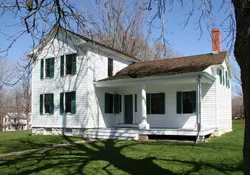
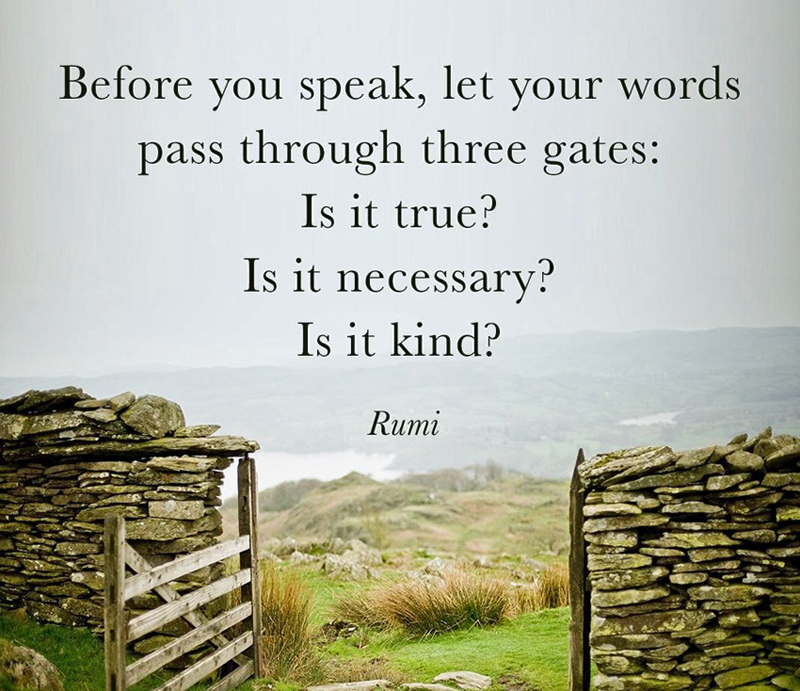

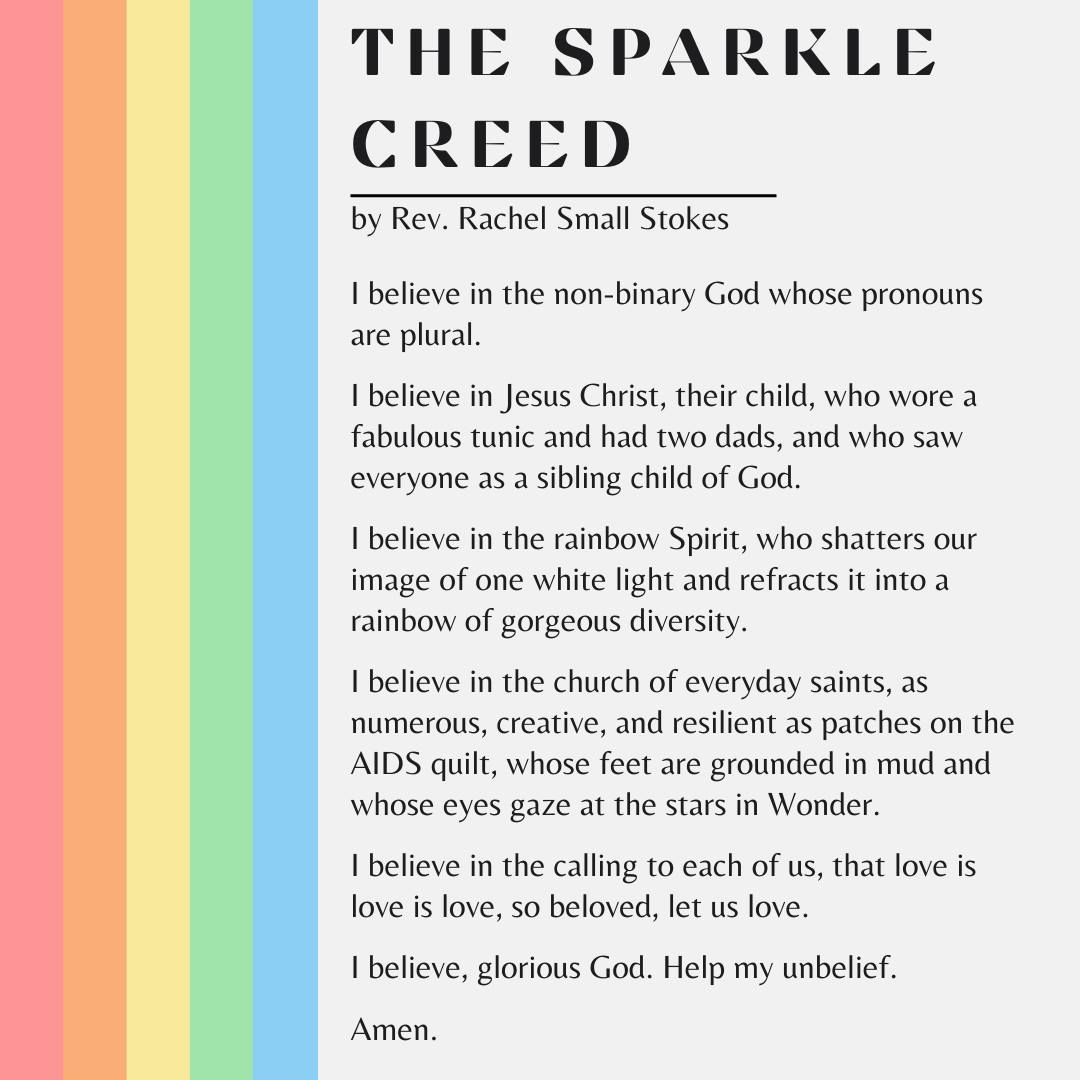


 reallifepastor