Sermon: March 14, 2021 (Lent 4) “Light for the Dark Night of the Soul”

John 3:14-21

Can you believe it’s been a whole year since pandemic protocols began?  Can you believe it’s been ONLY a year since pandemic protocols began?  Happy Anniversary!

How do we mark a year like the one that’s just passed?  We can, of course, mark it by the losses we’ve experienced–2.6 million deaths in the world, 527,000 deaths in the US, and 11,500 deaths in North Carolina.  We also can look at employment losses, health losses, and all the other losses we’ve endured because of the pandemic.  Did you know that overall life expectancy in the US dropped an entire year last year, from 78.8 years to 77.8 years?  In the same period, life expectancy for Blacks dropped a whopping 2.7 years, to 72 years.

Were we to list everything we’ve lost in the last year, we’d be here all day and well into the night.  To be sure, it’s important to make note of things and, especially, of people we’ve lost.  Grieving our losses is an important part of recovering from this traumatic year.

Equally important to grieving our losses, though, is naming what we’ve gained.  As someone said recently:  It’s been a year…and we’re still here!  And we are!  We ARE still here!  How did that happen?  How, after one of the most stressful years on record, are we still here?  

Let’s look at some of the positive things that have happened this year.  The children mentioned a few, like, spending more time with family and the fact that people are being more careful and safe.  I’m not sure about that having-more-play-time-and-less-school thing…  

I asked the same question during Sunday School last week.  In addition to saving money on gas and spending more time with pets, the adults said they appreciated having more time for reflection.  Several mentioned experiencing with greater depth the beauty of last Spring.  “I noticed the flowers!” one person said.  Some expressed gratitude for a return to simplicity and the reminder that we are all interdependent.  One person mentioned that people in her neighborhood now see and speak to one another.  

Another expressed appreciation for focusing our efforts more intentionally on working for racial justice.  I would add to that our congregation’s commitment to housing our houseless neighbors for Code Purple nights this winter.

Several people mentioned being grateful for Zoom.  I wouldn’t categorize comments I heard about Zoom last March as expressions of gratitude.  🙂  Getting comfortable with Zoom was a long process.  Do you remember?  Folks who now are hosting Zoom meetings were very firm in their stance at the beginning:  Our group will wait to meet until we’re all back together.  Remember that?

So, what happened to help us overcome our resistance to Zooming?  We practiced.  Marika talked us through how to do it…several times.  Eventually, Zooming became second nature to us.  Well, almost.  🙂  

So, we learned how to Zoom.  And that’s a significant accomplishment.  But here’s my question:  Why?  Why, in the midst of the traumatic experience of going on lockdown, why, when our lives were turned upside down, why, when so many things were so very difficult, why did we work so hard to learn something that, at the beginning was so uncomfortable?

It’s no great mystery, is it?  We learned to Zoom–despite all the frustrations–because we needed each other.  As our world went topsy turvy, as our losses mounted, as the trauma deepened, we needed to see each other and hear each other and share our lives with each other.  We needed to visit with each other and pray with each other and laugh with each other.  We couldn’t worship together in the sanctuary, we couldn’t hug each other, we couldn’t go out to lunch together…all that was left was Zoom.  And so–Dagnabit it all!–we learned it.  We might have gone kicking and screaming, but we learned Zoom because we needed each other.  I mean, we needed each other.  We needed some light in a world that had grown very dim.

One HUGE gift of Zoom has been expanding our congregation into the southern hemisphere.  Pam and Penny regularly join us from Ecuador.  And our teacher for Sunday School last week was Elena, who lives and works in Nicaragua.  

Last Sunday, we looked at the cross from the perspective of Liberation Theology.  As I read today’s description of Jesus’ crucifixion and resurrection in John, something Elena said in last week’s class resonated.

Elena said that Liberation Theology invites us to embrace the cross.  That means we embrace the fact that we are in pain, we are fractured, we are grieving.  When we can live through our pain, she said, then we are able to experience resurrection.

Another key tenet of Liberation Theology is that none of us does this work alone.  We don’t embrace our brokenness by ourselves.  We come to the cross together.  We come for ourselves, we come for each other, we come for the world.  And as we accompany each other to the cross, as we–together–embrace all the pain, all the brokenness, all our wounds, somehow, in embracing the pain, somehow, in our togetherness, somehow, in looking to and identifying with the one who was lifted up, somehow, we begin to heal.  And when we begin to heal…that’s when we begin to experience resurrection.

I suspect that’s why we’ve worked so hard to learn Zoom this year.  It’s not complicated.  We’ve needed each other.  In our brokenness, in our woundedness, in our weariness, as our way grew more and more dim, we needed some light…a light we only can experience in the presence of others.  And so we learned to Zoom.

As class ended last week, Elena asked each of us to share what we were taking with us from the class and what we were giving back to the community.  I said I was taking with me the reminder of how vital mutual accompaniment is in every aspect of life.  I’m giving back a renewed commitment to reminding us all that mutual accompaniment is vital to our work as a community of Jesus’ followers.  Life isn’t something we do alone.  We must do it together, listening to each other, sharing our true selves with each other, accompanying each other.  As Ram Dass said, “We’re all just walking each other home.”  

Everything we do as a community–both within the First Congregational community and in the work we do outside it, we do it all together.  We accompany each other.  We accompany those we serve outside this community.  We embrace the pain, the brokenness.  We open ourselves to experience healing.  Then and only then, do we experience resurrection.  And when we do, we move from darkness to light…together.

I share with you now a poem that describes well the process of embracing our brokenness as the means by which we experience the light.  As you listen, I invite you to invite into consciousness all the others who are hearing these words along with you.  Remember that we make the journey to the cross together.  Remember that we’re all just walking each other home.

When the light around you lessens

And your thoughts darken until

Your body feels fear turn

Cold as a stone inside,

When you find yourself bereft

Of any belief in yourself

And all you unknowingly

Leaned on has fallen,

When one voice commands

Your whole heart,

And it is raven dark,

Steady yourself and see

That it is your own thinking

That darkens your world.

Search and you will find

A diamond-thought of light,

Know that you are not alone,

And that this darkness has purpose;

Gradually it will school your eyes,

To find the one gift your life requires

Hidden within this night-corner.

Invoke the learning

Of every suffering

You have suffered.

Close your eyes.

Gather all the kindling

About your heart

To create one spark

That is all you need

To nourish the flame

That will cleanse the dark

Of its weight of festered fear.

A new confidence will come alive

To urge you towards higher ground

Where your imagination

will learn to engage difficulty

As its most rewarding threshold!

In the name of our God, who creates us, redeems us, sustains us, and hopes for our wholeness.  Amen.

Kimberleigh Buchanan  © 2021

  1.  For Courage, by John O’Donohue
Posted in Uncategorized | Leave a comment

Sermon: “Amistad Christianity” (John 2:13-22) Lent 3, March 7, 2021

Today’s Scripture story is one many of us wait all year to hear:  Jesus clearing out the temple.  He’s come to Jerusalem to celebrate Passover and, as all Passover pilgrims do, he enters the temple.  Seeing marketers of animals and moneychangers, Jesus creates a whip and cracks it.  “Get out of here!  Don’t make my Abba’s house a marketplace!”

For those of us committed to living our faith actively in the world, we who’ve committed ourselves to the work of transforming unjust social systems that oppress the least of these, this Jesus–the one who gets angry and speaks truth to power (and you gotta love that whip!)–this Jesus is our hero.  This is the Jesus who most often comes to mind when we make plans to act the world into wellbeing.  When we march, when we rally, when we send pointed letters to our elected officials, the whip-cracking Jesus in the temple is the one we follow.  

Which is good.  It’s good to identify with Jesus in the temple.  And yet…sometimes I wonder if we’re identifying with the right character in this story.  Are we the prophet speaking truth to power?  Or, as part of the religious establishment in the year 2021, do we have more in common with the moneychangers and marketers?

Let’s look again at what was happening at the temple.  At the time, animal sacrifice was part of Jewish faith practices.  On high holy days, tradition dictated that the faithful offer a sacrifice.  And since, in their minds, God–literally–lived in the Temple, the faithful made pilgrimage to the Temple in Jerusalem to offer those sacrifices.

Unblemished sacrifices were required, but the likelihood of arriving in Jerusalem after several days’ travel with an unblemished sacrifice was next to nil.  That’s why the animal sellers had set up shop in the Temple.  They made it possible for pilgrims to fulfill their vows to God.

The moneychangers also provided a helpful service.  You’ll recall that the second commandment forbade graven images.  Because Roman coinage had an image of Caesar on it, the faithful weren’t allowed to use those coins to buy their offerings.  The moneychangers converted Roman coinage into Tyrian coinage, which was permissible.

Sometimes, we see in this scene Jesus taking action against unjust economic practices, practices that exploited the poor, like, maybe they were price-gouging or didn’t give folks a fair exchange of money.  But the text doesn’t say anything about unjust economic practices.  In truth, the sellers of animals and moneychangers were providing needed services so the faithful could fulfill their religious vows.

So, if Jesus wasn’t railing against unjust economic practices or practices that exploited the poor, what was he doing?  Why did he take such dramatic action that day in the Temple?

Today’s scene immediately follows the story of the wedding at Cana.  That’s the one where the wine runs out and Jesus turns six stone jars of water into wine.  Good wine.  

The stone jars in question normally were used for religious purification rites.  When Jesus repurposed them, it was a sign that his ministry was about repurposing the faith.  The container that once held their faith, now was open to an abundance of something new.  

In today’s story, the Temple has become the container Jesus is repurposing.  When Jesus says to stop making his Abba’s house a marketplace, he isn’t railing against the sellers and moneychangers.  The sellers and moneychangers were only providing a service necessitated by the religious practice of the day.

Jesus wasn’t calling the sellers and moneychangers to task; he was calling into question the whole system that necessitated their presence.  He was calling into question a system that tied the faithful to a single location and that kept them dependent on religious authorities for faithful living.  In short, Jesus was calling for a revolution.  No longer would the Temple with all its rules and requirements be the place to encounter God.  The place to encounter God now was in him.  Now, Jesus was the Temple.

I know.  We like identifying with the Temple-clearing Jesus.  How many of you today have raised your arm and cracked the whip with Jesus?

But I have to wonder…as part of the religious establishment in 2021, are we imagining ourselves on the wrong end of the whip?

To be sure, we don’t have moneychangers or sellers of animals in the narthex, thanks be to God!  But, as part of the religious establishment, are there things we’ve become blind to?  Are there some practices we engage in that once felt necessary to our faith but aren’t needed any more?  Practices, perhaps, that keep us from experiencing God?  Practices shaped by economic exploitation…or by sexism…or by white supremacy…

I know we like to think of ourselves as whip-crackers, but what might happen if we dig deeper?  What might happen if we see ourselves on the other end of the whip?  What if Jesus is calling us to rethink and repurpose our faith…away from archaic traditions and toward him? 

What if we followed in the footsteps of our Congregational forebears in the 1840s? 

Many of those forebears already had committed themselves to the cause of the abolition of slavery.  In 1839, when 53 Africans were removed from their ship, the Amistad, and taken to prison, those good church folk had a choice.  How would they respond?  

Here’s what had happened.  The Africans had been captured and taken from their home in present-day Sierra Leone.  The ship was taken to Cuba, where the Africans were sold to someone who lived on a different island in the Caribbean.  When the ship set sail for that place, the Africans revolted.  Fearing for their own lives, they killed two of the ship’s crew.  Then they demanded that the remaining two crew members sail them back to Africa.

Instead of sailing East, the crew members sailed north.  Just off the coast of Long Island, the ship was intercepted by the U.S. Navy and the Africans were taken into custody.  They ended up in Connecticut.  After many months of delay and a trial, they were declared free only to have that decision appealed to the U. S. Supreme Court.  The Court upheld the Connecticut decision and declared the Africans free.  

It was Congregationalists–in partnership with other abolitionists–who accompanied the 53 Africans during their imprisonment and the trial.  They assisted with the court case.  They provided financial support.  They visited them in prison.  They taught them to read English.  Eventually, the Congregationalists and other abolitionists raised enough money to send the Africans back home.  Five church people accompanied them on the return voyage.  A mission was established.

A few years later, the same Congregationalists founded the American Missionary Association.  After the Civil War ended, the AMA established some 500 schools and colleges for blacks in the south, including the predominantly black colleges of Howard, Fisk and Dillard Universities.  

It’s a fascinating story, one we have good cause to be proud of.  In our celebration of our Congregationalist forebears in the 1840s, though, let’s not lose sight of just how radical their actions were. Much of Christianity at the time condoned slavery.  Because the Congregationalists who assisted with the Africans in the Amistad case were able to think outside the box of their tradition, because they were able to rethink and repurpose their Christian faith, many lives were transformed.  Their creativity and faithful action dealt a strong blow to the unjust system of slavery.  

What might it mean for us, we who follow Jesus in the 21st century…what might it mean for us to rethink and repurpose our Christian faith?  From our vantage point nearly two centuries later, working to dismantle the heinous system of chattel slavery seems obvious.

But the remnants of that heinous system remain, don’t they?  Many of our social systems continue to keep people of color in circumstances that deny their full humanity.  The cash bail system.  The criminal justice system.  Unfair housing practices.  Unequal access to healthcare.

Sometimes, I wonder if in celebrating Congregationalists’ role in the Amistad event, we distract ourselves from the work that lies before us here and now.  We, too, witness every day the systemic racism that oppresses–and yes, kills–our siblings with brown and Black skin.  What will we do about it?  How will we respond to what remains a heinous system?  What might we do that would lead our Congregational ancestors to celebrate us?

What will we do to get ourselves on the other side of the whip?

In the name of our God, who creates us, redeems us, sustains us, and hopes for our wholeness.  Amen.

Kimberleigh Buchanan  © 2021

Amistad Chapel, United Church of Christ Church House, Cleveland, OH
Posted in Sermons | Tagged , | Leave a comment

Sermon: “Take Up Your Cross?” (Lent 2) Mark 8:31-39 [2/28/2021]

“Take up your cross and follow me.”  Few of Jesus’ words have caused more consternation than these.  “Take up our cross?”  What does that mean?  Does following Jesus mean we’re supposed to suffer?  To follow Jesus properly, must we have a death wish?  

It sounds extreme, I know, but for some, Jesus’ call to take up our cross is a call to suffer.  In conversation with a clergy colleague in Washington state where she pastored, Pastor Rebecca Ann Parker learned how devastating the consequences of misunderstanding Jesus’ call to “take up our cross” could be.

“He killed her,” Pat said.  “With a kitchen knife.  In front of three of their children.  The baby was sleeping” (15).

In their small town, there were no social services for victims of domestic violence.  The place people turned for solace was church.  But the theology most church-goers got was the idea that suffering violence was holy.  Jesus suffered violence, so it must be, right?  Women especially took in that message.

Pat said, “Almost every woman who’s come here for refuge has gone back to her violent husband or boyfriend.  She thinks it’s her religious duty.”  

After one especially violent episode, with support, Anola, the woman who was being abused, pressed charges against her husband and testified against him.  He was sentenced to 10 days in jail.  When he was released, Anola let him come back home.

When Rebecca asked Pat why Anola had let him come back, Pat said, “She thought it would be the right thing, in God’s eyes.  In the church she went to, the intact family was celebrated as God’s will:  father, mother, and children were meant to be together in a loving home.  Anola believed that because this configuration of family was the will of God, God would somehow make it alright.  For her to break up the family would make her a bad person.  Doing the will of God was more important than her personal safety.  The possibility that faithfulness to God’s will might mean pain and violence could even have been in its favor.  A good woman would be willing to accept personal pain, and think only of the good of the family.  You know, ‘Your life is only valuable if it’s given away’ and ‘This is your cross to bear.’  She heard that Jesus didn’t turn away from the cup of suffering when God asked him to drink it.  She was trying to be a good Christian, to follow in the footsteps of Jesus.’”  “Anola believed God expected her to risk being battered, like Jesus.”  (18-19)

“Take up your cross and follow me.”  What did Jesus mean?  What might it mean for us to take up our crosses and follow Jesus?

Last week, we spent some time with Jesus in the wilderness.  During his 40 days without food or companionship–that is, without distraction–Jesus gained clarity about his calling, about what his response to God’s love for him would be.  As he reflected, we wondered:  Did he know what his calling might lead to?  Did he suspect that acting the world into wellbeing could lead to his death?  Did an image of a cross float into Jesus’ consciousness during his sojourn in the wilderness?

There’s no way to know for sure what Jesus was thinking in the wilderness.  By today’s passage, though, the cross is front and center.  He shares this insight with his disciples.  He began to teach them that the Promised One had to suffer much, be rejected by the elders, chief priests, and religious scholars, be put to death, and rise again three days later.  

Peter protests.  A few verses before, when Jesus asks the disciples who people say he is, they answer, “Elijah.”  “Moses.”  When Jesus asks, “But who do you say I am?”  Peter nails it:  “You are the Messiah.”

But, apparently, Jesus’ understanding of the Messiah and Peter’s aren’t the same.  For Peter, the Messiah had come to save people!  A dead Messiah couldn’t save anybody.  Jesus, in dramatic fashion, offers another understanding of what kind of Messiah he would be.  “Get behind me, Satan!  You’re looking at things from a human perspective, not God’s!”

And then, Jesus doubles down.  Not only is he going to die, but he calls his disciples also to “take up their crosses,” “to lose their lives in order to save them.”   

Suddenly, what had been all stories, healings, and miracles, takes a darker turn.  Or maybe it’s more accurate to say that things take a deeper turn.  It’s like Jesus has been bringing folks along, but–at last–wants them to know he hasn’t been playing at this thing of living God’s love in the world.  Living God’s love in the world–if we do it right–asks everything from us.  Living God’s love in the world isn’t something to play at or to engage in half-heartedly.  Living God’s love in the world isn’t a death wish, but it does call us to commit our whole selves to the work, even unto death.  As we heard Dr. King say last week, “We don’t know why we’re alive until we know what we would die for.”

Do you know what you would die for?  Or, to put it another way.  What are you living for?  To what have you committed yourself wholly, entirely?

In Sunday School, we’re exploring different understandings of the cross.  Last Sunday, we quickly learned that we have a wide diversity of understandings of the cross in our congregation… which is going to make for some terrific conversation.  🙂

I was struck by one person’s response to the question:  What does the cross mean to you?  “Focus,” they said.  Focus.  Maybe that’s what Jesus meant when he invited his followers to “take up our crosses.”  Maybe he was calling us to live our lives–our entire lives–with focus, with intention.  Perhaps the call to take up our crosses is a call to pare away anything that doesn’t contribute to living God’s love in the world.  Perhaps it is a call to commit ourselves wholly to that work and to not allow anything, anything to distract us from that calling.

Maybe that’s the difference between the understanding of the call to take up our crosses held by women about whom Pastor Rebecca Ann Parker writes and other understandings.  Maybe it’s about focus.  Maybe it’s about intention.  Maybe it’s about suffering, not because someone is perpetrating violence against us, but because we choose to suffer for a greater good. 

A few months after her visit with Pat, Lucia knocked on Rebecca’s door.  She, too, was being beaten by her husband.  He was beginning to turn his violence on their children.  

Lucia told Rebecca, “I went to my priest 20 years ago.  I’ve been trying to follow his advice.  The priest said I should rejoice in my sufferings because they bring me closer to Jesus.  He said, ‘Jesus suffered because he loved us.’  He said, ‘If you love Jesus, accept the beatings and bear them gladly, as Jesus bore the cross.’  I’ve tried,” Lucia said, “but I’m not sure anymore.  Tell me, is what the priest told me true?”

Rebecca told her it wasn’t true.  “God does not want you to accept being beaten by your husband.  God wants you to have your life, not to give it up.  God wants you to protect your life and your children’s lives.’

Hearing Rebecca’s response, “Lucia’s eyes danced.  “I knew I was right!” she said.  “But it helps to hear you say it.”  Lucia began taking courses at the community college to gain a marketable skill.  After that, she got a job and moved herself and her children to a new home.  

When I announced the Sunday School class on the cross, I wasn’t sure there would be any takers.  As Jesus’ words today suggest, understanding the cross is hard…so hard, in fact, that sometimes we just ignore it or push it to the side or simply believe what we’ve always believed about it without ever reflecting critically about those beliefs.

But what we believe about the cross matters.  What Anola believed about the cross led to her tragic death.  What Lucia believed and had confirmed by Rebecca led to her leaving her abusive marriage and beginning her life anew.  What we believe about the cross matters…not only for our lives, but also for the lives of others.   

So, what does the cross mean to you?  What difference does your understanding of the cross make in your life or the lives of others?  Are you ready to commit yourself wholly to the work of living God’s love in the world?  Do you know what you would die for?  Do you know what you’re living for?

Will you take up your cross and follow Jesus?

In the name of our God, who creates us redeems us, sustains us, and hopes for our wholeness.  Amen.

Kimberleigh Buchanan  © 2021

Brock, Rita Nakashima and Rebecca Ann Parker, Proverbs of Ashes: Violence, Redemptive Suffering, and the Search for What Saves Us. Boston: Beacon Press, 2001.

Posted in Sermons | Tagged , | Leave a comment

Sermon: Wilderness Times (2/21/2021)


Mark 1:9-15

Today is technically the first Sunday in Lent.  I say “technically” because, in many ways, we’ve been living Lent since last March, haven’t we?  We’ve given up so much.  Dining in restaurants, meeting for worship, singing together, hugging each other.  We could probably spend all day listing all the things we’ve given up during the pandemic.

In truth, Lent seems redundant this year.  We’ve already given up so much; and now we’re expected to give up even more?

There is one big difference between giving things up for the pandemic and giving things up for Lent.  That difference is choice.  During Lent, we choose what we will give up.  We do it as a way to clear things out of our lives so we can live our lives with greater authenticity.  By stripping away some of the clutter in our lives, we’re able to focus more clearly on what we are called to do, even who we are called to be.

Our Lenten journey begins this year where it always begins–with Jesus in the wilderness.  He’s just been baptized.  As he rises up out of the water, a dove descends and a voice proclaims, “You are my Beloved, my Own.  On you my favor rests.”

Wow.  What a profound experience!  You’d think they’d’ve thrown a party or something… or sent Jesus on his way to start preaching and teaching.  

But that’s not what happens, is it?  No.  “Immediately the Spirit drives Jesus out into the wilderness, and he remains there for forty days and is tempted by the Evil One.”  What is that about?  Why this extended sojourn in the wilderness?  Why not just send Jesus out to preach? 

We’ve got a lot of hikers and RV-ers in our congregation.  What happens when you go out into the wilderness, especially by yourself?  Or if not literally into the wilderness, what happens when you strip away the noise and busyness of your life and simply sink into quietness?  (One person recently told me they’ve been fasting from the news.)  When the familiar things of our lives are stripped away, we’re better able to reconnect with ourselves, aren’t we?  We gain a clearer understanding of who we are.  We get clearer about the work to which we’re called.

You know what I wish?  I wish Jesus had kept a journal during his 40 days in the wilderness.  Wouldn’t you love to know what he was thinking and feeling out there for all that time with no food, with all kinds of temptations happening, with “the wild beasts?”  I wonder how many times he replayed his baptism in his mind.  How many times did he recall those words:  “You are my Beloved, my Own.  On you my favor rests?”  What meaning did that experience, those words come to have as Jesus sat with them, contemplating, reflecting?

When did his thoughts begin to turn to the work he was being called to do?  Yes.  God had blessed Jesus, had called him beloved and said God’s favor rested on him.  But what would Jesus’ response to that blessing be?  How would he live God’s blessing in the world?

At what point did Jesus begin thinking of all the injustices he’d seen all around him?  Of all the people living in poverty who were being exploited?  Of all the people not part of the majority group who faced discrimination and oppression?  Of the ways women, children, and the disabled were ostracized and mistreated?  Of the ways in which the religious leaders were actively participating in these injustices?

At what point did Jesus’ memories of his baptism, of God’s declaration of love for him begin intertwining with his thoughts of the injustices he’d seen, the suffering of the least of these?  At what point did his calling click?  At what point did Jesus know with unwavering certainty that–as God’s beloved–he was called to teach and preach God’s love to all the people…and that doing that work authentically also meant speaking truth to power?

At what point did Jesus get a glimpse of what his preaching might lead to?  At some point in his wilderness contemplation, did an image of a cross float into his consciousness?  I ask that because, before too long, Jesus will begin extending the invitation to his disciples and others to “Take up your cross and follow me.”  In his wilderness sojourn, did Jesus realize that living his calling could lead to his death?

Martin Luther King, Jr.’s entrance into the Civil Rights movement was, at the beginning, a gradual thing.  He was pastor at Dexter Avenue Baptist Church in Montgomery, Alabama.  That was his calling, he thought.  That was the work he wanted to do.

But, beginning with the bus boycott in 1955-56, Martin started getting drawn into the movement.  He preached justice for Black people in Montgomery and the rest of the country.

As his notoriety spread, as his calls for justice began reaching out, the hateful phone calls began.  Once, around midnight, the phone rang.  Martin answered.  “When [he] lifted the receiver, a drawl released a torrent of obscenities and then the death threat: “Listen…we’ve taken all we want from you;  before next week you’ll be sorry you ever came to Montgomery.”  By this point, Martin was receiving 30 – 40 menacing phone calls a day.  Somehow, though, this one got to him.  Fear overcame him.  His confidence wavered.  He was ready to give up.

Unable to sleep, Martin went to the kitchen and fixed a cup of coffee, sat down at the table and reflected.  As he thought about his wife, Coretta, and their firstborn child asleep in her crib, it hit him for the first time just how serious the situation had become.  “His family could be taken away from him any minute, or more likely he from them.”  With sudden clarity, Martin realized that preaching truth to power as he was, could get him killed.

There at the kitchen table, Martin confessed his fear to God.  He acknowledged that he couldn’t go any further.  

Then he heard a voice saying, ‘Martin, stand up for righteousness.  Stand up for justice.  Stand up for truth.  And lo, I will be with you.  Even until the end of the world.”  Then, as Martin told it, “I heard the voice of Jesus saying still to fight on.  He promised never to leave me, never to leave me alone.  No never alone.  No never alone.  He promised never to leave me, never to leave me alone.”

Author Charles Marsh writes, “As the voice washed over the stains of the wretched caller, King reached a spiritual shore byond fear and apprehension.  “I experienced the presence of the Divine as I had never experienced it before,” Martin said.  “Almost at once my fears began to go.  My uncertainty disappeared.  I was ready to face anything.”  

A kitchen table isn’t exactly a wilderness, and Martin didn’t sit there for 40 days, but as Martin himself described the experience, it sounds like his sojourn at the kitchen table served a similar purpose to Jesus’ sojourn in the wilderness.  Both got reassurance of God’s presence with them, they made a connection between God’s love for them and the work that lay before them, they were tempted to abandon the work to which they’d been called, and they got clear about what was at stake in the work to which they’d been called.  They both got clear that engaging in their callings could lead to their deaths.  They both got clear, as Martin would later say, that we “really don’t know why we are alive until we know what we’d die for.”

What are you living for?  To what new thing is God calling you?  How will you respond to God’s love for and blessing of you?  How will you, personally, live God’s love in the world?  If you can answer those questions quickly and clearly, good news!  You get a free pass on Lent this year.

If, however, you aren’t sure of the answers to the questions, if you’re still wondering about to what work God might be calling you, and especially if you’re tempted to abandon the life of faith, to leave the cross where it is and go on your merry way, if you’re needing clarity for your spiritual life, good news!  It’s Lent!  Join Jesus in the wilderness and find clarity and meaning and purpose.  Join Martin at the kitchen table and find courage and assurance of God’s presence.  Join with the rest of us in our Lenten journeys as we wake up together to the work to which God is calling us now.

Good news!  It’s Lent!  Thanks be to God!

In the name of our God, who creates us, redeems us, sustains us, and hopes for our wholeness.  Amen.

Kimberleigh Buchanan  © 2021

Posted in Uncategorized | Leave a comment

Ash Wednesday (2/17/2021)

“Behind the altar on the east wall of the chapel of a Trappist monastery high up in the Rocky Mountains,  there hangs a simple wooden cross.  It will stay there until it is taken down to mark the grave of whichever brother is the next to die.  Until then it hangs on that wall so that whenever the monks turn and face the altar, they also turn and face this very simple and immediate symbol of their own death.”  In this way, the brothers literally practice Benedict’s admonition to “keep death daily before your eyes,” (de Waal, Living with Contradiction, p.113).

Those words have taken on a whole new meaning this year, haven’t they?  We are nearing half a million people in our country who have died of Covid-19.  We’re meeting virtually for worship–again–tonight to prevent us from catching and spreading the coronavirus.  We keep death daily before our eyes because, if we don’t, death could claim us or someone we love much too soon.  We keep death daily before our eyes because we are not able to grieve in the ways we’re used to, surrounded by friends and family.  Grief has nowhere to go, and so, it stays with us, weighing heavily in our hearts.

“Keep death daily before your eyes.”  It sounds morbid when you first hear it, but if you think about it, what happens when you keep death before your eyes?  At first, you might think, “I don’t want to die!”  If someone were to ask, Why don’t you want to die?  You’d be likely to respond:  “Because I have so many things left I want to do!”

Exactly.  When you think about your mortality, you start making a bucket list.  Didn’t know that started in the 5th century with Benedict, did you?  Benedict was so smart!  He knew that thinking of our deaths keeps us focused on how we’re living our lives.

And how we live our lives is what tonight is all about.

So, how’s the living of your life going?  Do you feel good about everything you’re doing?  All your relationships?  Your relationships with family, friends, other people in the world, creation, God, yourself… your faith community?  Are you content?  Do you feel completely comfortable in your own skin?

Chances are that if you’re here tonight, you aren’t quite comfortable in your own skin.  Something feels a little “off.”  You feel disconnected from God, other people, creation, yourself.  Chances are you’re here tonight because you want to feel more connected.

The gift of Lent and, especially, of Ash Wednesday, is the opportunity it provides to get rid of everything that’s extraneous, to get down to what is most authentic, most elemental in who we are.  

Tonight, as we touch the ashes, we’ll be reminded that “from dust we have come and to dust we will return.”  As you receive the ashes (in whatever way you will be receiving them), you’re also invited to touch the waters of baptism.  A few weeks ago, we remembered our baptisms, where God says to each of us: You are my child, my beloved, with you I am well-pleased.  As we are reminded of our mortality tonight, let us also remember just how loved we are.

Tonight, as we remember our baptisms, I invite us also to reflect on this question from the baptism liturgy of the Episcopal Church:  “Will you strive for justice and peace and will you respect the dignity of every person?”

We come from dust, we return to dust.  We are deeply loved.  We respond to that love by loving others.

It’ll be a little different tonight, but we’re going to impose the ashes.  If you have–safely!–created ashes, you may simply touch the ashes and make the sign of the cross on your own forehead.  If you’re with others, you may impose the ashes on each other.

If you don’t have any ashes, no worries.  Simply imagine the ashes being imposed, or remember a time in the past when you’ve received the imposition of ashes.

After the imposition of ashes, you’re also invited to touch the waters of baptism.  Remember how much you are loved.  Hear again the calling to share the love you have received with others.

Imposition of Ashes

(If you have ashes, you may impose them on your own forehead.  Also, if you have brought water to your worship area, you are invited to touch the water and remember your baptism.  You might reflect on how both symbols—baptismal water and penitential ashes—encompass the full gamut of what it means to be human.)

From dust we have come, 

To dust we will return.

And from one point to the next, 

Our God will carry us.  Thanks be to God!

Silence

Prayer.  Holy One, living authentic, joyful lives is sometimes hard…like, really hard.  We want to be kind and compassionate, we want to build others up in love, we want to do good in the world, we want to do well by our families, we want to do well by our church family…but we mess up.  We mess up in really bad and big and twisted ways.  We get to the point where we’re afraid to say or do anything because everything just seems to hurt–it hurts us, it hurts others.  Sometimes, Holy One, we start slipping into despair.

Thank you for the gift of this Ash Wednesday service.  Thank you for the opportunity to step away from the noise and tension of our lives and confess what needs to be confessed and, especially, to receive your grace and forgiveness.  Help us to receive–into our inmost beings–help us receive down to our deepest selves your forgiveness, your grace, your love.

Help us to remember that we are loved.  Help us to remember to respect the dignity of every person.  Help us to remember that “none of us are as bad as the worst thing we’ve ever done.”   In the assurance of your love we pray, Amen.

Hymn #223   What Wondrous Love Is This

Benediction 

The Lenten journey–if we engage it down to our deepest selves–isn’t easy.  Facing squarely all the ways in which we fail to live up to our baptismal vows is hard work.  As you embark up this journey, know this, God’s wondrous love will surround you and sustain you and give you strength every step of the way.  Go now in the knowledge of God’s peace.  May you rest in God’s love.  Amen.

Posted in Uncategorized | Leave a comment

Sermon: “Hectic Healing” (2/7/2021)

Mark 1:29-39

Thus far in the Gospel of Mark, Jesus has been baptized and sent into the wilderness for 40 days, he’s enlisted disciples, preached, been shouted at by some demons, and healed some folks.  And we’re not even out of the first chapter!

Thank goodness they’ve been in Capernaum, where Peter’s family lives.  They head to Peter’s house for a bit of a rest.  When they arrive, though, they learn that Peter’s mother-in-law is ill in bed with a fever.  Jesus heals her, too.

By evening, we’re told, “the whole city was gathered around the door.”  News had gotten out about Jesus healing all those people.  So many others also were desperate for that healing.

Do you ever wonder why so many people needed healing when Jesus started his ministry?  Had those people not been in need before Jesus began his ministry?  Or had those people’s communities not seen their need for healing?  Before Jesus, had those who needed healing simply given up and suffered in silence?  Did those people come to Jesus because– finally!–someone had seen them?

For whatever reason, they were coming in droves.  Jesus healed all of them.

The next morning, Jesus “gets up and goes out to a deserted place, and prays.”  At last!  A bit of quiet, restful prayer.  Yet, even in that deserted place, the disciples find him.  “Everyone is searching for you!” they say.  That’s when Jesus shares what, perhaps, was an insight that came to him while he was praying:  “Let us go on to the neighboring town, so that I may proclaim the message there also; for that is what I came out to do.”

As Kirstin reminded us so eloquently last week, the need for healing has racheted up in the last year–the need for physical healing from covid, the need for the healing of divisions caused by politics, the need for healing for myriad families who are experiencing food and housing insecurity, the need for healing in our own cities and communities.  

Sometimes it feels like the whole city, our whole country, the entire world is gathered around the door.  On Code Purple nights, they are literally gathered around our door.  People seeking shelter from the cold line up–sometimes for hours–to make sure they can get a place.

We can house 40 people.  I suspect if we opened it up to even more–which we are not able to do–we’d still have a line out the door. 

The needs are significant.  We who are Jesus’ hands and feet in the world, we, too, can get overwhelmed by the needs we see all around us.  What do we do?  How do we decide where to spend our resources?  How can we stay engaged and encouraged when we realize that no matter what we do, there will always be more to do?  That, no matter how many people we house, there will always be a line out the door?

Were we asked which part of today’s Scripture story resonated with us, I suspect some of us would be drawn to Jesus’ healing work, the work of meeting the needs of others.  Others of us, perhaps would be drawn to Jesus’ stepping away from the noise and the need to pray.  In our own FCUCC community, some folks are drawn more to social justice or benevolence work, while others are drawn to our contemplative ministries.  And some folks do all of it!

If we learn anything from today’s Gospel lesson, it’s that both contemplation and compassionate action in the world are vital.  If contemplation doesn’t lead to compassionate action, it becomes self-focused.  If compassionate action isn’t grounded in prayer and contemplation, the results can be disastrous.

Here’s a story from Wayne Muller, author of the book, Sabbath.  In a chapter titled, “Doing Good Badly,” he relates his experience working with other therapeutic professionals to return to their homes juveniles and psychiatric patients who’d been institutionalized.  “If we returned them to their community,” they reasoned, “they would need less public money, and they would be free to be cared for by their families, back home where they belonged.”

In their eagerness to do good–that is, to get people who were living in institutions back to their families and their communities–this group moved too quickly.  They didn’t pause to ask why the people had ended up in institutions in the first place.  They didn’t ask if those they were sending home had support in those homes, or if the families and communities had the resources to support them.  Muller writes:  “Without stopping, eager to be useful, we just let them go…We were in a terrible hurry to do good, but there was no rest in our decisions.  And just as speech without silence creates noise, charity without rest creates suffering.”  (157-159)

“Charity without rest creates suffering.”  I wonder how the story would have gone if Jesus hadn’t taken that moment to pray.  The insight from his prayer seemed to be, We need to move on.  Had he not prayed, had he not gained that insight, would he simply have stayed in Capernaum, healing people there?  Would his personal resources–and those of his disciples– have diminished?  Would he ever have moved on to preach to and heal others?  If he had stayed in Capernaum, would we be worshiping as followers of Jesus today?

Contemplation and compassionate action are of a piece.  One without the other leaves us limping.  A steady gait while following Jesus requires both contemplation and action.

Here’s one of the wonders of the pandemic:  During the pandemic, some of our ministries haven’t shrunk, but have expanded!   Contemplative ministries are stronger, like the Artist’s Rule, Stir the Soul, Sacred Pause, and weekly prayer.  (Feel free to join us by Zoom for Noon Prayer on Wednesday).  Our benevolence ministries also continue to thrive, at least the ones we’re able to do during the pandemic–the refugee ministry, feeding Homeward Bound clients who are staying at the Red Roof Inn, feeding people at Battery Park Apartments at the beginning of the pandemic, hosting Code Purple nights.

As I’ve thought about our next steps as a congregation, I wonder if it is our benevolence work and our new Social Justice and Arts ministries–which has begun during the pandemic–that will guide us.  I suspect the spike in needs created by the pandemic will not subside any time soon.  The world needs followers of Jesus to help.  And our Social Justice and Arts ministry already has propelled us light years ahead in our work to end racism.  (Stay tuned for exciting news on that front!)

Here’s another story from Wayne Muller’s chapter, “Doing Good Badly.”  It illustrates well the close link between benevolence work and artistic engagement, the close link between contemplation and compassionate action.  

When Muller “worked as a community organizer in the poorer Boston neighborhoods of Roxbury and Dorchester,” Muller writes that “we often had meetings with local teachers, parents, clergy, and social activists, trying to listen for the healing that would be possible in the lives of the struggling families who lived there.  

“One day, we were meeting in Old South Church, one of the fine, traditional houses of worship in Boston.  One social activist was particularly enthusiastic in criticizing the great disparities of wealth in the city.  In his evangelical fervor, he used the church we were sitting in as an offending example.  ‘Take this church.  It is obscene, all this stained glass and gold chalices and fine tapestries.  If the church really cared about poor people, they should sell all of this and give it to the poor.’

“This argument is not new,” Muller writes.  “It was made by Jesus’ disciples themselves, and it clearly has some merit.  But a woman from the neighborhood, who had lived there all her life, said quietly, ‘This is one of the most beautiful places in the city.  It is one of the only places where poor folks can afford to be around beauty.  All the other beauty in this city costs money.  Here, we can be surrounded by beautiful things, and it all belongs to us.  Don’t even think about taking away what little beauty we have.”

Muller concludes by saying, “We are a nation of hectic healers, refusing to stop…In our passionate rush to be helpful, we miss things that are sacred, subtle, and important.”  (161-2)

May be an image of text that says 'ZAEEE First Congregational tional United Church of Christ OAK STREET, ASHEVILLE, NC EST. 1914'

In a recent conversation with Mandy Kjellstrom, coordinator for our Social Justice and Arts Ministry, she marveled at her new passion for social justice, especially anti-racist work.  “Until now, I’ve been all about contemplation!  Now, suddenly, I’m all in on social justice.  What happened?”  I suspect what has happened to Mandy is that her deep commitment to contemplation and prayer–and to the cultivation of beauty through her artwork–have led to a new commitment to working for racial equity.  Based on what I’ve seen of Mandy, her commitment to the contemplative life hasn’t wavered.  It still grounds all her work for racial equity.  It’s just that now, Mandy’s not limping.  She’s following Jesus with a  steady gait.  Contemplation–action–contemplation–action.

Now, I want to share with you a conversation I had with Beaver about some of the action our congregation takes on behalf of those who are hungry.  (Insert video with Beaver.)

Posted in Uncategorized | Leave a comment

Sermon: “The World as We Know It Is Passing Away…” (Jan. 24, 2021) Jonah 3:1-5, 10; 4:1


This is how whales get to be so huge -- and what limits them from being  even bigger - ABC News


Old Jonah…I’m not saying he was stuck in his ways…but old Jonah was stuck in his ways…his old biases…his old understandings of how God functioned in the world. 

There he was, minding his own business, when he felt the familiar stirring.  He felt God leading him to preach to people who needed to hear of God’s love for them, usually, it was to people of his own faith who had, as we used to say back home, back-slidden.  

But this time, God called Jonah to preach to Ninevites–foreigners.  God wanted to redeem the Ninevites, who, in Jonah’s mind, were “less than.”  God called Jonah to Nineveh.  Jonah didn’t want to go.  So, he didn’t.

You remember the story.  Two ships departing–one to Nineveh, one to anywhere else.  Jonah took the one headed anywhere else.  Not far from shore a storm blew in.  A bad one.  The crew prayed to their gods to save them.  They cast lots.  The lot fell on Jonah.  He confessed his sin.  The crew hesitated throwing Jonah overboard, but in the end he told them to do it.  As soon as he slipped into the sea, the storm subsided.

Then, you remember, Jonah got swallowed by a big fish.  After three days of sloshing around the entrails of the fish, Jonah repented, at which point, the fish spit him out.

Great story of redemption, isn’t it?  Jonah resisted the new thing God was calling him to do, he got swallowed by a fish, he repented, got regurgitated, then redeemed.  Yay!  

This time, Jonah catches the ship to Nineveh.  He walks through the city preaching repentance to the Ninevites.  And guess what?  The Ninevites repent!  And we’re talking full- bore repentance–sackcloth, ashes…the whole 9 yards.  God accepts the Ninetives’ repentance and relents, “by not inflicting on them the disaster that threatened them.”

So…Jonah repents and gets redeemed.  The Ninevites repent and get redeemed.  Two happy stories of redemption.  Hurray!

But, the story continues.  “But Jonah,” we’re told, “grew indignant and fell into a rage.” In his grumpiness, he tells God, “See?  When I was back in my home country, this is exactly what I said would happen.  That’s why I fled:  I know you’re a God of tenderness and compassion, slow to anger, rich in kindness, and relenting from violence.  Now, Yahweh, please take my life!  I’d rather be dead than keep on living!”

I’m not saying Jonah was stuck in his ways…but Jonah was stuck in his ways.  Maybe entombed in his ways.  He didn’t want to go to Nineveh because he knew that if he did, God would–as God is wont to do–show up in that God-forsaken place.  Old Jonah didn’t want to see God in a place he’d never thought of God being before.   Jonah only wanted to see God where he’d always seen God…In people who looked like him and prayed like him and worshiped like him…he only wanted to see God where he’d always seen God–in his home country, where he was comfortable.  And felt safe.  Jonah did NOT want to find God in Nineveh. 

I wonder if God is calling us to Nineveh…a place we’ve never been before…a place we’ve never thought about God being before…a place, quite frankly, in which we’ve never WANTED to look for God.  I wonder if we’ve felt God calling us to a new place, but in our desire to stay in our “home country”–where we feel comfortable and safe–we’ve headed in the opposite direction. 

I wonder if we–both First Congregational AND the church universal–are at this moment, sloshing around the entrails in the belly of the whale.

When I was ordained near the turn of the century, I was alarmed to hear some religious leaders say the church (big C) was dying.  The church had been in decline for decades.  That decline was quickening.  As someone just starting out as a pastor, I worried…both about the church and about my job prospects.  Once I got over my worry, I got hopeful.  In many ways the church has gotten so comfortable as an institution, so, like Jonah, set–maybe even entombed–in its ways, the church’s relevance is fading.  I agree with What Bishop John Shelby Spong wrote at the time:  “Christianity must change or die.”

Enter the pandemic.  The message of the pandemic has been this:  “Church, you must change your ways–you’ve got to rethink worship, fellowship, pastoral care, justice work, benevolence work…you’ve got to rethink everything.  If you don’t, you–LITERALLY–will die.”  

In her book, The Great Emergence:  How Christianity Is Changing and Why, religious editor Phyllis Tickle suggested that every 500 years the Church (big C) undergoes a major shift.  500 years after Jesus, it was the changes brought by Gregory the Great.  500 years after that, it was the Great Schism in the church between East and West.  500 years after that–which was 500 years ago–it was the Great Reformation, when Protestantism was born.

As we’ve tried to reinvent how we do church this year, I’m starting to think Phyllis Tickle was right.  I do think the church (big c) and individual churches are in a period of profound transition.  We’re changing now because we have to change; we have no choice.  If we at FCUCC hadn’t made changes in response to the pandemic, if we had said in March, “We’ll just pause and wait until we can get back to church;”  if we hadn’t learned how to youtube and Zoom; if we hadn’t been intentional about staying in touch with each other and getting creative about how to do it… If we hadn’t been intentional and creative about this year, I’m not sure we’d even still be here now.  The fact that we are here and–in my estimation–thriving, is a tribute to our community’s willingness to rethink nearly every aspect of how we do church.

We’ve done good work as a community adapting to the pandemic.  I have the sense, though, that even as vaccines are getting in people’s arms, even as we’re imagining returning to the way things used to be…well, I don’t think we’re ever going to be able to go back to the way things used to be.  Even when we are back to worshiping in our sanctuary, it will be different.  We will have had months–perhaps years–of different kinds of worship experiences.  We will have people who have joined our community who’ve never stepped foot in our church building.  

The Great Reformation was fueled by the invention of the printing press.  Before the printing press, illiteracy was the norm.  People had to depend on their religious leaders to interpret Scripture for them.  Once reading materials–especially the Bible–could be mass produced, people could read and interpret the Scriptures for themselves.  It was revolutionary.

As we’ve moved so many of our ways of doing church to online platforms in the last year, I’m beginning to wonder if the internet is serving a similar role to the printing press.  Our understanding of community has exploded this year.  Pam and Penny regularly tune in to Wednesday prayer from Ecuador.  Some people find us online, watch our services a few weeks, then start showing up at Community Hour or Sunday School.  I’m curious to see just how many of our ministries will continue Zooming after the pandemic has subsided.  Maybe we’ll like to continue coming to prayer in our PJs…who knows?

Even in times of great upheaval and transition, some things stay the same.  “One fact remains that does not change,” right?  God’s love does not change.  The importance of followers of Jesus meeting together and supporting each other does not change.  Worshiping together–even if worship looks very different–does not change.  Sharing our resources with those in need does not change.  The need to engage in the important work of justice has not changed.

The message of the Gospel–that everyone is loved by God and deserves to have the things they need to live–has not changed one iota.  The work to which we are called, the work of acting the world into wellbeing–has not changed.  The need to go deeper into our own spirits, even as we do what we can to heal the world–that hasn’t changed.

What is changing is the means by which we live out the Gospel, the tools we use.  I’m starting to wonder if the internet is our Nineveh.  So much technology!  Can God live there among the electrons?  Can people really find a faith that is meaningful on Zoom and Youtube?  Can we experience true incarnation without actually being physically present to each other?  Can we have experiences of worship without communal singing?  

Our home country–worshiping and meeting together in person–is so much more comfortable and feels so much safer.  That’s where we’ve always found God in the past.  Truth be told, we’re resistant to finding God in places we’ve assumed to be God-forsaken.

But what if God can show up in God-forsaken places?  And what if God is calling us to new places, unfamiliar places, scary places, uncomfortable places and is–as God did for Jonah– assuring us that God will be in that place, loving us, helping us to find a way forward?  What if the church (big C) isn’t dying, but coming back to life?  What if we at FCUCC are coming back to life?

In his letter to the Corinthians, Paul told them that, “the world as we know it is passing away.”  Exactly.  The world as we know it is passing away.  A new world is coming.  The question for us today is this:  Once the fish spits us out, what will we do?  Will we take the ship to Nineveh?  Will we go to uncomfortable places for the sake of the Gospel?  Will we overcome our resistance to finding God in God-forsaken places?  Will we welcome the new world and help usher it in?  The world as we know it is passing away.  How will we respond to the new world that’s emerging?

In the name of our God, who creates us, redeems us, sustains us, and hopes for our wholeness.  Amen.

Kimberleigh Buchanan  © 2021

Posted in Uncategorized | Leave a comment

Sermon: “Redeeming Our Nation”

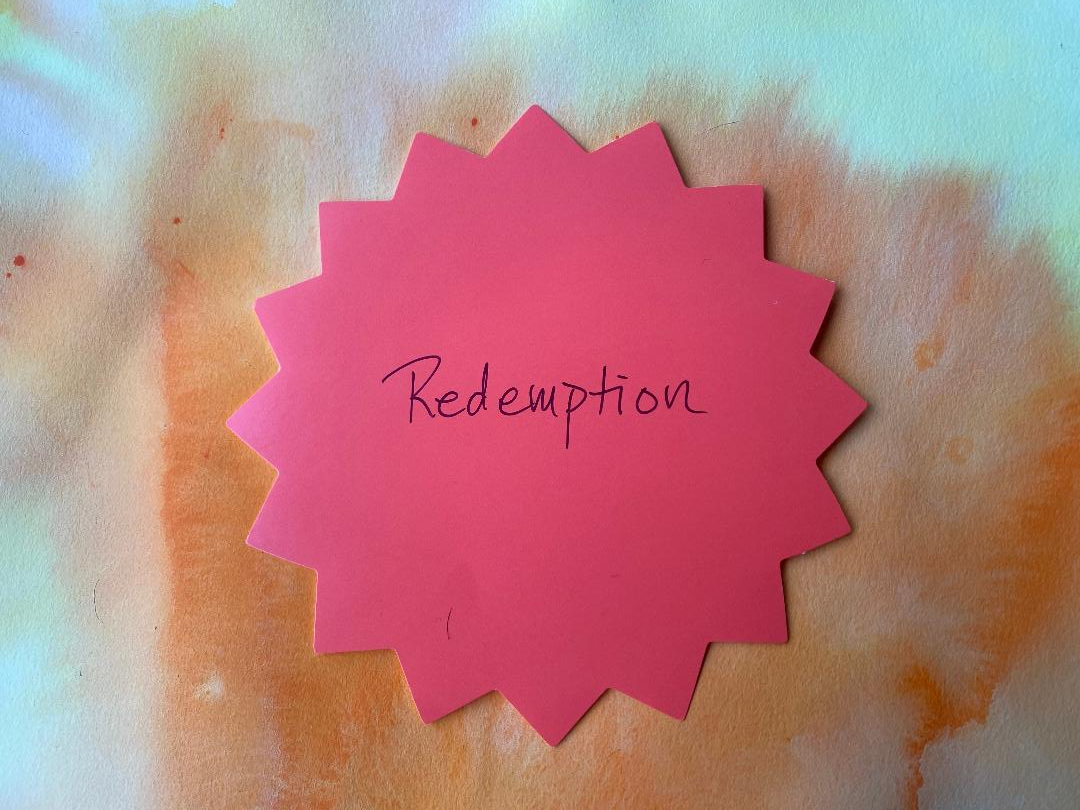
Every Epiphany at FCUCC we select “star words.” As the magi followed the star to Jesus, we follow our star words through the year.  This year, our congregation also is following a star word.  That word?  Redemption.

Many of us, including me, were disappointed with the word.  What about community?  Or justice?  Or love?  Redemption has so many negative connotations, especially from the conservative religious traditions from which many of us come.

As I’ve thought about it, though, redemption is growing on me.  To redeem something is to increase its value, to see that something with new eyes, to look at it again and find a deeper worth than it has known before.

Today, I want to talk with you about redeeming our nation…about increasing its value, about seeing it with new eyes.  I want to invite us to look at our nation again and search for a deeper worth than it has known before.

I want to invite you to work with me to save our nation.

What we saw on Wednesday–Epiphany– was startling.  A vicious mob forcing its way into the Capitol building, fighting Capitol police, killing one of them, invading the House chamber, forcing their way into representatives’ offices.  In addition to Officer Brian Sicknick, four other people were killed on Wednesday.

Yes, the rhetoric has been ratcheting up the last four years, yes, it’s been puzzling why the president hasn’t accepted the results of the  election. But the images we saw on Wednesday?  It wasn’t the kind of thing we ever thought we’d see in our country, the United States of America.  It’s the kind of thing we expect to see happening in other countries, not our own.

But it has happened.  And I hope those images of people scaling the walls of the Capitol building, breaking windows, marching down the halls screaming will remain imprinted in our minds…because what happened on Wednesday was our nation’s epiphany, and that epiphany was this:  as a people, as a nation, we must change.

When I say “we must change,” I’m not talking about changing our elected officials, though, in some cases, that might help.  I’m not even talking about changing policies, though that work is needed.

The change I’m talking about is in how we treat each other.  Most of the Old Testament prophets spoke to people who were losing or had lost their country.  The explanation the prophets give for these dire circumstances?  You didn’t care for the poor.  You neglected the least of these.  You cared more about your own wellbeing than about the wellbeing of others.

The same is true for us.  We, too, are losing our country because we, as a nation, aren’t caring for the poor and the least of these.  We’re thrilled the market is doing so well, but fail to think about people who will never have enough money to invest in the stock market.  As a nation, we’re focusing more on ourselves than others.

If we don’t change things now, we will lose our country.  Period.

How do we redeem our nation?  How do we increase its value?  We do it by going back to the basics, the four R’s.

First, we remember that rhetoric matters.  What we say creates the world we inhabit.  If we speak kindness and truth, the world becomes kinder and truer.  If we spew hatred and lies, those things take root and grow.

While the images we saw on Wednesday were startling, they really weren’t all that surprising.  For four years, little lies have snowballed into big lies because no one has stopped them.  Giving the president the benefit of the doubt soon led to enabling his unhealthy and unstable behavior.  At some point, the media stopped counting the mistruths spoken by the president and simply began to say, What the president said is not true.

When the first lie was given a pass, the other lies lined up, because they knew there would be nothing and no one to stop them.

Why for four years has congressional leadership abided the lies?  It’s no mystery.  The president’s lies got a pass from some leaders because they wanted power.  At any cost.

That’s the second R.  If we want to redeem our nation, we must rethink power.  In politics, power has become a zero sum game–either you have it, or you don’t.  What can we do for our side? is the main question…and often it turns into, What can I do for myself?

Psychologist Rollo May described five different kinds of power:  exploitative, manipulative, competitive, nutrient, and integrative.  In so-called normal times, our government tends to gravitate to competitive power, a constant struggle between the parties to move their agenda forward.  In the last four years–and especially in the last week–we have seen power used to manipulate and exploit.  We have seen power’s ability to destroy.

As May describes it, nutrient power is power for others.  We are employing nutrient power when we act others into wellbeing.  When both parties work together–as they did on the first CARES Act–for the good of all Americans, our elected officials are engaging in nutrient power.  Integrative power is shared power.  It’s when we all work together for the common good.

If we want to save our nation, we need to remember that rhetoric matters, we need to rethink power, and, the third R, we need to reconnect with the common good.  Remember that?  The common good.  Do our governmental policies benefit all of the populace?  Do the practices in our communities–even in our church…Do we consider the impact of those practices on the least of these?  As the prophets told our ancestors in faith, unless we reconnect with the common good, we will lose our country.

Remember that rhetoric matters.  Rethink power.  Reconnect with the common good.  If we mindfully engage in these three things, we’ll be taking a solid first step toward redeeming our country.

One last thing, though, is crucial.  If we are to have any hope of redeeming our country, we must, we must, we must reclaim kindness.  A lot of us are feeling anger, maybe even rage right now.  That is understandable, even commendable.  One person has prayed for the courage to “stay angry.”  If ever there was a moment to be enraged, this is it.

Once the anger has passed–or has been re-directed into action–I am convinced that the thing that is most needed, the thing (maybe the only thing) that will transform our nation is to reclaim kindness, to see every person–every person–as a human being…to see the flesh-and-blood human being in front of us, the person who is a son or daughter or mother or father or friend and grandparent…to understand that that person is a person, a beloved child of God.  And to treat them with fairness and dignity.  If we continue to villify the people with whom we don’t agree, if we dehumanize people we don’t understand or simply don’t like, if we don’t reclaim kindness as a daily practice, we will lose our country.

If we don’t reclaim kindness as a daily practice, we will lose our country.

I’m speaking today from the baptismal font.  We’ve just celebrated the baptism of Jesus and renewed our baptismal vows.  In Sunday’s sermon, I suggested that we don’t fully experience our baptisms until we live out our baptisms in the world.  

If ever there was a time to live as baptized people, it’s now.  If ever there was a time to follow Jesus, it’s now.  If ever there was a time to go forth, not as individuals, but as part of the whole community of Jesus’ followers, it’s now.  If ever there was a time to act the world into wellbeing, it’s now.

So, baptized people of God, will we remember the rhetoric matters?  Will we rethink power?  Will we reconnect with the common good?  Will we reclaim kindness?  

So, my baptized siblings, beloved children of God:  what will we do to redeem our nation?

In the name of our God, who creates us, redeems us, sustains us, and hopes for our wholeness. Amen.

Kimberleigh Buchanan (c)2021


Posted in Uncategorized | Leave a comment

“Me and White Supremacy, Day 1: My White Privilege…and Healthcare”

I’m on Day 1 of Layla Saad’s, Me and White Supremacy.  In response to Saad’s question, “What negative experiences has your white privilege protected you from throughout your life?” I named illness due to inattentive healthcare professionals or lack of health insurance.  In fact, healthcare providers often have been more vigilant than I have been when it comes to my health.

A case in point.  After wonky, but inconclusive mammograms and ultrasounds last summer, I was referred to a breast surgeon who specializes in caring for people at high-risk for breast cancer.  In our initial conversation, the doctor recommended an MRI, not expecting to find cancer, but just to see what might be there.  Thankfully, the MRI detected the cancer in my left breast at a very early stage.

My surgeon’s vigilance–after a long history of vigilance by health care professionals because of my family’s history of breast cancer–led to the early detection of this cancer, which meant I received treatment before the cancer had the opportunity to grow.  In December, the tumor was removed.  I underwent four weeks of radiation.  My mammogram in July detected no abnormalities.

As I reflected on my experience last Fall and Winter, I wondered if the experience would have been similar if I were Black.  Then I remembered a story I’d seen recently on PBS Newshour.  Here’s part of the transcript.

William Brangham:  For many years, Houston resident Lakeisha Parker was among the uninsured. She was a certified nursing assistant.

  • Lakeshia Parker:  I was proud of that work. I enjoyed doing it, because I love to be able to help people.  So, what I would do is go into people’s homes after their surgeries or illnesses, and assist them with getting back to life, daily activities of living, bathing, fixing them a small meal… 
  •  
  • William Brangham:  But Parker says the pay wasn’t great. She says the most she ever earned was about $13 an hour. And it never came with health insurance she could afford.
  •  
  • Lakeshia Parker:  I’m actually working in health care, and can’t afford to pay it. That’s not right.
  •  
  • William Brangham:  So, like many, Parker went for years without checkups or seeing a regular doctor. Too expensive, she said. But then she discovered a lump the size of a tangerine in her breast. It was malignant cancer.  Parker found a Houston clinic that would treat her on a sliding scale, based on her income. Only after the cancer diagnosis did she qualify for a special Medicaid program.  So, the tumor, along with 33 lymph nodes, were removed. While surgery was a success, it, along with the chemotherapy and radiation, left her unable to use one of her arms like before.
  •  
  • William Brangham:  Do you think, if you had had health insurance you would have found this sooner, you would have been going to the doctor sooner?
  •  
  • Lakeshia Parker:  If I would have had insurance for me at that time, health care that I would have been able to afford, I would have easily accepted it.  But, again, it comes the question of having somewhere to live, having something to eat, gas to get back and forth to work. So…
  •  
  • William Brangham:  Those were the choices you were wrestling with?
  •  
  • Lakeshia Parker:  Of course. You know, those are everyday life choices that a lot of people have to make based on their income.
  •  
  • William Brangham:  The weakness in her arm cost her her job. With no money, she lost her apartment.
  •  
  • Lakeshia Parker:  And you become homeless if you cannot pay rent.
  •  
  • William Brangham:  Parker is now homeless, unemployed, and at the time of our interview living in a shelter.
  •  
  • Lakeshia Parker:  We are still citizens.  We pay taxes.  It makes me feel that we don’t matter.

Update:  Lakeisha Parker has a new job at Amazon. It has benefits, and she will soon be moving into her own apartment.  https://www.pbs.org/newshour/show/is-u-s-health-care-the-best-or-least-effective-system-in-the-modern-world

************

Being diagnosed with cancer was scary…but when I read Lakeshia’s story?  I realize that my White privilege has insulated me from some of the really scary effects of serious diagnoses for many of my fellow citizens.  I see now that it was a luxury–a luxury–only to have to focus on my treatment.  I didn’t have to worry about a place to live.  I knew I would have food to eat and the medications I needed.  I knew we’d be able to pay the bills that came.  I had two people in the house to care for me.  A congregation of people willing to help out.  Enough sick and vacation days that I didn’t worry about losing income.  I knew I’d be able physically to do my job once treatment ended.  I was indeed lucky.  Well, maybe not so much lucky as privileged.  Yes.  Because of my White privilege, dealing with breast cancer was little more than a “blip” for me.  A humbling realization.

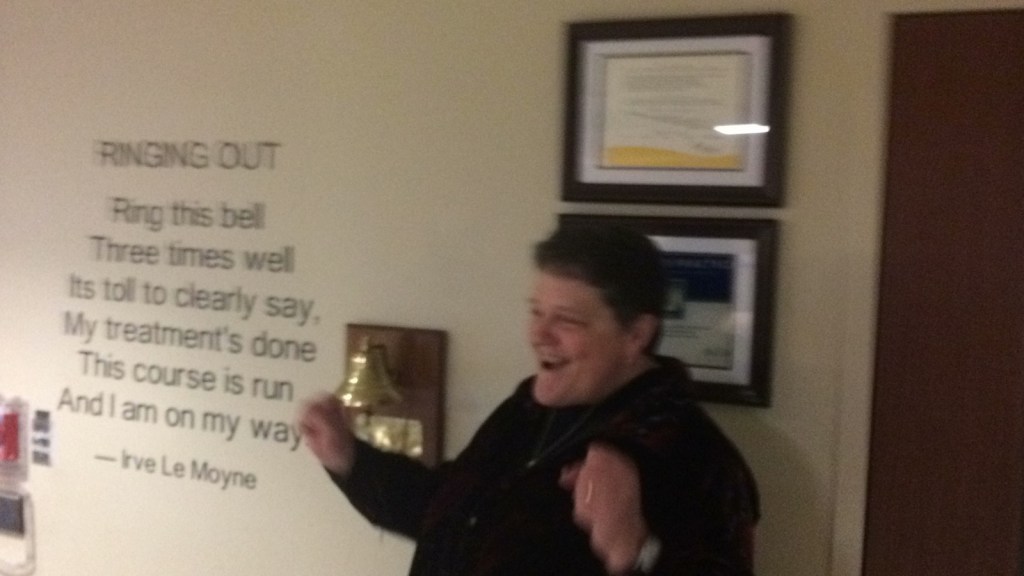
Ringing the bell after my last radiation treatment, 3/5/2020.
Posted in Uncategorized | Leave a comment

Sermon: Rebirthing the Church: Where Do We Go from Here? (8/30/2020) Genesis 32:

The French Broad River — Lynne Buchanan Photography

(river) A lot has happened in the last five months.  The pandemic continues to rage, with 5.7 million cases and 177,000 deaths in our country thus far.  George Floyd was killed.  Protests against our country’s original sin of racism have erupted.  Our own Asheville City Council passed a resolution on reparations to the Black community.  

In the midst of what’s been happening this summer, we’ve wrestled with a question:  What it will take to re-birth the church?  As we wrestle, Jacob will be a good guide for us.

Jacob–which some translate as “trickster”– tricked his twin brother Esau out of his birthright.  When Esau learned of the betrayal–after Jacob already had received the inheritance– he was enraged and pledged to kill his brother.  Jacob fled.

When Jacob arrives at the Jabbok River in today’s Scripture story, he’s at a crossroads. After his long sojourn, he’s returning home…with his wives, children, and possessions.  When the company arrives at the river, he sends everyone else across.  He stays on the near-side to prepare himself for seeing his brother again after their long separation.  

We, too, are at a crossroads.  It’s clear, after the pandemic and the call for a reckoning for racism, that who we’ve been as a church to this point, is past.  We know we have to cross the river, but, man.  It’s scary, isn’t it?  Can you imagine Jacob’s fear as he prepared to meet the brother who had threatened to kill him?  

Looking to the far side of this river we must cross…it’s daunting.  What is church going to look like after so many months of not meeting together?  And, while dismantling structural racism sounds like a great thing to add to our to-do list, it’s hard to imagine how to do the work.  Any action we might take seems so small.  

(Art gallery.)  Despite how daunting the work seems, we have in recent months begun taking tentative steps in the work of dismantling systemic racism outside our church’s walls…beginning within these glass walls of the Oak Street Gallery.  

Many signs during the protests after George Floyd’s death asked us to “Say their names.” Artists from our church and the Mountain Scribes calligrapher’s created artwork on paper bags to do just that.  This month’s exhibit continues the racial justice theme.    

On the one hand, it feels important that we are breaking out of our insular discussions of racial justice within our walls and are taking our advocacy work outside them.  On the other hand, putting ourselves and our artwork out in public is teaching those of us who hold white privilege to learn just how much we have to learn about dismantling systemic racism.

The initial plan for artwork on the paper bags in last month’s exhibit was to hang them in trees in front of the church.  Weathergrams are the idea of artist Lloyd J. Reynolds.  The intent is for the artwork to be transformed by exposure to the weather.  

When the weathergrams were hung in the trees with the names of Black people who had died in their encounters with law enforcement, the pointed question came.  How could we install a display that looked so much like lynching?  Realizing the pain and trauma we were causing by the display, we took it down immediately.

We’ve also gotten some hard questions from Black visitors to the YMI gallery.  Why weren’t Black leaders invited into the process of the exhibit?  Why are no Black artists represented in either of our exhibits?  

These stories aren’t easy to share.  It’s hard to admit when actions we mean for good, in truth, cause significant harm.  It’s hard to acknowledge that white privilege blinds us to the experiences of our fellow humans whose skin is brown or Black.  We’re good people!  We want to do what we can to heal the sin of racism!  But we keep making so many missteps.  

In conversation with Mandy Kjellstrom, director for both art projects, here’s what I’ve learned–when people who hold white privilege try to engage in the work of dismantling systemic racism, we’re going to make missteps.  In fact, the vast majority of our steps likely will be misses.

And yet?  Every misstep is an opportunity to learn.  Every misstep helps us to see things from someone else’s perspective.  Every misstep actually is a step in the right direction of transforming ourselves into anti-racists…if we are able to learn from those missteps.

But the struggle is hard.  The wrestling continues.  Jacob ultimately prevails in his struggle.  He limps from the encounter, but he leaves it transformed and ready to encounter his estranged brother.

File:French broad river 9228.JPG - Wikimedia Commons

(river)  In the middle of the pandemic, engaging more deeply in the work of racial justice, I suspect we’re still struggling on this near-side of the river.  We’re still wrestling.

In Nikos Kazantzakis’ memoir, Zorba the Greek, he tells of the time he discovers “a cocoon in the bark of a tree, just as the butterfly is making a hole…and preparing to come out.”  Eager to see the butterfly and growing impatient with its slow emergence, Nikos breathes on the cocoon, warming it.  In no time, the butterfly begins to emerge!

But something’s wrong.  The butterfly moves slowly, its wings “folded back and crumpled.”  Belatedly, Nikos realizes that “it needed to be hatched out patiently and the unfolding of the wings should be a gradual process in the sun.”  Pierced by guilt, Nikos confesses that “My breath had forced the butterfly to appear, all crumpled, before its time.  It struggled desperately, and, a few seconds later, died in the palm of my hand.” 

We are in the struggle.  We continue to wrestle–with ourselves, with God, with our country’s sin of racism.  Jacob’s example for us at this point in our journey is to stay with it, as he did.  Our call is to wrestle as long as we need to.  If we stop the wrestling too early, if we abort the process too soon, if we try to rush it, we will not attain the deep transformation we need, the deep transformation our church needs to do the important work of creating a just and loving world for everyone, especially our brothers and sisters with Black and brown skin.

It’d be nice on the last day of this series on “Rebirthing the Church” to show you a picture of a precious newborn.  It’d be nice to know that the labor is finished, the new has emerged, and it’s time to get on with naming and raising this baby.

But, as the sermon series ends, we know, the labor continues.  We’re still wrestling.  We’re still struggling.  But if we allow whatever is being created to emerge in its own time, if we continue to wrestle–even if it takes all night–we too will emerge from our cocoon, wings fully formed and beautiful, ready to take flight.

May it be so.

In the name of our God, who creates us, redeems us, sustains us, and hopes for our wholeness.  Amen.

Kimberleigh Buchanan (c)2020

Posted in Uncategorized | 1 Comment