Sermon: True Wisdom (5/22/16)

At last week’s Town Hall Meeting, we heard from the Growth Planning Team about options for replacing the Next Generation House.  We’re only in the early stages of planning; there’s no telling where the process will lead.  What did become clear as we talked together, is that we don’t want to proceed willy nilly.  If this project—whatever it entails—is to succeed, if it is to help us fulfill our mission as a church, every decision we make needs to be wise.

So, how do we choose wisely?  Today’s passage from Proverbs introduces us to wisdom.  She’s a woman. J  In personifying wisdom, the writer invites us to see her, not as an object to be obtained, but as someone with whom we come into relationship.

How’s your relationship with wisdom these days?  Is she helping you grow, or is she giving you a run for your money?  Today’s verses from Proverbs suggest at least 3 things to do to help us deepen our relationship with wisdom.  The first two can be found in verses 1-4.

2 On the heights, beside the way, at the crossroads Wisdom takes her stand;

3 beside the gates in front of the town, at the entrance of the portals she cries out:

4 ‘To you, O people, I call, and my cry is to all that live.


Wisdom is everywhere!  All we have to do is pay attention.  That’s the first thing that deepens wisdom—paying attention.  Now, there’s a lost art.  Each day we are bombarded by tens of thousands of images and ads and sounds and people and words.  Frantic to get things done– to read the blogs, check in on Facebook, answer email…even those of us who want to pay closer attention to things find little time to do it.

Or that’s what we tell ourselves.  That’s what the world tells us.  More experiences, more online articles, more hours on Facebook–more is always better, right?  Here’s the thing about more….more doesn’t make us choose.  If more is the goal, you take everything in.  There is little or no discernment about which choices might be better.

The second thing that helps deepen wisdom is to be discerning choosers.  Did you notice in the verses we just heard, that wisdom is at the crossroads, at the gates of the city, at the entrance to the portals?  In short, wisdom resides at transition points, at times of decision.  And isn’t that when we most need to call on wisdom, when making a decision?  Which school to attend, what to eat, whom to marry, which job to take…Wisdom helps us choose, well, wisely.

As a community, we have some decisions coming our way….which I find very exciting.  Because any time a community makes a decision—no matter which way the decision goes–it grows.  The process of discerning what to do helps us grow deeper as a community.

Two ways of tapping into wisdom:  Pay attention and engage in careful discernment…

like we did a few years ago when the need to expand and update our facility became urgent.

The first wise thing we did was appoint a Growth Task Force to help us figure out what to do.  The first thing the Task Force did was assess what wasn’t working with the current space.  By “wasn’t working,” I mean that spaces—worship space, educational space, fellowship space, stalls in the women’s bathroom space—all the spaces had become so crowded that it made people uncomfortable.  Some guests came once or twice, then didn’t come back.  A few people actually named the building as the reason they didn’t return.

Once we decided to build, we had to decide where to build:  here on this property or somewhere else?  Ultimately, we decided that our property is an essential part of who we are.  We decided to stay.  If we keep growing, then we’ll seed another church at another location.

Of all the decisions we made during that Growth Task Force Process, I think the decision about staying was the most important …because it helped us clarify who we are as a community.  (1)  We’re not all showy with a building you can, like, see from the road.  And we’re just fine with that.  (2)  Also, we’re a church whose faith is intimately connected to the natural world.  The picnic tables out front are really helping us connect with that part of our identity.   (3) We also discovered that we’re a destination church.  When we did a map of where our members live, we realized that the church is centrally located to our members.  Shifting locations could actually lose us members.

The decision to stay on this property was a good one, but it also put limits on what we could do.  Our property is just under 5 acres, but not all of it is buildable.  The only way to determine whether we could build was to engage an architect.  Sound familiar?  We hired Architect Randy Young to tell us whether or not we could build.  His answer?  Yes!

We were so excited!  We shared the findings with the congregation.  Then, because the cost for building a new sanctuary was steep, we did a feasibility study.  That’s when regular pledgers in the church are called and asked if they’d be willing to support the venture.

In May of 2008, I got a call.  “Kim, there’s just no way to do it.  We don’t have the support.”  After we made the announcement to the congregation, someone came to me privately and asked if I was going to leave.  When I asked why, the person said, “Because we can’t build.”  I told them then—and I’m telling you now:  I wasn’t tied to any specific outcome in that process.  I wasn’t nearly as interested in what kind of structure we would build as I was in what kind of community we were becoming.  After the process we’d just been through, we’d grown by leaps and bounds as a community.  I wasn’t disappointed that we weren’t going to build a new sanctuary.  In fact, I was ecstatic about how much we had grown as a community.

Later that summer, Lois Dischinger’s deacon families were gathered right over there for a communal meal.  During that lunch, one of the attendees began paying attention to this room.  Drawing on both his theater background and his experiences as the son of a builder, he began doodling on a napkin.  The design Ric came up with is pretty much what you see here.

I’ve had many joyful experiences here at Pilgrimage, but Divine Redesign was one of the most joyful.  Because the whole community pulled together, talked together, dreamed together.  And step after step, because we payed attention and discerned carefully, big fat gifts just kept appearing…like the stained glass windows… and the communion table donated by the company Tony Mills worked for at the time…free skilled labor from some church members.

And here’s the MOST joyful part of Divine Redesign—We set our new course in the Fall of 2008.  In October of 2008, the bottom fell out of the market.  Had we tried to commit to a big build, I’m not sure we’d still be here.  Thankfully, we are still here.  And thriving.  Why?  Because we paid attention, carefully discerned, and made a long series of wise decisions.

We’re doing the same thing now.  Thankfully, the Growth Task Force’s work a decade ago has made our work now easier.  We don’t have to decide whether to stay or go.  That decision’s been made.  We know we aren’t into building cathedrals.  (I also thought we weren’t a stained glass church, but what do I know?  J).  We know we want to move forward.  We are committed to being good stewards of our resources.  We know we want to create a space that is truly hospitable.  But ostentatious we are not.

We’re practical people, people deeply committed to our mission of caring for each other and for the world.  Having a home base, a place to help us engage with the holy and the beautiful is important, but we also have a lot of ministry to do.  If we’re too tied to bricks and mortar, the mission will get lost.  Our task the next few months is to find a workable balance between creating hospitable space and living our commitment to mission.

Speaking of our mission….Here’s the third way today’s passage from Proverbs invites us to deepen our relationship with Wisdom.  After being introduced in the first few verses of chapter 8, Wisdom recites her resume.  I’ve been here since the beginning of creation, she says.  “When God established the heavens, I was there.  When God drew a circle on the face of the deep, made firm the skies above, established the fountains of the deep…when God marked out the foundations of the earth, I was there…daily, I was God’s delight,” says Wisdom, “rejoicing before God always, rejoicing in the inhabited world and delighting in the human race.”

Why might Wisdom rejoice in creation?  Perhaps it’s because, as poet David Whyte says:  “All the birds and creatures of the world are unutterably themselves.”

The greatest sign of wisdom is authenticity—being exactly what or who one is created to be.  Whyte acknowledges that human beings are the only thing in creation that can choose to be something other than we are created to be.  But other created things?  No struggle at all.  “The cloud is the cloud, the mountain is the mountain, the tree is the tree, the hawk is the hawk. The kingfisher doesn’t wake up one day and say, “You know, God, I’m absolutely fed up with this whole kingfisher trip.  Can I have a day as a crow?”  No.  The kingfisher is just the kingfisher.  Whyte suggests it’s the natural world’s utter authenticity that human beings find so healing.  Sitting outside at the picnic tables, going for a hike—When we do those things, we’re immersing ourselves in authenticity…which calls us to our own authenticity.  And being who we are created to be, being our authentic selves is what heals us.

Because we have this capacity for being something other than ourselves, we have to think about, pay attention to, and practice being who we are.  The same will be true of this growth planning process.  We don’t have to be frightened of making the wrong decision here.  All we have to do is remember who we are and what we’re here for.  As the body of Christ, we aren’t here simply to lay bricks and mortar.  We’re here to be Christ’s body in the world, to be his hands and feet.  In her new book, Becoming Wise, Krista Tippett says, “You have it in you to become wise.”  We have it in us as a community to become wise.

…all we have to do is keep paying attention….keep carefully discerning…and continue living out our mission of being who God creates us to be.  If we do those things, we are going to be just fine…and we’ll be able to trust whatever decisions we make in the next few months.

In the name of our God, who creates us, redeems us, sustains us, and hopes for our wholeness.  Amen.

Kimberleigh Buchanan  © 2016
Posted in Uncategorized | Leave a comment

Sermon: Acting the World into Wellbeing–God’s Spirit Leads Us (5/15/16)

After 10:00 worship today, we’ll gather for a Town Hall Meeting to hear from the Growth Planning Team.  They’ve been hard at work researching options for what we might do when the lease is up on the modular unit that now houses the Next Generation House.  This rental unit has served us well for several years, but it always was meant to be temporary.  As the end of its life approaches, the question arises:  What next?

I do hope you’ll stay for the conversation.  As a congregation, we make decisions together, as a community.  The way we come to those decisions is by talking with each other, listening to each other, and discerning together in what direction God’s Spirit might be leading us.  So, if you’re able to stay, please do.  We want—and need—your input!

So…How do we “discern together in what direction God’s Spirit might be leading us?”  We could, of course, sign up for VBS.  This year’s theme?  “God’s Spirit Leads Us.”  Or we could wait until all the children go through VBS then interview them afterward.  We could even do both those things—sign up for VBS and interview the children afterward.

Or we could look more closely at today’s Scripture text.  The story thus far…  Jesus is born, he grows up, he becomes a great teacher.  His teaching is so good that it threatens the religious authorities, who plot to get rid of him.  The plot succeeds.  Jesus is crucified.

Three days later, Jesus begins appearing to the disciples.  For 40 days, the risen Jesus hangs out with his disciples, breaks bread with them, reminds them of everything he’s taught them.  On the 40th day, Jesus commissions his followers to witness to all he’s done “in Jerusalem, in all Judea, in Samaria, and to the ends of the earth,” then leaves the scene for good.

Today’s events take place ten days after Jesus’ ascension.  After electing someone to replace Judas, the 12 are gathered together in a house.  Suddenly, the house fills with the sound of a violent wind.  What looks like tongues of fire appears and rests on their heads.  All of them are filled with the Holy Spirit and begin to speak in other languages as the Spirit leads them.

The energy of what’s happening in the house is so intense, it spills out into the area surrounding the house until hundreds of people are involved.  All are amazed to be able to understand what the Galileans are saying, because they speak different languages.

Well, not everyone is amazed.  Some stand around, mocking the proceedings, accusing those caught up in the Spirit of being drunk.  I wonder why they did that.  Why mock those who were having this amazing, positive experience of God’s Spirit?

I wonder if the naysayers mocked the others because, even though they were there like everyone else, they were not having an amazing, positive experience of God’s Spirit.  To them, the Galileans spoke Galilean, the Parthians Parthian, the Egyptians Egyptian…  Maybe they mocked the others because they were jealous of the experience they were having.

Now we’re to the deeper question–Why didn’t the naysayers experience the Spirit like everyone else?  They were there witnessing the same events.  Hundreds of people were having a profoundly spiritual experience.  Why didn’t the mockers also receive the gift of the Spirit?

What does it take for any of us to receive the gift of the Spirit?  I discovered a video this week that, I think, offers answers to that question.  (Show video of Greek Grandmother welcoming refugees.   https://www.youtube.com/watch?v=Hb_Hdjy4CVw)


“I talk, we laugh.  Even though we can’t understand each other,” Panagiota says.  They don’t understand each other’s languages, but there is deep communication taking place.  What do you think contributes to that deep communication?  What helps Panagiota and Baraa and his children connect?  (Responses)

The first thing that strikes me is that they’re open to each other.  Panagiota is open to the refugees; they are open to her.  I can imagine someone else in Panagiota’s position saying, “Ach.  More refugees.  Will they never stop coming?”  And I can imagine refugees fleeing civil war and traumatizing experiences back home being leery of citizens of the country they’re passing through.  But all involved choose to be open to each other.

And not just open, but open at a deep level.  That’s another thing that helps Panagiota and the refugees connect—they meet each other at a place of deep personal need…the refugees need shelter, food, showers, a friendly face.  Panagiota needs companionship.  She says, “My life changed because I have company in the house.  There is nothing else.  I have company in the house.”

The past couple of months, we’ve been looking at spiritual longing, those places of deep need in our own souls.  We’ve looked at longings for safety, God, reconciliation, resurrection, certainty, forgiveness, comfort, inclusion, and peace.  The list isn’t exhaustive, but it has given us a good taste of how places of incompleteness within us, places of yearning, can help us connect with God.

Our summer theme of “acting the world into wellbeing” is the natural next step after this long consideration of our own spiritual longings.  It’s kind of like in the Scripture story when the intensity of the people’s experience of the Spirit spills over into the area surrounding the house.  We’ve been focusing the past few months on our own spiritual longings.  We’ve found solace for some of those longings—mostly in community with our friends here at Pilgrimage.  I’m thinking, in particular, of the visit from our friends in the Ahmadiyya Muslim community, the experience during Lent with the mosaic cross, and the service on the Sunday after Joshua Derby died, when we offered our support to Josh’s mom, Janet Derby.  We hear every week just how much this community means to us, just how real God’s Spirit becomes for us in this place.

I saw a church sign recently that said:  “Our Mission:  Caring for Each Other.”  It’s good for church communities to care for each other—I think we do that well here at Pilgrimage.  But if that’s all a church community does, the community won’t last long.  The point of our caring for each other is to become stronger so that we can go out from this place to care for the world.  If we neglect taking our intensely positive experiences of God’s Spirit in this place outside this place, we are missing the point.

Again, I think here at Pilgrimage we do have a strong sense of calling not only to minister to each other, but to minister to others outside this place.  I’m not trying to convince you of something we already believe and do.  I am excited about some of the opportunities this summer for reflecting more deeply on how we might act the world into wellbeing, but I know I don’t need to convince you of the need to do it.

What I am inviting us to think about is our dual mission of caring for each other and caring for the world in the context of figuring out the next step for the Next Generation House.  How might we use our space to help us care for each other and for the world?  I think it’s significant that God’s Spirit came to the disciples when they had gathered in a place, a structure, a house.  Perhaps they were even worshiping.  It was through their togetherness in that space that the Spirit chose to make its entrance… and once the Spirit’s presence and energy and joy and vigor took hold, the experience was so intense, it couldn’t do anything else except spill over into the community beyond the house.

Can you see that happening here?  Can you see the love we experience in this place, the intense, energizing experiences of God’s Spirit moving among us spilling over into the larger community around us?  What might that spilling over look like?  What might it accomplish?  How much more of the world might we act into wellbeing if we follow Panagiota’s example of staying open, even in the deep places, tapping into our own spiritual longings, and finding there a source for helping to meet the longings of others?

Last week, I asked how we as individuals might act the world into wellbeing.  The Pentecost story invites us to consider how we as a community will act the world into wellbeing.  How will we tune into God’s Spirit and allow it to lead us?  How will we create spaces outside this space for people to meet God?  And—perhaps the most important question—When do we begin?

In the name of our God, who creates us, redeems us, sustains us, and hopes for our wholeness.  Amen.

Kimberleigh Buchanan  © 2016


Posted in Uncategorized | Leave a comment

Mother’s Day Prayer

Holy One,


It’s Mother’s Day.  Chances are good that we’ve got some feelings about that…


Some of us feel gratitude:  for excellent mothering we have received– from birth mothers, adoptive mothers, grandmothers, surrogate mothers, and as one of our children said, “twin mommies.”   Bless all who feel grateful today, God.  GM/HP


Some of us feel deep joy:  the new mothers, those who have been given another year with an aging mom.  And though they’re the tiniest bit annoying, what with all that picture-showing, the grandmothers.  J  Some of us feel joy for technological advances like in vitro fertilization and for processes like adoption and foster parenting.  Some of the mothers among us feel great joy because we love our children so much and are so very proud of them.  Bless all who feel joy today, God.  GM/HP


Some of us feel guilt today:  for not being the best mother we could be… for not being the best daughter or son we could be…for something we can’t even name…  For all who feel guilty today, God, ease the weight of their guilt.  Surround them with your grace.  Remind them they are loved.   GM/HP


Some of us are angry today:  because we didn’t get the mothering we needed… because our children don’t always appreciate what we do for them… because we feel called to be mothers, but our bodies or circumstances have prevented that from happening…  For those who are angry, God, help us learn from our anger, to understand the hurt that causes it, and to move forward in strength and love and insight.  GM/HP


Some of us feel sad today….because we never had a mother…or did have a mother who couldn’t seem to love us…or do have a mother whose dementia is taking her from us one memory at a time…  Some of us are sad because our mothers have died, or are alive but have never felt their full worth…  Some of the mothers among us are sad because they have lost their children in one way or another.  And some women who aren’t able to have children– having worked through their anger– now are feeling sad.  Holy One, please comfort all who come to this day with sadness.  GM/HP


(Whisper)  Some of the mothers among us are so exhausted by their mothering they have now fallen asleep.  Give them pleasant dreams, God.   GM/HP


Some of us—women who have NOT been called to be mothers—are wondering just why this prayer has gone on so long.  What’s the big deal?  Bless us, too, God.  Affirm our decision not to have children.  Bless all the ways we have given and are giving the best of ourselves to others by means other than parenting.  GM/HP


That last group is right, God—this prayer has gone on a long time.  And, long as it is, it likely still hasn’t given voice to all the feelings present in the room today.  In the quiet, Holy One, surround us with your love and care as we share with you all our feelings–all our joys, all our concerns, all of ourselves with you.  In silence, hear us.  (Silence)  GM/HP


Holy One, some of us call you Father;  some of us call you Mother;  and some of us don’t call you anything because we’re so confused about you most of the time….Thank you for answering our prayers– no matter where we are on our theological journeys.  J  For all we don’t know, this we do know:  Jesus was our brother.  We join our hearts and voices together as we pray the prayer he taught us…


Posted in Uncategorized | Leave a comment

Sermon: Longing for Peace (5/1/16)

Do you long for peace?  May is a great time to ask that question, isn’t it?  Graduations, school endings, preparations for summer vacation, getting back into a routine of yard work, all that extra daylight pointing out all the house-cleaning you didn’t do during winter… And traffic.  Always, traffic.  Yeah, May is a good time to talk about our longing for peace.

But peace in our schedules or on I-75 or 400, that’s only surface peace, isn’t it?  What about the deeper places longing for peace?  Places of grief or internal conflict or indecision or doubt?  Places of relational conflict or stress or distress?  Places in our communities, in our country, throughout the world that seem always to be on the brink of chaos?

We are a peace-seeking people–that’s why we sing every week “Let There Be Peace on Earth and let it begin with me…”  But how do we do it?  How does peace begin with each of us?  What might we do to create peace on earth?

Today’s Gospel lesson comes from Jesus’ last words to his disciples before his arrest.  He’s gathered with the disciples for the Passover meal and shares with them his “last thoughts” before leaving them.  It’s pretty long–kind of like the professor who, on the last day of class, tries to cram in the second half of the syllabus she hasn’t gotten to yet.  This long speech of Jesus’ is sometimes called “The Farewell Discourse.”  It’s well-named.

Key themes here at the beginning of the speech are love and peace.  “If you love me, you will keep my commandments,” Jesus says.  Then he promises them the gift of the Holy Spirit, who will remind them of all he has said, all he’s saying to them in this long after-dinner discourse.  Then Jesus promises them the gift of peace.  “Peace I leave with you; my peace I give to you…Do not let your hearts be troubled, and do not let them be afraid.”

When I first read this passage, I thought it contained two different themes–love and peace.  As I contemplated which to focus on in the sermon, love or peace, I realized that the two walk hand in hand–Peace comes from loving; loving from peace.  If we love Jesus, we’ll keep his commandments.  And what were those commandments?  To love God with all your heart, mind, soul, and strength and your neighbor as yourself.  The best way to express love to God is to live love toward others, yes, to act them into well-being.

As I reflected on how I might explain the relationship between peace and love to you all–and being only half-successful in the attempt–this week’s copy of the etidings appeared in my inbox for proofing.

And there it was!  The artwork for the back of this year’s VBS t-shirt, designed by Isaac Martin.  When I saw Isaac’s depiction of Peace and Love sitting together at a campfire, I realized I had been making things way too complicated.  If the close connection between peace and love is simply a given–as it is for Isaac and for most children–what’s the point of parsing it, explaining it, footnoting it?  Just bring them both to the warmth of the campfire and enjoy.

Every Advent on Peace Sunday, we hear the words of the prophet Isaiah as he tries to help the people imagine a more peaceful future.  He says:  The wolf shall live with the lamb and the leopard shall lie down with the kid, the calf and the lion and the fatling together, and a little child shall lead them.

“A child shall lead them.”  There are many things we adults need to share with children.  Guiding children is one of our main jobs as adults, especially as adults who are part of a community of faith.  But sometimes, what we most need is to listen and to allow ourselves to be led by the children in our lives.

So….we have peace cranes!

Do you know the story of peace cranes?  The story of these particular peace cranes is that they were created at a Worship Team crane-making party.  I’m sure there are many stories to tell from the party…but those will have to wait for another time.  🙂

Here’s the story of how the peace crane movement got started.  August 6, 1945, the U.S. dropped an atomic bomb on Hiroshima, Japan.  About a mile from ground zero, a two year old girl named Sadako Sasaki lived with her family.  The initial blast sent little Sadako flying through a window.  Her mother ran after her daughter, fearing the worst.  As it happened, Sadako wasn’t even injured.

Along with their friends and fellow country people, Sadako and her family began finding their “new normal” after the bombing.  As we know now, the effects of radiation aren’t only lethal initially; they’re also devastating for those who survive the initial blast.

At the end of 1954, when she was 12, Sadako developed swelling on her neck and behind her ears.  Purple lesions began appearing on her legs.  In February 1955, Sadako was diagnosed with leukemia–at the time called “atom-bomb disease”–and admitted to the hospital.

Understandably, Sadako was frightened.  She did not want to die.  Five months into her hospitalization, 1000 peace cranes arrived at the hospital.  Following a legend from Japanese folklore that one’s wish will be granted after folding 1000 peace cranes, a group of high school students had created the cranes for children at the hospital.  From that point, Sadako began folding cranes.  With each crane, she prayed that she would be cured and not die.

Sadly, Sadako’s prayer for healing was not answered in the way she’d hoped.  She died October 25, 1955.  Feeling sad and helpless at the loss of their friend, Sadako’s sixth grade classmates at Bamboo School sought a way to honor her.  They decided to commission a statue.  When word of the plan got out, school children from all over the country collected money.  The result of their effort is a sculpture of Sadako releasing a crane at the Hiroshima Peace Park.  It has become a tradition for children to place peace cranes at Sadako’s statue.

In 2012, the United Nations took the tradition a step further.  The UN’s International Peace Day team (a reminder that International Peace Day is September 21st each year) contacted Sue DiCicco, a former Disney animator and illustrator of children’s books.  Through her organization, Armed with the Arts, Sue seeks to use the arts to “guide the world’s youth towards a conversation about peace, community, harmony, and connectedness.”

When the UN Peace Day team asked Sue to create a project for children for International Peace Day, the Peace Crane Project was born.  On the Armed with the Arts website, Sue says this about the Project.

“Since launching the Peace Crane Project in late 2012, my goal to arm our children with the skills to express themselves creatively, and connect them to one another through the arts has been met with astounding enthusiasm and support around the world. The United Nations Peace Day team has been incredibly generous in their support and encouragement.  Rubia Braun, a friend and fellow creative, has been instrumental as well, producing a series of global videos to capture the essence of the Project.  But, at its core, are….the teachers, parents, and community leaders that have joined in, one by one…and are making the Project their own and through it, are building  a more harmonious world of tomorrow.

“To date, nearly one million children, from 154 countries, have joined in.  Our participants engage and communicate with one another every day of the year, often building on the network I have created, and bringing a new level of compassion, appreciation, and understanding to their communities.”

This next part, I’ve shared with Miss Janet.

“In addition to overseeing the Project this year,” Sue writes, “I’m exploring the possibility of installing a series of large scale exhibits around the world, each featuring one thousand origami cranes in flight.  Every child participating in the Peace Crane Project will be invited to write a poem about peace, fold it into an origami crane, then send it to me for inclusion in this special art installation.  I look forward to developing this celebration of our children, and our universal goal for peace and understanding in our homes, communities, countries, and planet.”   (www.armedwiththearts.org)

As we begin exploring our summer theme of acting the world into wellbeing, the Peace Crane Project is a great place to start.  I’m guessing it might take a while to create 1000 origami cranes.  But it’ll take as long as it takes, right?  And we’re going to invite the whole community to participate in crane creation.  (I’m already thinking of starting a group for women of a certain age:  “Crones for Cranes.”)  Who knows what might happen if we use our time of folding cranes to pray for peace in the world?  (At the rate some of us fold, that’s going to be a LOT of prayer time!)  If we pray for peace….and share those prayers with people around the world…I don’t know.  It might just become a reality.

I want to close by showing a video created by the Peace Crane Project–it’s a global song, that is, a single song sung by people (mostly children) around the globe.

https://www.youtube.com/watch?v=Rt7pjk09S4w

In the name of our God, who creates us, redeems us, sustains us, and hopes for our wholeness.  Amen.

Kimberleigh Buchanan  ©  2016

Posted in Uncategorized | Leave a comment

Song: Charleston (4/28/16)

Gun violence.  Columbine frightened me.  Sandy Hook bewildered me.  Charleston woke me up.

Wednesday Bible study.  Nine people killed, several of them ministers.  The setting of the Emmanuel AME church shooting June 17, 2015, brought the devastation of gun violence home to me.  When I read the news on my phone the morning of June 18th, I knew that simply scrolling past news articles about mass shootings was no longer an option for me–either as a pastor or as a person.

As I tried to make sense of what happened in Charleston and the catastrophic rise in death and injury due to gun violence, a song emerged.

The more I sang the song and listened to the final chorus–“We can make all this killing end by living out our humanity….”–I began to wonder what that might look like.  After the shooting in San Bernardino, that wondering led to planning a Prayer Vigil to End Gun Violence with other interfaith spiritual leaders in Cobb County.

I hope you will join us this Sunday, May 1, 2:30 p.m., on the Marietta Square.  Our time of prayer and song will begin with lament then will move toward hope, people across our community, across faith traditions working together to act our corner of the world into wellbeing.


Posted in Uncategorized | Leave a comment

Song: Who Built This House? (4/25/16)

Saturday’s clash between white supremacist and Black Lives Matter folks was a vivid reminder–again–of just how much work remains to be done in race relations.

I have come to recognize that part of my work in race relations is coming to terms with my own white privilege.  The work is not easy.  At all.

In this song, I wrestle with what it means to be descended from slave owners….

Posted in Uncategorized | Leave a comment

Song: The Whale and Jonah (4/25/16_

Posted in Uncategorized | Leave a comment

Sermon: Longing for Inclusion (4/24/16)

Last week, we left Peter in Joppa. He’d gone there at the behest of distraught friends of a woman named Tabitha, who had died. Still in Joppa after raising Tabitha from the dead, Peter gets hungry. As the meal is being prepared, he goes up to the roof to pray. He falls into a trance and has a vision.
Before I tell you about the vision, it’ll help to know this. In the early days after Jesus’ death, many people assumed that the Jesus movement was a Jewish thing. Jesus had been a Jew, after all. He’d used language that was familiar to Jews, he taught in synagogues, all the disciples were Jewish… When he preached, it was the Jewish authorities he ticked off…
To that point, the Jesus movement had been a Jewish movement. And if you read much of the Jewish law (that’s the first five books of the Bible, the Torah), you’ll see that a key part of Judaism was setting clear boundaries around who was in the community and who wasn’t. No intermarrying, no intermingling. No eating certain foods…

In the verses just before Peter’s vision, we learn that a messenger appears to a man named Cornelius at his home in Caesarea. He’s a centurion. He and his family are all God-fearing, but they’re not Jewish. They’re Gentiles. So, the messenger tells Cornelius to send some people to Joppa to find Peter and bring him back to Caesarea. Cornelius appoints some folks and they begin their journey to Joppa.

As the entourage sets out, Peter has his vision. In it, the heavens open and a sheet containing “all kinds of four-footed animals, as well as reptiles and birds” descends. A voice tells him: “Get up, Peter. Kill and eat.” “Surely not, Lord!” Peter replies. “I have never eaten anything impure or unclean.” Peter is referring to those Jewish laws about determining who’s in the community and who’s not. Observing the dietary laws proscribed in the Torah was a key way of demonstrating one’s Jewishness.
In response to Peter’s declaration, the voice says, “Do not call anything impure that God has made clean.” Then–of course….It’s Peter, after all–the vision happens two more times.

As he’s mulling over the meaning of the vision, the men from Caesarea arrive. The Spirit says to Peter: ‘Simon, three men are looking for you. Get up and go downstairs. Do not hesitate to go with them, for I have sent them.” Peter goes.

When they arrive at Cornelius’ house in Caesarea, they find a crowd has gathered. Here’s what Peter tells them. “You are well aware that it is against our law for a Jew to associate with Gentiles or visit them. But God has shown me that I should not call anyone impure or unclean.” Peter has experienced deep conversion.

Then he says, “I now realize how true it is that God does not show favoritism but accepts those from every nation who fear him and do what is right.” He goes on for a bit, then the Holy Spirit shows up. We’re told that “the circumcised believers–that is, the Jews–were astonished that the gift of the Holy Spirit had been poured out even on Gentiles.

“Then Peter said, ‘Surely no one can stand in the way of their being baptized with water. They have received the Holy Spirit just as we have.” The new believers were baptized.
This was huge. Just before the risen Jesus left the scene for good, he commissioned his followers. He told them: “And you will be my witnesses in Jerusalem, and in all Judea and Samaria, and to the ends of the earth.” How were they going to share the good news “to the ends of the earth” if they were only going to talk to Jews? Somebody’s mind was going to have to change if the movement was going to get off the ground. And Peter was the obvious choice. So what if it took him three times to get the message? Sometimes conversion takes a while.

We’re all about inclusion here at Pilgrimage. It’s on our sign out by the road– “Jesus didn’t reject people, neither do we.” It’s on all our literature. It’s on the website. It’s in our hymns. It’s on our lips constantly: “We welcome everyone.” I know we take our ministry of extravagant hospitality very seriously.

But…

Just because we decide in our minds we want to and plan to welcome everyone doesn’t mean it’s always easy or comfortable.

A case in point: Roller girls. When Trudy Stoddert first started attending a couple of years ago, I asked her what had brought her to Pilgrimage. She said, “I’m a member of Roller Derby. There are many LGBTQ folks who play, good friends of mine. I don’t want to take my kids to a church where they’ll be told being gay is wrong.”
Then Trudy quietly began planting seeds about reaching out to the Roller Derby community. I confess the idea was new to me; I wasn’t sure how to go about it. But Trudy, with gentle persistence, kept mentioning the idea. (For me, it took many more times than 3!)
Then she came up with a plan–a detailed plan–about how to pull off a screening of “In the Turn” at Pilgrimage. The film tells the story of a 10 year old trans girl named Crystal, who is sponsored by an LGBTQ Roller Derby team to attend Junior Roller Derby camp. Council discussed it and approved it. From there, the project picked up steam. Trudy partnered with the ONA Team, which highlighted both raising awareness for Pilgrimage folks and reaching out to the LGBTQ community. She partnered with Missions in suggesting that all proceeds go to Lost n Found. She partnered with youth and their families in providing and selling concessions.

Now, I’m not going to tell you that every single moment of the film was comfortable for me. I think I might have learned a new word or two. 🙂 As I reflected on the event afterward, though, I realized that it felt like the truest kind of outreach we’ve done since the church’s decision to become ONA 19 years ago. I haven’t seen one article online about inviting Roller Derby into the church…and I certainly didn’t hear about it in seminary.
…and yet, last week felt holy. Very holy. And very much, I think, what the Jesus thing is all about–showing no partiality, welcoming into the community everyone who wants to follow Jesus. Period. Yes, we’ve grown up with certain assumptions about who’s in the community and who’s not. But Jesus always pushed those boundaries. Some boundaries are necessary, but it’s way to easy to use boundaries to exclude. That exclusion, Jesus and Peter would say, is not of God.

What I’ve told you to this point isn’t what happens into today’s Scripture story. Today’s story happens after Peter goes back to Jerusalem. The Jewish believers there have heard through the grapevine that Gentiles are receiving the gift of the Holy Spirit. They’ve formed a committee, discussed it at length and, with great officiousness, they censure Peter: “You went into the house of the uncircumcised (the Gentiles) and ate with them.” If I’m not mistaken, Jesus heard those same words on several occasions.

In response to the criticism, Peter relates the story of what happened to him in Joppa and Caesarea. “As I began to speak, the Holy Spirit came on them as it had come on us at the beginning. Then I remembered what the Lord had said: ‘John baptized with water, but you will be baptized with the Holy Spirit.’ So if God gave them the same gift he gave us who believed in the Lord Jesus Christ, who was I to think that I could stand in God’s way?”
Peter simply tells his critics the story of what has happened. We’re told that “when they heard this, they had no further objections and praised God, saying, ‘So then, even to Gentiles God has granted repentance that leads to life.”

Peter’s conversion led to more people being welcomed into the community. His telling the story of the Holy Spirit’s gift to the Gentiles helped others change their minds about who was in and who was out, as well. Notice that Peter didn’t berate his critics, he simply told them the story and let the evidence speak for itself.

In our own community, the folks who were here when the ONA vote was taken thought through what that meant. Their getting the vision and sharing it with others has been pivotal in us living into our ONA identity.

Last week’s Roller Derby event pointed out to me that our work isn’t done…that my personal work isn’t done. So many people long for inclusion! Here at Pilgrimage, we faithfully try to live our mission of extravagantly welcoming every person. … But Peter’s vision reminds us that welcoming others isn’t just something we do on auto-pilot. True hospitality requires constant conversion.

So, if in the near future, you have a vision of a sheet descending from heaven and you hear a voice telling you that God’s love extends to the creatures or people on it, whatever or whoever they might be–donkeys, elephants, North Carolina legislators—remember Peter’s vision. Remember how his being open to changing his mind about who God loved opened the door for the Gospel to spread. And allow yourself to imagine who else we might welcome, how much farther the Gospel might go in our community if we also were a little more open to changing our minds.

We’ve gotten a good start last week with welcoming the Roller Girls and in February, our Muslim friends. Who else might we welcome? Who else has God declared “clean” for us? Who else will learn of God’s deep, deep love for them from us?

In the name of our God, who creates us redeems us, sustains us, and hopes for our wholeness. Amen.

Kimberleigh Buchanan © 2016

Posted in Uncategorized | Leave a comment

Sermon: “Longing for Comfort” (4/17/16)

Way back on Ash Wednesday, we began our exploration of spiritual longing, the yearnings within the human spirit that ache to be filled.  Sometimes, we choose things that actually sate our yearnings.  Other times, we choose things that only seem to sate them, but that, in fact, only leave us with deeper longings.  The invitation in exploring these achings of the human heart is to find true fulfillment for them…because, as Augustine wisely said, “Our spirits are restless until they find their rest in God.”

Thus far, we’ve considered our longings for safety, God, reconciliation, resurrection, certainty, and forgiveness.  The thing that seems to happen every time I plan a sermon series long in advance is that a topic that’s identified months before ends up being the perfect topic for its day on the schedule.  The topic chosen months ago for today?  Longing for comfort.

I suspect many of us here today are longing for comfort.  We prayed for Joshua Derby for a long time…from his diagnosis of leukemia through every hospital stay…  We rejoiced at every bit of good news, and grieved with every relapse.  Most of us didn’t know Joshua, but we know and love his mother Janet Derby….who teaches and loves our children so well.  It has seemed a natural thing for us to love and pray for HER child during this arduous journey.  And so we have.

12976938_10154135480189314_6572364154517686339_o

We continued praying for Josh until the moment he welcomed death last Wednesday morning.  Josh fought so hard!  He loved life…and when it was time to release it, he did that, too, with great love….a love he learned from his mom, dad, and the rest of his family.

Death is hard.  The death of one so young–nearly unimaginable.  Even so, we are grateful Josh isn’t suffering any more.  We’re glad he never has to make another trip to the hospital or endure any more biopsies.  Josh is free.  And we are grateful.  We celebrate his life.

And we are heartbroken.  We did not want it to end this way.  When I first talked to Allen after I got the news, I told him, “I knew this was coming, but I didn’t expect it.”  I thought I was prepared, but when death comes, it always seems surprising, doesn’t it?

Now I, like many of you, am longing for comfort.  Some of you might be visiting for the first time today and don’t know what I’m talking about.  It’s true that you didn’t know Josh and that you don’t know Janet.  But if you’re a human being, you do know sorrow, you do know pain, you do know brokenness.  All of us at some point in our lives have found ourselves longing for comfort.

That’s where a group of women in the coastal city of Joppa find themselves.  Their good friend Tabitha becomes ill and dies.  We’re told that Tabitha’s “life overflowed with good works and compassionate acts on behalf of those in need.”  When Tabitha dies, her friends wash her body and lay her in an upstairs room.  Hearing that Peter is in nearby Lydda, two people go there and bring him back with them to Joppa.

When they arrive at Tabitha’s house, they take Peter to the upstairs room.  A group of widows meet him.  In a heart-wrenching scene, we’re told the women are crying and that they “show Peter the tunics and other clothing Tabitha made when she was alive.”

The story goes on after that.  Peter raises Tabitha from the dead.  I don’t know about you, but that part of the story just doesn’t interest me today.  Because everyone who gets sick and dies doesn’t get raised.  Worn out from fighting disease, longing for rest, the bodies of loved ones stop fighting and, finally, slip into the rest for which they have yearned.

But for those of us who are left…like those widows in Joppa, we are beside ourselves with grief.  The ache for our loved one is so intense…it’s like our insides are broken into a thousand pieces like this cross…Someone once described it as being like wearing the inside of your skin on the outside.  Everything hurts.

Today as we grieve the loss of Josh–and all the other losses we’ve known–I suspect Tabitha’s resurrection doesn’t resonate nearly so well as the grief of those widows, inconsolable, touching the things that Tabitha had touched, yearning for anything to bring them comfort.

From where might our comfort come today?  If not from physical resurrection, how might we find consolation for our disconsolate spirits?

For an answer to that question, I consulted an expert on the topic–Janet Derby.  I called Janet and told her where I thought the sermon was going this week and asked if it was okay to talk about Josh.  She thought about it and said it was okay, though she did want to read the sermon before today.  She has.

Then I sent her an email asking what has brought her comfort this week, that I might like to use her answer in today’s sermon.  She sent me six emails.  (I haven’t checked my email in the last couple of hours.  There could be even more waiting in my in-box.  If I didn’t know any better, I’d say Janet’s been longing to “help” me with my sermons for quite a while.  🙂

Everyone finds comfort in different ways.  Often, it takes us a while to figure it out.  Some of that, I think, is because grief is so unwieldy.  It’s unpredictable.  What brings us comfort one day may have little effect the next.  Even so, I share with you Janet’s responses to me–in the order in which they arrived in my in-box.  May you find within them something that resonates with your own longing for comfort.

The first email included the pictures on your bulletin of artwork created for Janet by the children and middle schoolers, along with this note written by a member of this community.

Somehow I believed that being a prayer warrior to someone I have never laid eyes on would have the special powers of Almighty God and those prayers would be mighty and endlessly powerful. But opening the email to the news of Josh’s passing has thrown me. I guess I was naïve. I never considered that he would die. How can someone die when so many people are so prayerful?  It will take some time for me to process the idea that there was another plan for Josh.  And now the Lord has another warrior by his side. Janet, I grieve with you. I can’t imagine your pain. I pray now for his soul to rest and for your family to feel the fellowship of all our love as you walk this path.

The next email from Janet included these things….


  • Hugging the teddy bear (or transitional object) that Josh gave me from Boston University.
  • I’ve been wearing the sweater we bought him in Ireland last year and it feels like he’s hugging me
  • I’ve also been using the prayer shawl from Pilgrimage, which we put on Joshua’s bed after he came home
  • He also gave me a necklace for Easter, which I keep touching
  • Mostly, Memories and Stories, both mine and hearing other people tell stories and memories of Josh


The third email contained a story from Janet’s sister-Sister Mary Pat.  The sister-in-law of one of Mary Pat’s fellow nuns, Marilou, was distraught.  She’d lost her engagement ring.  In the wake of her husband, Fred’s, death last Fall, the loss was traumatic.  So, Sr. Carolyn prayed to Josh and Fred, and Marilou immediately found the ring by the TV in the living room.  To quote sister-Sister Mary Pat:  “Josh’s first miracle!”  I think they’re in the process of submitting it the Vatican.  🙂

Email, The Fourth.  Here’s what Janet wrote in today’s Daily Devotion.


My husband, Ken, has always said that I and his children know the sound of his whistle. One of his favorite memories of our son, Josh, took place in front of the Venice train station. We were vacationing there and Josh was meeting us after being in London for a few days. We did not have cell phones at that time, we just knew the time he was supposed to arrive. As we stood on the steps, Ken whistled. The next thing we knew, Josh was walking up to us, having heard and recognized his dad’s call. So too, it is with God. I can think of little that is more reassuring than knowing that we are safe in the reach of God’s call and care.


Yesterday morning, I got this email:


As I lay awake last night I continued to think about your question. I realized that with the exception of memories, what I listed are mostly surface comforts. Going deeper, what gave me comfort this week was the presence of love. Having Matt and my sisters– who have cared for me through this journey from a distance– physically present to hug me the last couple of weeks was tremendous. Yet I know, as Ken said last night, they will not be here after a time. I don’t think I am as concerned for me when that happens. I think that is because I believe that when I need to get back to the normal ordinariness of life I will continue to be surrounded by people who have been on this journey with me and will understand that, for me, life will never be totally normal again.


We’ve heard that testimony so many times in this room—that the thing that got us through a rough time was being surrounded by the people in this community, to receive the hugs, to be embraced and sustained by the love of these people for us.  Grieving alone–if that’s even possible — is a much more treacherous journey than grieving in the midst of community.

It’s not easy to share our grief with others.  I’m sure it hasn’t been easy for Janet to share so deeply with us or even to be here today.  But her presence among us today is testimony to just how deeply she believes in community—in this community—and to just how much comfort she has experienced by being part of this community.  Janet, we love you.  And we are grateful that you have shared this entire journey with us.  You have blessed us with your vulnerability.

Here’s the last email (that I know of):


The one thing I failed to mention was music. “Oh Jesus, I Have Promised” has been running through my head even though I don’t know it very well. But having Josh sing it in the hospital when I asked him about favorite hymns allows me to feel him singing it with me. And sometimes at night when I can’t fall back asleep, I sing “Hymn of Promise” in my head.


As a tribute to Josh, we’re going to sing “O Jesus, I Have Promised” right now.  And instead of the last hymn that’s listed, we’re going to sing #433, “In the Bulb There Is a Flower,” which is the text for “Hymn of Promise.”  Now, y’all, don’t be looking at Janet to sing either of these hymns.  She’s already told me that today, that’s just not going to happen.

Let us sing together and celebrate the life of Joshua Derby.

(Sing #493, O Jesus, I Have Promised)

In the name of our God, who creates us, redeems us, sustains us, and hopes for our wholeness.  Amen.

Kimberleigh Buchanan  © 2016


Posted in Uncategorized | Leave a comment

Sermon: Longing for Forgiveness (4/10/16)

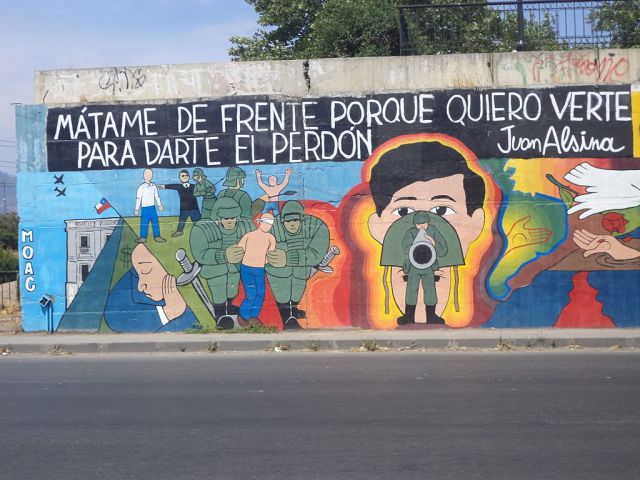
September 11, 1973, a military coup brought a dictator to power in Chile.  As part of the coup, killing squads were sent to murder supporters of the prior government.  On September 19th, a death squad came for 31 year old Fr. Juan Alsina, the Spanish priest who ran San Juan de Dios Hospital.

It was common for shooters to take their victims to a bridge and make them face away.  Once the deed was done, the body would be dropped into the river below.

When they positioned the blindfolded, hand-bound priest on the edge of the Bulnes Bridge, he asked them to remove the blindfold.  “I want to face you so that I can give you my forgiveness.”  Then he lifted his eyes to heaven and said, “Father, forgive them…”

Memorial_a_Joan_Alsina_03

Forgiveness.  It’s a powerful thing, isn’t it?  And, whether giving it or receiving it, it’s hard.  Very, very hard.

In today’s Gospel lesson, it’s Peter who seems to long for forgiveness.  Jesus has been crucified, resurrected, and has appeared to the disciples.  After telling the story of Thomas’ struggle to believe, John sounds like he’s wrapping things up.  “Jesus did many other signs…which are not written in his book.  But these are written so that you may come to believe that Jesus is the Messiah, the Son of God, and that believing, you may have life in his name.”  Doesn’t that just scream for a “The End?”  But like the end of a Beethoven symphony, the story doesn’t end where you think it will.  John has one last story to tell.

The scene opens with 9 of the remaining disciples chilling at the beach.  John doesn’t tell us why.  Maybe they were still processing everything that had happened.  Maybe they were trying to figure out what to do next.  At some point, Peter hops up and says, “I’m going fishing.”  That’s what he did before Jesus called him, right?  He was a fisherman.  Perhaps in the midst of his grief, he was just going back to what he knew.  All that discipling and sharing God’s love had been good, but Jesus was gone now.  What’s a follower to do without a leader?

So Peter tells the others, “I’m going fishing.”  They jump up and say, “We’ll go, too,” and follow Peter to the boats.  They all shove off from the shore and head out to fish.

You know the story—“Fished all night and caught no fishes…”  At dawn, a figure appears on shore and tells them to cast their nets on the other side of the boat.  They do and their nets nearly break from the haul of fish.  When the disciples reach the shore dragging their heavy nets, Jesus is waiting for them, frying up some breakfast.  They break bread together.

After breakfast, Jesus asks Peter three times whether he loves him.  “Yes, Lord, I love you.  I love you.  I love you.”  Three times Jesus tells Peter to feed his sheep and tend his lambs.

Why three times?  Ah, yes.  A literary parallel to the three times Peter denied Jesus the night before Jesus was crucified.

Another familiar story.  The night before his crucifixion, Jesus gathered with the 12 for the Passover seder.  In the course of the meal, Peter tells Jesus he would die for him.  “Will you lay down your life for me?” Jesus asks.  “I tell you, before the cock crows, you will have denied me three times.”  After the meal, they walk to the garden and pray.  Then Judas shows up with the religious leaders.  Jesus is arrested.  Terrified, the disciples scatter.

We don’t know where the other disciples go, but Peter follows the entourage escorting Jesus.  When the group enters the house of the high priest, Peter stays in the courtyard, where others are standing around a fire.  First one, then another, then a third person all identify Peter as one of Jesus’ disciples.  He denies it.  “I do not know the man!”   Then the cock crows.

Peter denied knowing Jesus three times.  And now, the risen Jesus gives Peter three chances to re-affirm his love.  The Gospel writer intends us to make the connection between Peter’s three denials and Jesus’ three invitations to receive his forgiveness…but why?  If the story seemed complete already, why go to the trouble of tacking on this P.S.?

Perhaps it’s because Peter needed to be forgiven.  Why had Jesus initially called the disciples?  So they could learn from him while he was alive and then continue his work after he was gone.  “As God sent me, so I send you,” Jesus said the first time he appeared to them after his resurrection.  “I will make you fishers of people,” he’d said, when he first called them.

What were the disciples doing the morning Jesus took his stroll on the beach—fishing for people?  No, they were fishing for fish.  Jesus had sent them out, but they hadn’t gone.  John had tried to tie things up with a bow, but the disciples weren’t cooperating.

So, God bless him, Jesus has to show up one more time…which he does.  And he does the thing that’s necessary to getting the disciples up and working–he forgives Peter.

John doesn’t tell us Peter was longing for forgiveness.  And Peter certainly doesn’t say anything.  The need to be forgiven…it’s not something we talk about, is it?  Usually, when we’ve hurt someone, we’re embarrassed, ashamed.  So, we keep it to ourselves, hoping it’ll just go away, that people will forget, that we can forget this hurtful thing we’ve done.

Trouble is, when we feel guilty about something we done, if we don’t find forgiveness, the need for it will manifest itself in some way—in a lack of joy, in depression, in pathological do-gooding, in physical ailments.  If we don’t release the things we feel guilty about, they fester and prevent us from living life as fully as we can.  That’s why we offer a prayer of confession every week in worship—so we can confess our failings to God and receive forgiveness.

Peter’s need for forgiveness manifests itself as a reluctance to take up the mantle of leadership.  If the God movement was going to continue after Jesus was gone, it was going to need a leader.  Peter’s gifts and experiences made him uniquely qualified to be that leader.  As soon as he says, “I’m going fishing,” the other disciples immediately follow him to the boats.

Peter is a born leader.  We know it.  The disciples know it.  Jesus knows it.  The only person who doesn’t seem to know it is Peter.  And if he doesn’t get that message, the God Movement will die.

Maybe the reason Peter can’t yet see himself as the leader the movement needs him to be is because, deep down, he’s holding onto his denial of Jesus, beating himself up with it, letting it limit the possibilities he sees for his future.  And maybe those feelings are down so deep that Peter isn’t even aware of them.  But if he doesn’t get aware and receive forgiveness, the God movement will never get off the ground… …so, Jesus does the one thing necessary to see that his work of sharing the good news of God’s love continues:  he forgives Peter.

The first time I heard the story of Fr. Juan Alsina’s offer of forgiveness to his assassins, it didn’t compute.  How could he possibly have done that—offer forgiveness to the people about to riddle his body with bullets?  After spending some time with Peter and his need for forgiveness, I think I understand a little better—the priest was a priest until the end.  He understood the power of forgiveness.  He understood that those young men with the guns were all caught in a web of treachery they hadn’t created.  In a real way, they too were victims.  If their humanity had any chance of surviving, they were going to need to be forgiven.

The only reason the story of Fr. Juan’s forgiveness is known is because one of the shooters—who was only 18 at the time of the coup—years later made confession to his priest.  He affirmed the story in the trial for the Colonel who ordered the assassination.  Tragically, the shooter—Nelson Banados was his name—was not able to receive Fr. Juan’s forgiveness.  Like Judas, when the full weight of what he’d done hit him, he took his own life.

Peter was able to receive Jesus’ forgiveness and, I suspect, to forgive himself.  We are the proof.  Peter didn’t retire as a fisherman.  He led the disciples and lived the faith.  He was so faithful, in fact, that he died a martyr.  It’s doubtful Peter would have lived out the life he was born to live had he not received forgiveness and released his guilt.  If Peter hadn’t received Jesus’ forgiveness, it’s doubtful we would be here today, celebrating our Christian faith as so many Christians before us have done….going all the way back to the first leader of the church—Peter.

Are you longing for forgiveness today?  Is the weight of harmful things you’ve said or done preventing you from living the life you were meant to live?  Is your need to receive forgiveness robbing you of joy?

If so, I invite you to sing with me hymn #449, “Softly and Tenderly Jesus Is Calling.”  May these words become real for you.  May you take them in.  May you find a way to “come home.”

Congregation sings “Softly and Tenderly.”  https://www.youtube.com/watch?v=B_6s6lRPPBQ

In the name of our God, who creates us redeems us, sustains us, and hopes for our wholeness.  Amen.

Kimberleigh Buchanan  © 2016


Posted in Uncategorized | Comments Off on Sermon: Longing for Forgiveness (4/10/16)