Sermon: “Becoming Children of God” (Mt. 5:1-12) [2/2/2020]

Last week, we heard briefly about the beginning of Jesus’ ministry.  After calling some disciples, Jesus travels around Galilee, teaching in synagogues, “proclaiming the good news of the kindom and curing every disease and every sickness among the people.”  It’s no surprise that large crowds were following Jesus.

When he saw the crowds, here’s what Jesus did.  He went up a mountain and sat down.  The sitting down part was a signal that he was about to teach.  His going up a mountain also was a sign the people would have recognized.  Matthew is sometimes called “the Jewish Gospel.”  That’s because it was written to a Jewish audience… which means the author used language and images that would connect with people of the Jewish faith.
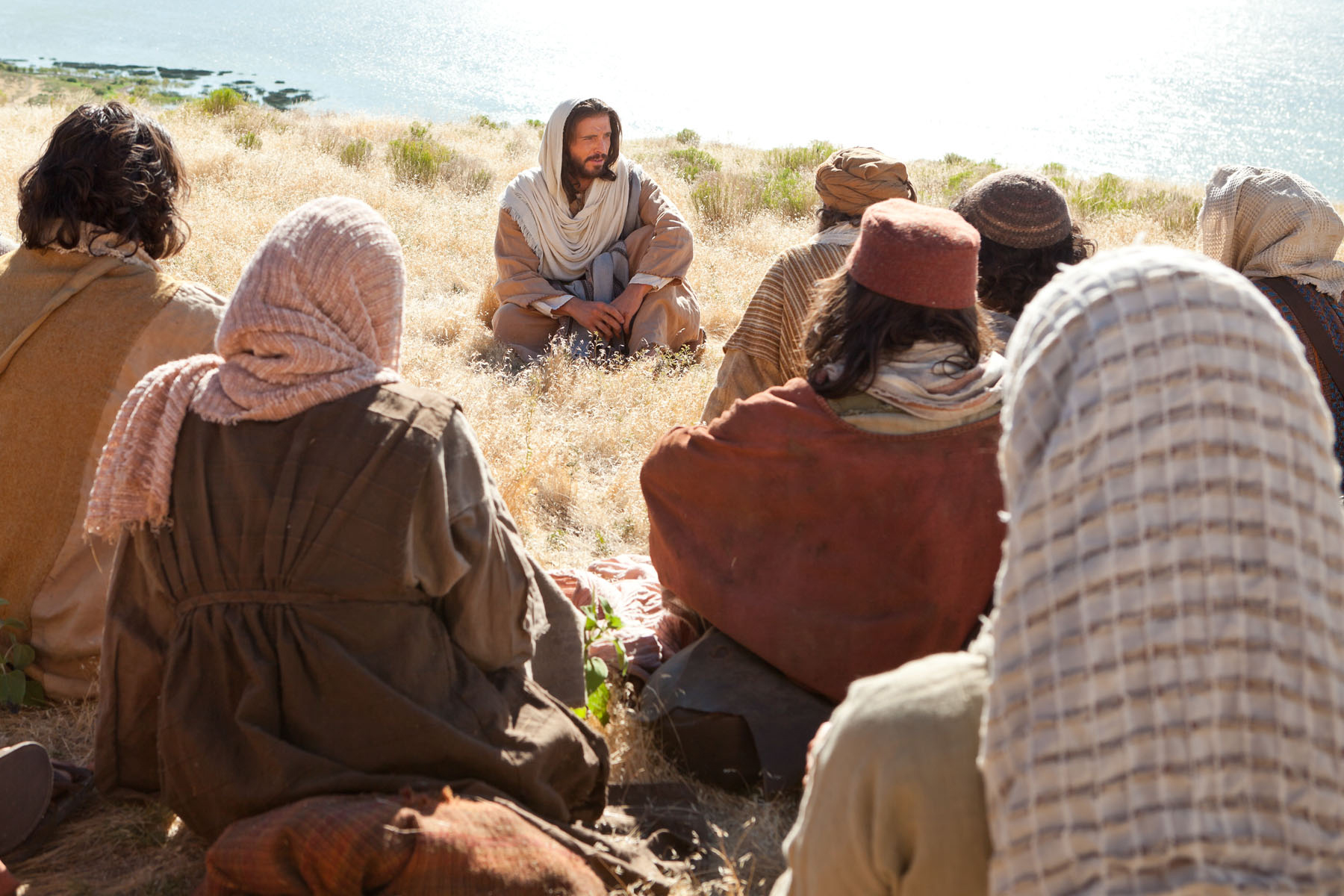
Related image

So, who in the Hebrew Bible went up a mountain to teach the people?  Moses!  And what happened when Moses went up the mountain?  That’s when he gave the people the law–the Ten Commandments…with about a million footnotes, cf. the book of Leviticus.
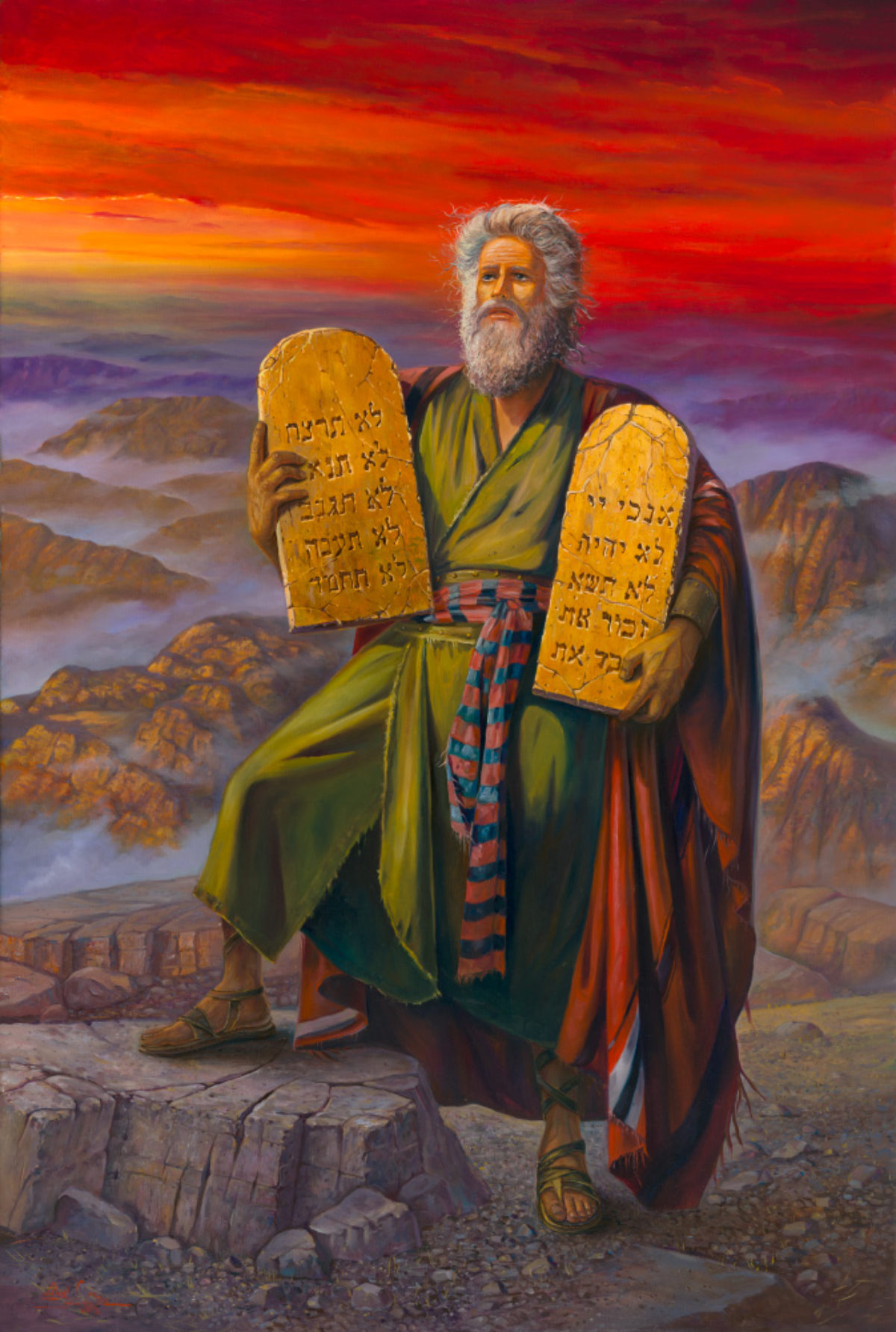
Image result for picture moses on sinai

So, when Jesus goes up the mountain and sits down, the Gospel writer is signaling that Jesus is bringing a new understanding of the law that had guided the Jewish people for centuries.  “You have heard that it was said…  But I say to you…”  Jesus is a new Moses.  While grounded in the tradition, Jesus’ aim was to reimagine their faith for the present time.

Which is what faith communities are all about, right?  Our Judeo-Christian tradition is a rich one.  We have the words of poets and prophets.  We have Moses and Jesus, and Deborah and Dorcas.  Much of what we do is grounded in that tradition.

AND…if our faith is to remain relevant, we have to constantly reimagine it for our time.  If any times called us to reimagine our faith, these are them.

We’ve come to call Jesus’ teaching in Matthew 5 the Sermon on the Mount.  Today, we hear the introduction to the sermon–the Beatitudes, or Blessings.  Each beatitude is so densely packed, it would take a looooong time to deal all of them….so today, we’ll look at just one:  “Blessed are the peacemakers.”

In the newsletter this week, I invited you to read through the Beatitudes and see how this Beatitude differs from the others.  Did you come up with anything?  (Responses)   

In all the other Beatitudes, the ones referenced receive something.  “Blessed are the poor in spirit, for theirs is the kindom of heaven.”  “Blessed are those who mourn, for they shall be comforted.”  What do peacemakers receive?  “Blessed are the peacemakers, for they shall be called children of God.”  It’s not, “they are, or will become children of God.”  It’s “they will be called children of God.”

It’s true that creating peace is its own reward, but still.  All the others receive something.  The meek get the whole Earth!  All the peacemakers get is a good standing in the eyes of others.  I don’t mean to gripe, but why is everybody’s else’s gift so much better than ours?

“Blessed are the peacemakers, for they shall be called children of God.”  They shall be called children of God.  Here’s my first question.  Who is it that will be calling peacemakers children of God?  Other children of God?  Religious authorities?

What if the folks who call peacemakers children of God, don’t themselves identify as God’s children?  What if it’s people outside the community looking at the work of peacemakers and saying to themselves, “If there is a God, that’s what children of that God would be doing.”

People of faith–people of Christian faith–are called lots of things these days, aren’t we?  “Children of God” isn’t high on the list of things we’re called.  Truth be told, the church has earned its disparagement.  Over the centuries, the church has done some horrific things…the Inquisition…the Crusades…the Magdalene laundries in Ireland…colonization in Africa, South America, and our own country…much of the systemic racism that defines our country was authored by people of Christian faith…and we haven’t even gotten to the church’s terrible treatment of LGBTQ people or covering up clergy sexual abuse…

Oh, yes.  The church has earned the epithets it has received.  All things considered, being called “children of God” might be nice.  In fact, being called “children of God” by people outside the church might be a very good gift indeed, maybe almost as good as inheriting Earth.

So, how do we do that?  How can we do and be church in a way that will lead folks outside the church to call us “children of God?”

“Blessed are the peacemakers, for they shall be called children of God.”  If peacemakers are called children of God, then the thing people most associate with God-ness must be peace, wholeness, shalom.  When people are able to live as whole, fully-authentic human beings, others see God.  When Earth and all its creatures are able to thrive in good health, others see God.  When communities and countries work for the common good, others see God.  So, when we help people live whole lives, when we work for environmental wholeness, when we work for the common good, if this beatitude is right, then others will see us as God’s children.

Peacemaking is a concept it’s hard to wrap your mind around.  A lot of times, it’s taken narrowly to mean anti-war.  Certainly, anti-war activism is a part of peacemaking, but peacemaking encompasses a whole lot more than anti-war activism.  Peacemaking encompasses any activity that contributes to any created being living as it was created to live.

I saw an article this week that said suicide rates of folks who are LGBTQ are down dramatically since marriage equality was passed.  Working for marriage equality was an act of peacemaking.  Three weeks ago, this community celebrated the arrival in this country of Karina’s dad and Basem’s wife and daughter.  Laws and advocates that made it possible for that to happen?  Peace work.  And, as Horace reminded us two weeks ago, so many more people are languishing at our borders.  Writing new laws, opposing unjust laws, protesting against the indignities and trauma imposed on people waiting for their immigration cases to be heard–all of that is peace work.

We could spend all day–all week–listing off all the people and situations longing for peace.  At the heart of any peace work in which we might engage is a core commitment:  a commitment to honoring and working for the dignity of every single living thing.

May 27, 1992, soon after the siege of Sarajevo began, a bomb fell in one of the city’s squares.  Twenty two people, standing in line to buy bread, were killed.  A neighbor of those 22 people, Vedran Smailovich, played cello in Sarajevo’s symphony orchestra.

On May 28, Vedran appeared in the square dressed in his tuxedo, carrying his cello.  He grabbed one of the up-turned chairs from a nearby restaurant, opened his case, and began to play.  For the next 21 days–for a total of 22–Vedran Smailovich played the same piece…under threat of bombing or sniper attack, he played each day, once for each life lost.  With his tuxedo, with his playing, by creating beauty in the center of a bomb crater, Smailovich sought to remember—literally, to re-member–the dignity of lives so senselessly lost.

The story is told that during one of his mini-concerts, a soldier asked Smailovich, “Why are you playing where there is bombing?”  A bewildered Smailovich replied, “Why are you bombing where I am playing?”

It’s a simple exchange that goes to the heart of peacemaking:  reframing everything, everything, in terms of peace.  From the soldier’s perspective, a cellist playing in the middle of bomb crater was absurd.  In the soldier’s mind, all around them was a war zone.  In Smailovich’s mind, it wasn’t his playing that was absurd, but the war.  Before the siege began, Sarajevo was a place where Jews, Christians, and Muslims got along very well, a place alive with the arts, a city that, just 8 years before, had hosted the Winter Olympics.  A cellist playing in the streets of Sarajevo wasn’t the absurd thing.  The thing that was absurd was dropping a bomb on people who were in line to buy bread.

Image result for vedran smailovic picture

Each of us makes peace in our own way.  Some of us march for peace.  Some of us feed the hungry or visit the imprisoned.  Some of us work for structural change by working for political candidates and for more just legislation.  Some of us work for peace by praying or tending to our own internal peace.

Whatever the venue or peacemaking tasks in which we engage, the heart of it all begins where the cellist of Sarajevo began:  by reframing every venue, every task in terms of peace.  Creating beauty in the midst of war is not absurd.  Creating war in the midst of beauty—that is what’s absurd.

The piece Smailovich played those 22 days is a haunting melody attributed to Tomaso Albinoni, an 18th century composer.  There’s actually some debate about exactly who wrote it.  One story has musicologist Remo Giazotto finding a scrap of a composition by Albiononi in the rubble of Dresden after it was bombed in World War II.  Giazotto based the piece we now know as Albinoni’s Adagio in G on the bass line written on that scrap of paper from Dresden.

Whoever wrote it, it is a beautiful melody…and it became more beautiful when Vedran Smailovich played it to resurrect the dignity of 22 lives lost as they stood in line for bread.  As Claire plays the Adagio—a tribute to one man’s fearless commitment to peacemaking—may it spark in each of us a renewed commitment to working for peace in our world.  Claire?

(Claire plays “Adagio”)

Posted in Uncategorized | Leave a comment

Sermon: “The Broken World Waits in Darkness…” (I Cor. 1:10-18) [1/26/2020]


Each week, the lectionary provides four Scripture texts for worship.  I’ve heard that in the Episcopal Church, priests are able to touch on all four texts in sermons that last only 10 minutes.  It’s, like, a miracle!

I’m going to focus on only one text this week (You’re welcome.), but I’m intrigued by the four texts taken together.  The first three–from Isaiah, Psalms, and Matthew–focus on light, which is appropriate in this season of Epiphany.  “The people who walked in darkness have seen a great light,” Isaiah says.  Matthew quotes those verses from Isaiah, then promptly introduces Jesus’ ministry…as if to say, Jesus is the one who brings this light to the world.  Earlier, the psalmist says, “God is my light and my salvation; whom shall I fear?”

On the face of it, the fourth text–our focus for today—doesn’t fit.  “Quit your fighting!” Paul writes to the church at Corinth…because fighting, they were.  First, Chloe’s people come tattling on everyone else.  “Apostle Paul, Apostle Paul!  Everybody’s fighting!  I’ve written everybody’s name on the chalkboard!”  We soon learn that Chloe’s not the only one with “people.”  There are also Apollos people, and Peter people, and Christ people.

Back 2,000 years ago, churches were messed up, weren’t they?  Everybody going off with their own people, sniping at other groups who’d gone off with their own people.  Thank goodness we’ve grown past all that communal divisiveness in the last 2,000 years!

The longer I pastor, the more I love Paul.  For several decades, mostly because of what he wrote about women and same gender-loving people, I contemplated excising Paul’s letters from my Bible.  Certainly, you have to dismiss some items in these letters, because the cultural context in which Paul was writing was so vastly different from our own.

But the things Paul writes about communities?  That resonates.  He’s so frustrated!  Perhaps, especially, with the believers in Corinth.  “Has Christ been divided?” Paul shout-asks.   “Was Paul crucified for you?  Were you baptized in the name of Paul?  I thank God I baptized none of you except Crispus and Gaius, so that no one can say you were baptized in my name.  Oops.  Wait.  Strike that.  I also baptized the household of Stephanas; beyond that, I don’t know whether I baptized anyone else.”

Why is Paul so frustrated?  Was he just a cantankerous old man?  Well, yes.  That’s likely.  But reading Paul’s letters, he seems to reserve his greatest frustration for communities who refuse to get along with each other.  Why is that?  Why is Paul so concerned with how people in those communities treat each other?

Here’s what I’ve decided–about Paul and about what the lectionary folks were thinking when they included this text about fighting Corinthians with three texts about God’s light.  Are you ready?  Here goes.  What if it is through the community that God’s light now comes into the world?  Maybe Paul got so frustrated with communities not getting along because he understood that it is through healthy communities that God’s love becomes manifest in the world.  If the broken world we’re living in right now needs anything, it’s a community where people love each other and work with each other for the common good… don’t you think?

We’re pretty intentional here at FCUCC about doing community.  Guests often comment on how welcome they feel.  The sharing we do during prayer time, in friendship time, and in faith formation classes is heartfelt and authentic.  From my own experiences with recent surgeries, I can attest to just how nurturing a community this is.  I am grateful.

How might we build on that?  How might we become even more intentional about living as a community of Jesus followers?  If the best gift we have to give to the world is our community, what might we do to strengthen that gift?

This next bit is going to require some imagination.  Ready?  Imagine there are factions in the church.  Chloe’s people are over there.  Apollos’ people are across the way.  Those Peter people–they always keep to themselves.  And the Christ people?  Don’t even get me started!

Why all the factions?  Why has each group built a wall around itself?  What would it take to dismantle the walls?  What would it take for the people in all those groups to become one authentic community?

In a book called, The Education of Little Tree, a Cherokee grandfather tells his grandson, Little Tree, that, “back before his time ‘kinfolks’ meant any folks that you understood and had an understanding with,” not just blood kin…what Tom and Arni call “biological and logical kin.”

“Granpa said when he was a little boy his Pa had a friend, an old Cherokee man named ‘Coon Jack.  ‘Coon Jack was continually distempered and cantankerous.  Little Tree’s granpa couldn’t figure out what his Pa saw in old ‘Coon Jack.

One Sunday, at the little church down in the hollow, at testifying time “‘Coon Jack stood up and said, ‘I hear tell they’s some in here been talking about me behind my back.  I want ye to know that I’m awares.  I know what’s the matter with ye; ye’re jealous because the Deacon Board put me in charge of the key to the songbook box.  Well, let me tell ye:  any of ye don’t like it, I got the difference right here in my pocket.’  “Granpa said, shore enough, ‘Coon Jack lifted his deer shirt and showed a pistol handle.  He was stomping mad.

“Granpa said that church house was full of some hard men, including his Pa.  He said his Pa stood up and said, “‘Coon Jack, every man here admires the way ye have handled the key to the songbook box.  Best handling ever been done.  If words has been mistook to cause ye discomfort, I here and now state the sorrow of every man present.

“‘Coon Jack set down, total mollified and contented, as was everybody else.

“On the way home, Granpa asked his Pa why ‘Coon Jack could get away with such talk, and Granpa said he got to laughing about ‘Coon Jack acting so important over the key to the songbook box.  He said his Pa told him, ‘Son, don’t laugh at ‘Coon Jack.  Ye see, when the Cherokee was forced to give up his home and go to the Nations, ‘Coon Jack was young, and he hid out in these mountains, and he fought to hold on.  When the War ‘tween the States come, he saw maybe he could fight that same guvmint and get back the land and homes.  He fought hard.  Both times he lost.  When the War ended, the politicians set in, trying to git what was left of what we had.  ‘Coon Jack fought, and run, and hid, and fought some more.  Ye see, ‘Coon Jack come up in the time of fighting.  All he’s got now is the key to the songbook box.  And if ‘Coon Jack seems cantankerous…well, there ain’t nothing left for ‘Coon Jack to fight.  He never knowed nothing else.’

“Granpa said, he come might near crying for ‘Coon Jack.  He said after that, it didn’t matter what ‘Coon Jack said, or did…he loved him, because he understood him.

“Granpa said that such was ‘kin,’ and most of people’s mortal trouble come about by not practicing it; from that and politicians.’  “I could see that right off,” Little Tree says, “and might near cried about ‘Coon Jack myself.”  (38-39)

“After that, it didn’t matter what ‘Coon Jack said or did…he loved him, because he understood him.”  That’s what it means to be kin…to practice kin.

To a large degree, that’s what seems to be missing in our world today–in Washington, in Chile, in Yemen, in Myanmar…we seem to have forgotten that we’re kin, that we’re all connected, and that the way to strengthen those connections is to get to know each other, to work at understanding each other…to sit back and listen, really listen to each other.  The last line of a poem by Elizabeth Alexander asks:  “Are we not of interest to each other?”

I wonder if, after reading Paul’s letter, Chloe’s people started taking an interest in Peter’s people.  And maybe Paul’s people took an interest in Apollos’ people.  What might happen if  Republicans and Democrats took an interest in each other?  What might happen if the top 1% took more interest in the bottom 1%?  What might happen if the northern hemisphere took more of an interest in the southern hemisphere?

What might happen if we here at FCUCC took more interest in each other?  What if, when some of us got a little cantankerous, the rest of us got curious about the source of that cantankerousness?  What if we listened to each other more, and worked even harder at understanding each other?

If we did these things, might we better reflect God’s love?  If we did these things, might people who are walking in darkness get a glimmer of light?  If we did these things, might we become an even stronger community…and might the world through us become a little more whole?

What I’m wondering is, might the broken world be waiting in darkness for the light that is us?

Image result for the broken world waits in darkness for the light that is you

In the name of our God, who creates us, redeems us, sustains us, and hopes for our wholeness.  Amen.

Kimberleigh Buchanan  © 2020


Posted in Uncategorized | Leave a comment

Sermon: “Standing on the Side of Love” (Advent 4, LOVE) Mt. 1:18-25 [12/22/19]

Image result for picture love fourth sunday of advent

So, some things happened in Washington this week.  The last time a president was impeached (in 1998), I sat riveted to the TV.  This time, I read Thursday morning’s paper, saw the news and said, “Oh.  That was yesterday.”

The consensus of pundits is that the process of impeachment has become so partisan, it no longer carries the moral weight it once did.  Perhaps the most perplexing–and troubling–reality of politics these days is how, now, value is determined, not by truth, but by polls.  Not by a concern for the common good, but a personal concern for reelection.  How did we get to this surreal place where truth has so little meaning?

A lot of people, I’m sure, were happy with the House vote on Wednesday.  A lot of people cling to the hope that the president will yet be removed from office.  I confess that I haven’t put all my eggs in that basket…because I think the crisis in our country runs far deeper than a president who struggles with the truth and basic norms of civility.  No person becomes president in a vacuum.  A person becomes president in a specific historical context.  Little by little, we allow our values to slip until, pretty much, anything goes.  Or perhaps I should say that, little by little, we have allowed our values to slip until, now, pretty much, anything goes.

When the Access Hollywood tape came out three weeks before the election in 2016 and it didn’t even phase the American electorate, I knew our country was in a crisis–a crisis of character.  That crisis has only deepened.  Removing the president wouldn’t change that fact.  Our work as Americans—and as followers of Jesus–is the work of rebuilding character.  Of speaking only what is true.  Of working together for the common good.  Of just being good people.

How appropriate on this Sunday, after this week in Washington, to hear again about Joseph…a man of sterling character, if ever there was one.  Joseph gets a lot of attention for what happens after the angel Gabriel makes his visit, that is, taking Mary as his wife, despite the fact that she’s pregnant.  And certainly, Joseph’s actions after Gabriel’s visit demonstrate just how good a person he was.

But Joseph didn’t need an angel’s visit to show him how to do the right thing.  Joseph’s true character is revealed before Gabriel shows up.

This is how the birth of Jesus came about, Matthew writes.  When Jesus’ mother, Mary, was engaged to Joseph, but before they lived together…  It was the custom among Jews in 1st century Palestine to have a period of betrothal.  As a betrothed woman, Mary was exclusively bound to Joseph.  So, when she was found to be pregnant through the Holy Spirit…  It’s important to note here that, while Matthew lets the reader know that the pregnancy comes from the Holy Spirit, Joseph doesn’t know that yet.  He won’t know it until Gabriel comes to visit.

Sidebar…Y’all know this is a story, right?  It’s not a factual, historical accounting.  And it’s certainly not a scientific article.  It’s a story…a really good story.  Some might even call it a fantastic (or fantastical) story.  But it’s a story.  We do ourselves a disservice when we dismiss the lessons to be learned from a story by trying to make it bear scientific accuracy.  If I want to talk science, I go to Chris Cain or Jim Beggs.  If I want to enter a story and, potentially, be changed by it, one of the places I go is the Bible.  So.  Back to the story.

In the context of this story, when Mary is found to be pregnant, Joseph’s options are limited.  When Jewish law first was written, the punishment for adultery was death by stoning.  By the first century, the rabbis had moved away from capital punishment, but the punishment for adultery was still severe…and publicly humiliating, especially for women.

Joseph’s response to the news of Mary’s pregnancy reveals what kind of person he was. As Mary’s husband, Joseph had certain rights according to Jewish law.  As an “upright” or “righteous” person, Joseph was committed to following Jewish law.  Yet, despite his commitment to following the law, Joseph was unwilling to disgrace Mary… As strong as his commitment to following religious law was, Joseph’s compassion was stronger.  His concern for Mary’s dignity superseded even the possibility of his own public embarrassment.  Unwilling to disgrace her, Joseph decided to divorce her quietly.

As I’ve reflected on Joseph’s character and the actions that flowed from that character, the line that keeps coming to mind is the motto of our UU friends:  “Standing on the side of love.”  If anyone in Scripture stands on the side of love, it’s Joseph.  Based on what he knew at the time–that the one to whom he was betrothed was pregnant–Joseph understood what rights the law afforded him…and yet, he chose not to avail himself fully of that law.  Why?  Because to do so would have demeaned Mary…and that’s not a line Joseph was willing to cross.  Joseph refused to disgrace Mary.  He refused to treat her as if she were less than fully human.

We talk about love a lot here at FCUCC.  That’s appropriate.  We are a church, after all.  At the heart of our understanding of love–of the love Jesus taught and lived–is justice.  Love is the power to act each other into wellbeing.  Justice is the means by which we take that loving action.

Love, justice, all of it begins by acknowledging the full human dignity of every single person.  Every.  Single.  Person.  If all of us could see the profound dignity in every other human being, if all of us could recognize that of the divine in each person… If we could do that, if we were to treat every person with equal dignity, the world would be an infinitely kinder and more peaceful place.  It also would be a whole lot closer to the world of which God dreams.

The movie, Hidden Figures, tells the story of the three African American women calculators, whose computations were key to the success of NASA in the early 60s.  In a pivotal scene in the film, Kevin Costner’s character, Al Harrison, comes out of his office and angrily asks Katherine Johnson why she is leaving the room again at such a critical time in their work.  “Where do you go for 40 minutes every day!” he demands.  “To the bathroom, sir,” Katherine says.  The answer angers Harrison.  “Why do you spend that much time going to the bathroom?” he shouts.  “Because there’s no bathroom for me here,” Katherine says.  “What do you mean, there’s no bathroom for you here?”

Finally, Katherine releases all her frustration, all her anger, all her humiliation.  “There are no colored bathrooms in this building…or any building outside the West Campus, which is half a mile away.  Did you know that?  I have to walk to Timbuktu just to relieve myself…I work like a dog, day and night, living off of coffee from a pot none of you want to touch!  So.  Excuse me if I have to go to the restroom a few times a day.”

After Katherine leaves the room, a stunned Mr. Harrison slowly walks to the table holding the two coffee pots and removes the “Colored” sign scotch-taped to the smaller one.  A later scene takes place outside a nearby restroom.  Mr. Harrison walks up to the bathroom door and swings an axe at the “Whites Only” sign attached to the wall above it.  It takes several whacks, but, eventually, the sign falls to the floor with a dull clang.  Mr. Harrison says to the workers gathered in the hall:  “No more colored restrooms.  No more white restrooms.  Just plain old toilets.  Use whichever one you want…”  To Katherine, he says:  “Preferably, the one closest to your desk.”

Yeah.  That’s definitely a move from Joseph’s playbook.  Al Harrison stood on the side of love.  It’s where we all must stand.  We all must stand on the side of human dignity.  We all must stand on the side of grace.  We all must stand on the side of compassion.  We all must stand on the side of love.  If there is any hope of creating the shalom of which God dreams, we all must stand on the side of love.

I leave you with these words of 14th century mystic, Hafiz.  “I have come into this world to see this:  the sword drop from men’s hands even at the height of their arc of anger…because we have finally realized there is just one flesh to wound and it is his—the Christ’s, our Beloved’s.  I have come into this world to see this:  all creatures hold hands as we pass through this miraculous existence we share on the way to even a greater being of soul…

“I have come into this world to hear this:  every song the earth has sung since it was conceived in the Divine’s womb and began spinning from the Beloved’s wish, every song by wing and fin and hoof, every song by hill and field and tree and woman and child, every song of stream and rock, every song of tool and lyre and flute, every song of gold and emerald and fire, every song the heart should cry with magnificent dignity to know itself as Beloved; for all other knowledge will leave us again in want and aching…

“I have come into this world to experience this:  people so true to love they would rather die before speaking an unkind word, people so true their lives are the Beloved’s covenant—the promise of hope.  I have come into this world to see this:  the sword drop from men’s hands even at the height of their arc of rage because we have finally realized there is just one flesh we can wound.”

If this is so—that we are one flesh—how can we not, every minute of every day…if we are one flesh, how can we not stand on the side of love?


In the name of our God, who creates us, redeems us, sustains us, and hopes for our wholeness.  Amen.

Kimberleigh Buchanan  © 2019

Posted in Uncategorized | Leave a comment

Sermon: “Swords into Plowshares” (Is. 2:2-5) [12/1/19] Advent 1, Hope

‘Tis the season!’  But ‘tis the season for what?  According to any retail outlet, since about mid-October it’s been the Christmas season, the season to buy, buy, buy!  Does it sometimes feel as if the retailers get the better end of the Christmas deal?  After all, they get to celebrate Christmas for two and a half months (or more…).  We Jesus-followers only get to celebrate it for twelve days…and the first of those days isn’t until December 25th.

Oh, the pain of Advent!  For those of us who celebrate Advent, now ‘tis the season to wait.  We’re waiting on the baby Jesus.  Again.  Just like every year.  ‘Joy to the world, the Lord will come!’ we sing….as we wink to one another over the tops of our hymnals.  We wink because we know.  We know the end of the story.  We know that the world celebrates joyously because the Lord has already come.  We know the baby Jesus will come again…just like he always does.  We go through the motions of the Advent story every year because it’s familiar.  And who doesn’t love a familiar story, especially one with a happy ending?

But I wonder.  Do we know for certain the baby Jesus will show up this year?  Yes, he’s shown up every previous year…but this Advent is different.  After a year of experiences, we’re different people than we were this time last year.  We’ve gotten older.  We’ve lost loved ones.  We’ve said hello to new family members.  We’ve adjusted to difficult diagnoses and recovered from accidents, falls, and surgeries.  And not only are we in different places as people, the world is a different place than it was last year, too.  Did you see the report that came out this week?  Climate change is going significantly faster than anticipated.  Protests continue to roil across the globe.  In our own country, we’re more entrenched politically than we’ve ever been.

Waiting for the Christ-child, waiting for God’s presence to dwell with us is different this year because we are different people; the world is a different place… Yes, Jesus has shown up every year prior to this one, but will he show up again?  Will our waiting bear fruit, like always?  Will God really come to dwell with us again?

Several years ago, the church I served needed a new crèche.  Have you ever tried to find a manger scene where the baby Jesus is not attached to the manger?  It isn’t easy!  We looked everywhere for an unattached baby Jesus.  Finally, Allen and I found one in Adel, Georgia, of all places.  Why is that?  Why is the baby Jesus so often so firmly attached to the manger?  Oh, sure.  The baby Jesus is small and we want to be sure we know where he is come the Christmas Eve service!  Better to attach him to something bigger, like the manger, than to risk losing him.

But again, I wonder.  Are we afraid of losing a small piece of ceramic?  Or we scared that this might be the year the Christ-child doesn’t come at all.  Yes, in ancient times, God said God wanted to be with us.  God actually did dwell with us for a while.  But that was then.  Now we live in (what feels like) a much more complicated world.  There’s so much pain and grief and meanness.  Does God still desire to dwell with us?  Will God-with-us really come again?  I wonder if we like an “attached” baby Jesus because the empty manger makes us nervous.

Waiting is a messy, nervous-making business.  But it always seems easier when we have something to do.  So, what are we to do during this season of waiting?  What shall we do while we wait again for the Christ-child to come?

Isaiah has some ideas.  “In days to come the mountain of God’s house shall be established as the highest of the mountains… all the nations shall stream to it.  Many peoples shall say, ‘Come, let us go up to the mountain of God, that God may teach us God’s ways and that we may walk in God’s paths.” 

We 21st century folk understand God to be present in all the world, not just on mountain tops or in sanctuaries.  But let’s go with this image for a minute.  First, we have a mountain, taller than all other mountains.  And on top of this mountain is the house of God, a place to worship God, to learn from God. And from as far as the eye can see, people are streaming to this mountain.  From every direction, people of different races and ethnicities and nationalities and languages and sizes and shapes and colors and dress are streaming to the mountain of God.  They get to the bottom of the mountain and they start climbing up.  Why are they climbing up the mountain of God?  Because they want to get close to God!  They want to learn from God!  And so, they start climbing up the mountain.

And here’s the interesting thing.  As they’re climbing up the mountain, all these different people, as they’re climbing up the mountain trying to get closer to God, look at what else is happening!  As the people get closer to God, they also get closer to each other…so that, by the time they get to the top of the mountain to commune with God, they’re sitting right next to each other!  And what do they do once they get there?  They learn from God’s ways so they might walk in God’s paths.  And what are God’s ways?  God’s ways are whatever it takes for these people of different shapes and colors and nationalities to talk to each other and be with each other.  What a beautiful image for this Sunday of hope!

But the prophet doesn’t just offer an image of a better world.  He also offers an image of how to get there.  Listen:  ‘For out of Zion shall go forth instruction, and the word of God from Jerusalem.  God shall judge between the nations, and shall arbitrate for many peoples; they shall beat their swords into plowshares, and their spears into pruning hooks; nation shall not lift up sword against nation, neither shall they learn war any more.  O house of Jacob, come, let us walk in the light of God!

Swords into plowshares.  Also a powerful image…if you know what a plowshare is.  I looked it up.  A plowshare is the blade of a sickle.  It’s used to harvest grain.  So you can see the significance of the image of turning a sword—a weapon—into a farm implement, an implement of peace.

Nonviolence Training, Resources, and Networking

In your bulletins, you’ll find several pictures…you see the words of Isaiah 2:4 on a wall at the UN:  ‘They shall beat their swords into plowshares, and their spears into pruning hooks; nation shall not lift up sword against nation, neither shall they learn war anymore.’ You also see a picture of a sculpture of a plowshare created, in part by melted down guns.  You’ll also see farm implements and shovels created by melted down guns.  There’s even a guitar created out of guns.

Artist Pedro Reyes

            Perhaps the most powerful artistic rendering of Isaiah’s “swords into plowshares” image is a nine-foot sculpture that stands in one of the gardens at the UN.  In that sculpture, a muscular blacksmith is beating a sword into a plowshare.  What the blacksmith has is neither sword nor plowshare.  It’s something in between.  The blacksmith is in the process of making peace.  He’s in the process of conversion.

Image result for un swords into plowshares statue

“Swords into Plowshares” sculpture at the United Nations

            As are we.  Oh, to live in a world where nations do not lift swords against each other!  Oh, that war-making could be removed from our collective curriculum as obsolete!  Unfortunately, for us—as for the prophet Isaiah—our conversion process is not yet complete.  We live in a world where nations do war, a place where senseless violence still occurs.  It’s hard—so hard—for us to imagine a world without war or violence, but that’s why God gave us prophets.  Prophets help us imagine.  And Isaiah helps us to imagine a new day, a day where people of different backgrounds and faiths and colors meet together on the mountain of God in peace.  Isaiah helps us imagine a world without war, a world without violence.

Our work of Advent is like the work of the blacksmith in the sculpture at the UN:  the call this Advent is to be about the process of making peace.  We may not make it up the mountain of God.  We may not even make it to the mountain of God.  And our arsenals may be better-stocked at this point than our barns…But now that Isaiah has helped us imagine it, let us work toward peace, a just peace.  Let us continue walking in the light of God, searching for God’s mountain.  And let us scale that mountain together.  And let us encounter God there. And let us meet God’s other children there, our sisters and brothers.  And let us find peace there.  And as we work together and seek God’s peace, let us also keep one eye on our tasks and one eye on the empty manger.  For we may discover that—just as we hoped—God is indeed with us.


In the name of our God, who creates us, redeems us, sustains us, and hopes for our wholeness.  Amen.


Kimberleigh Buchanan  © 2019 (2013, 2001)

Posted in Uncategorized | Leave a comment

Sermon: “Guide Our Feet in the Way of Peace” (Luke 1:68-80) [11/24/19]

Luke is the original Broadway Gospel.  Every time something big happens, the story’s characters break into song.  When the pregnant Mary visits her cousin Elizabeth, she breaks into song.  (#119) “My soul gives glory to my God…” When angels appear to shepherds in the field, they break into song.  (#125) “Gloria!  In Excelsis Deo!”   When Mary and Joseph present the infant Jesus at the temple, the elder Simeon breaks into song.  (#807): “Holy One, now let your servant go in peace; your word has been fulfilled.”  Luke’s John the Baptist doesn’t break into song, but when Godspell’s John the Baptist does, it feels pretty Lukan.  Shall we sing it together?  Prepare ye the way of the Lord. 

Of all the songs sung in Luke’s Gospel, perhaps the sweetest is the one sung by the priest  Zechariah.  Though deeply faithful, Zechariah and his wife Elizabeth remained childless.

Once a year, a priest was selected to go into the temple to make a special offering for the people.  On Zechariah’s year, an angel appears and tells Zechariah that he and Elizabeth are going to have a baby.  They’ll name him John.  Zechariah’s response to this joyful news?  “How will I know this is so?  For I am an old man, and my wife is getting on in years.”  And the survey said, BLAST!  Wrong answer.  Zechariah’s punishment for not believing the angel’s good news?  “You will become mute until these things occur.”

Struck mute.  Man, that had to be hard for Zechariah.  Maybe not so much for Elizabeth… but for Zechariah, really hard.  Which had to make his joy at the birth of his son that much more joyous.  No wonder he breaks into song!  Let’s sing that song together.  (#110)

Now bless the God of Israel, who comes in love and power,

Who raises from the royal house deliverance in this hour.

Through holy prophets God has sworn to free us from alarm,

To save us from the heavy hand of all who wish us harm.


Remembering the covenant, God rescues us from fear,

That we might serve in holiness and peace from year to year;

And you, my child, shall go before to preach, to prophesy,

That all may know the tender love, the grace of God most high.


In tender mercy, God will send the dayspring from on high,

Our rising sun, the light of life for those who sit and sigh,

God comes to guide our way to peace, that death shall reign no more.

Sing praises to the Holy One!  O worship and adore.


If this number were being staged, Zechariah would be holding little John, singing these words as a lullaby.  “And you, my child, shall go before to preach, to prophesy, that all may know the tender love, the grace of God most high.”  Here’s how the last verse of Zechariah’s song reads in Luke 1:  “By the tender mercy of our God, the dawn from on high will break upon us, to give light to those who sit in darkness and in the shadow of death, to guide our feet into the way of peace.”  To guide our feet into the way of peace.  Then we’re told that “the child grew and became strong in spirit…”  Growing up hearing his dad sing these kinds of songs to him, to pray these kinds of things for him?  It’s no wonder John became “strong in spirit.”

But peaceful?  I’m not so sure John got that message.  Later, we see that John did fulfill his dad’s vision of his “going out to preach and prophesy.”  Here’s his first sermon:  “You brood of vipers!  Who warned you to flee from the wrath to come?  Do not begin to say to yourselves, ‘We have Abraham as our ancestor’; for I tell you, God is able from these stones to raise up children to Abraham.  Even now the axe is lying at the root of the trees; every tree therefore that does not bear good fruit is cut down and thrown into the fire.’”  Preach, yes.  Peace?  It sounds like John was still trying to figure out the peace part.

How about you?  Do you have the peace thing figured out?  Do you pray for God to guide your feet into the way of peace?  Do you know when you’re actually walking in that way?

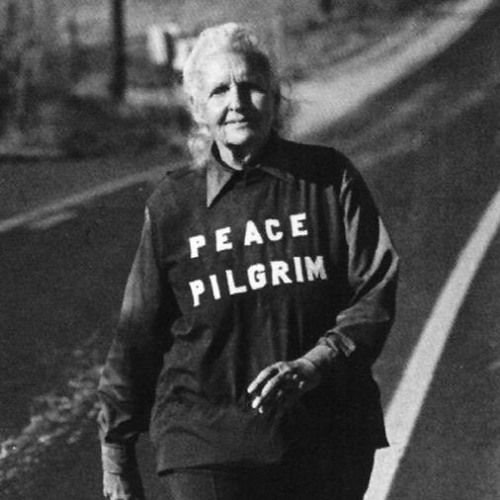
Image result for peace pilgrim

It took her 15 years to figure it out, but a woman who took the name Peace Pilgrim, let her steps be guided by peace.  A typical teenager and young woman, Peace loved fashion; she sought the good life.  But on a walk through the woods one evening, a voice came to her.  She began to question her choices in life.  She didn’t know exactly what it meant, but she began listening to the voice inside her….and slowly—bit by bit—her life changed.

It began with helping her neighbors, staying with a sick friend during that friend’s convalescence, assisting troubled youth.  During her years of discernment, she began to feel the burden of ownership…so she started getting rid of her possessions.  (Peace Kando-ed before Marie Kando was even born.)  In a palpable way, the strong connection between inner peace and world peace began to crystallize for Peace.

Finally, Peace knew what she was being called to do:  she would walk across the country spreading the message of peace….she would walk, in fact, until world peace had been achieved.

She began, of all places, at the Rose Bowl Parade, New Year’s Day, 1953.  Here’s the explanation Peace shared with people during seven trips of walking across the United States:

“You may see her walking through your town or along the highway—a silver-haired woman dressed in navy blue slacks and shirt, and a short tunic with pockets…in which she carries her only worldly possessions.  It says, “PEACE PILGRIM” in white letters on the front of the tunic and “25,000 Miles on Foot for Peace” on the back.  She has walked the 25,000 miles.  However, she continues to walk, for her vow is, “I shall remain a wanderer until (hu)mankind has learned the way of peace, walking until I am given shelter and fasting until I am given food.”  She walks without a penny in her pockets and she is not affiliated with any organization.  She walks as a prayer and as a chance to inspire others to pray and work with her for peace.” (vii)  Peace walked until she died—ironically—in a car accident in 1981.

Are you ready to sell everything and start walking around the country for peace, walking until you’re given shelter and fasting until you’re given food?  Not to worry.  Peace Pilgrim was clear from the beginning that embarking on a peace pilgrimage was her calling, a calling it took her 15 years to discern.  A big part of her mission was to invite others to think about what their calling to peace might be.

What do you imagine your calling to peace might be?  I was a little hard on John the Baptist earlier, with all that brood of vipers stuff.  Truth is, when his listeners began pushing back, he gave them some good ideas about how to create peace:  “Whoever has two coats must share with anyone who has none; and whoever has food must do likewise.”  Luke tells us that “even tax collectors came to be baptized, and they asked him, ‘Teacher, what should we do?  He said to them, ‘Collect no more than the amount prescribed for you.’  Soldiers also asked him, ‘And we, what should we do?’  He said to them, ‘Do not extort money from anyone by threats or false accusation, and be satisfied with your wages.’”

It’s interesting that these last two suggestions are made to people in specific professions, tax collectors and soldiers.  John tailors his responses to those people based on where they are in life….because that’s where the way of peace begins, isn’t it?  Not necessarily on some grand pilgrimage around the country, but in the small actions of our everyday lives.

It’s good to hear about people like John the Baptist and Peace Pilgrim, people who were able to commit every aspect of their lives to the way of peace.  But what about us?  How will we commit ourselves to the important work of peacemaking?  How will we—in the context of the lives we already are living—create peace in the world?  How will we contribute to the world and its people becoming a little more whole?

In a recent Monday’s Musings, I confessed that all those times I’d been asking you all if you didn’t feel overwhelmed by all the broken places in the world, I was actually talking about myself.  Oh, yes.  I see all the mending the world needs and it mostly makes me want to crawl into bed and pull the covers over my head.  It’s true that a big part of my personal calling in the work of peacemaking is the work I do here at church—preaching about peace, working with the Faith Formation team to provide classes on peace (Rollin’s class), working with the worship team on peace, being in conversation with Earth, Racial Justice, and Benevolence teams on the important work of acting the world into wellbeing.

But when it comes to engaging in peacemaking outside the church?  That can get overwhelming.  How does one decide?  There is so much work to do, all of it important, crucial work…but there are only so many hours in the day.  How do you decide?

Then I signed up to preach once a month at the prison.  Bingo!  I’m a preacher; they need preachers.  There’s a lot of brokenness in the world that I’m never going to be able to mend.  But the second Sunday of the month from 6:30 -7:30 p.m.?….yeah.  I can mend that tiny bit.

What tiny bit might you mend?  What skills or passion from your day job—or your pre-retirement job—might you employ in mending one tiny piece of the world?  And what might happen if each and every one of us tends to mending one or two tiny bits?  If each of us diligently works to create shalom in our small corner of the world, might shalom then become more real for the rest of world?  What say we give it a try?

In the name of our God, who creates us, redeems us, sustains us, and hopes for our wholeness.  Amen.

Kimberleigh Buchanan  © 2019  (2016)


Posted in Uncategorized | Leave a comment

Sermon: “Making God’s Dreams Come True” (Isaiah 65:17-25) [11/17/19]


Five of us went to prison last Sunday evening.  (Beaver, Peggy, Mary, Tisa) Thankfully, they let us back out.  While we were there, we shared in worship with close to 100 women.

Here’s the thing about worship at the prison–it’s about as real as it gets.  Oh, sure.  Some of the women come just get out of the dorms.  But a lot of the women come because they need the worship, they need that connection with God.  For those women, God keeps them sober.  God keeps their children safe.  God gives them hope they’ll be able to make better decisions when they get out.  Stripped of just about everything else, those women hang onto God for dear life.  Literally.

Preaching in prison is very different from preaching outside.  On the outside, we have so many choices, so many options of what to do with our time…what clothes to wear, what job to take, what continent to visit on our next vacation, what justice work we want to do, what to wear to church, what to eat after church.  Who to vote for.  Whether to vote at all.

We even have the luxury of whether or not to believe in God.  There’s so much we can do for ourselves, belief in God’s not really necessary for living successful, even, happy lives.  Many of us–perhaps even most of us–do choose to believe in God, but for most it’s not a life-or-death prospect.  Preaching at the prison is giving me a whole new perspective on what it means to depend on God…and on what it means to be in constant conversation with God about how to make the world a better place.

Today’s passage from Isaiah is that kind of conversation.  It happens after Judah has been defeated by Babylon and many of their people taken back to Babylon in captivity.  (Talking about the Babylonian Captivity inside a prison takes on a whole new meaning.)  The people have now returned and have been in the rebuilding process for a while.  As we heard last week when we talked about rebuilding the temple, the people had become discouraged.

Discouragement often comes when we lose a vision of where we’re headed.  Isaiah senses that’s what’s happening…and so he shares the vision he has received from God, a vision of what God dreams for the world.  I invite us to hear the prophet’s words once more.  May we receive them as a clear picture of what God dreams for the world.

A reading from Isaiah.  For I am about to create new heavens and a new earth; the former things shall not be remembered or come to mind. But be glad and rejoice forever in what I am creating; for I am about to create Asheville as a joy, and its people as a delight. 

I will rejoice in Asheville, and delight in my people; no more shall the sound of weeping be heard in it, or the cry of distress. No more shall there be in it an infant that lives but a few days, or an old person who does not live out a lifetime; for one who dies at a hundred years will be considered a youth, and one who falls short of a hundred will be considered accursed. 

They shall build houses and inhabit them; they shall plant vineyards and eat their fruit. They shall not build and another inhabit; they shall not plant and another eat; for like the days of a tree shall the days of my people be, and my chosen shall long enjoy the work of their hands. 

They shall not labor in vain, or bear children for calamity; for they shall be offspring blessed by God— and their descendants as well. Before they call, I will answer; while they are yet speaking, I will hear. 

The wolf and the lamb shall feed together, the lion shall eat straw like the ox; but the serpent—its food shall be dust! They shall not hurt or destroy on all my holy mountain, says our God.

Yeah.  Okay.  I was a little sneaky there, substituting Asheville for Jerusalem.  Strange how easily God’s dreams from two centuries ago are still relevant today, isn’t it?  The line that always slows me down is They shall build houses and inhabit them…  How many people who build some of these mansions on the tops of mountains inhabit them?  Probably not many.  On the other hand, that’s exactly what happens with Habitat for Humanity.  Folks who buy Habitat houses work on them then inhabit them.  I suspect this verse was very much in the minds of Millard Fuller and Clarence Jordan when they first thought up the Fund for Humanity that became Habitat for Humanity.

Another line that gives me pause is this one:  I will rejoice in Asheville, and delight in my people; no more shall the sound of weeping be heard in it, or the cry of distress.  One commentator I read wondered what it would be like to live in a city where no one wept or cried out in distress.  Can you imagine?  An Asheville where everyone has an affordable place to live?  With adequate heat?  Where everyone has enough food to eat?  Where everyone has easy access to adequate health care?  Where everyone has meaningful, well-paying work?

My point today is not to convince you that, as people of faith, this is the work we’re called to do.  Many of you have been doing this kind of justice work for longer than I’ve been alive.  And it gives me great joy–and hope–to see our children and teenagers actively engaged in this work, as well.

So, if convincing us to engage in justice work isn’t the point of this sermon, what is?  The invitation today is to a subtle shift in thinking…a shift from seeing ourselves as “doing God’s work in the world” to understanding ourselves as “working with God to transform the world.”  One commentator on this passage asked, “What are the capacities of God?  In our mystery-stripped world, we tend to focus on human capacities.”  In our “mystery-stripped world”…what a beautiful–and accurate–line.  We really have lost a sense of mystery, a belief that sometimes, things or beings beyond our control can help us in acting the world into wellbeing.  So often, we try to do everything ourselves.  We focus only on human capacities.  We rarely ask what God’s capacity might be.

Maybe we avoid asking about God’s capacity because we don’t want to practice bellhop theology–that, like a bellhop in a concierge hotel, God is there simply to do our bidding.  We’ve grown way past that theology.  In an effort to distance ourselves from it, though, I fear we have–in functional terms–done away with God entirely, except maybe here in church on Sunday.

So, what might happen if we invite God into a more active role in our justice work…not to do the work for us, but to partner with us in this important work?  What if we open our minds and hearts to the divine presence in the work of racial justice and economic justice and gender justice and health justice and the vital work of peacemaking?  What if we didn’t try to go it alone, but actively engaged every activist action with prayer?  What if we invited God back into the work of social justice?

What if we saw our work of repairing the world more literally as the work of making God’s dreams for the world come true?

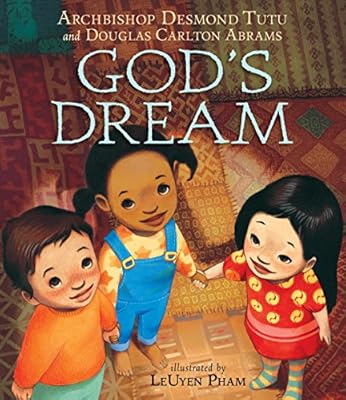
I’m going to read another piece we’ve already heard this morning, the book I read to the children earlier, God’s Dream.  As I read this simple rendering of what God hopes for the world, keep in mind who wrote it–Archbishop Desmond Tutu of South Africa…he who helped people keep the faith during Apartheid, he who regularly spoke truth to power, he who was instrumental in the Truth and Reconciliation process after Apartheid ended.  This one who had been through and seen hell all around him still had enough faith, enough love, enough belief in God, enough hope to write this book for children.

Image result for god's dream


Dear Child of God, What do you dream about in your loveliest of dreams?  

Do you dream about flying high or rainbows reaching across the sky?

Do you dream about being free to do what your heart desires?

Or about being treated like a full person no matter how young you might be?


Do you know what God dreams about?

If you close your eyes and look with your heart, 

I am sure, dear child, that you will find out.


God dreams about people sharing.

God dreams about people caring.

God dreams that we reach out and hold one another’s hands 

and play one another’s games and laugh with one another’s heart.


But God does not force us to be friends or to love one another.


Dear Child of God, it does happen that we get angry and hurt one another.

Soon we start to feel sad and so very alone.

Sometimes we cry, and God cries with us.

But when we say we’re sorry and forgive one another, 

We wipe away our tears and God’s tears, too.


Each of us carries a piece of God’s heart within us.

And when we love one another, the pieces of God’s heart are made whole.


God dreams that every one of us will see that we are all brothers and sisters–

yes, even you and me–

even if we have different mommies and daddies or live in different faraway lands.

Even if we speak different languages or have different ways of talking to God.

Even if we have different eyes or different skin.

Even if you are taller and I am smaller.  

Even if your nose is little and mine is large.


Dear Child of God, do you know how to make God’s dream come true?

It’s really quite easy.

As easy as sharing, loving, caring.

As easy as holding, playing, laughing.

As easy as knowing we are family because we are all God’s children.

Will you help God’s dream come true?  

Let me tell you a secret…

God smiles like a rainbow when you do.


Will we help God’s dream come true?

In the name of our God, who creates us, redeems us, sustains us, and hopes for our wholeness.  Amen.

Posted in Uncategorized | Leave a comment

Sermon: “Mending the World” (Haggai 1:15b-2:9) [11/10/19]


Some of the people gathered that morning in the footprint of the old temple remembered the former temple’s glory…the tall pillars, the broad areas for prayer and study, the entrance to the Holy of Holies, where God once lived.  They remembered pilgrimages to the temple, making their offerings, and, especially, the excitement of the high holy days.

They also remembered receiving word that the temple had been destroyed.  The news hit like a shot.  Gone?  How could the temple be gone?  Then came the question that rattled them to their core, the question that hung over them in exile:  Where was God now?

After nearly 70 years, the exiles have returned to Judah.  They’ve slowly begun to rebuild…first, the protective wall around the city, now, the temple.  After laying the foundation for the new temple, they apparently had grown discouraged.

Sensing that discouragement, Haggai–feeling a nudge from God–speaks to Judah’s governor, high priest, and people.  The prophet asks those gathered around the empty space where their beloved temple used to be:  “Who here is left among you who saw this Temple in its former glory?”  I suspect a few aged arms were lifted.  “And how does it look to you now?” the prophet asks.  I imagine heads dropping in sadness.  Perhaps the prophet’s voice got softer here.  “Doesn’t it seem like nothing in comparison?”  Were those sighs the prophet heard?

The grief–and disappointment–must have been overwhelming.  To have lost your country…to have lived in exile…to have returned from exile only to find things a mess, still in need of rebuilding.  Of course, the people were discouraged.  Of course, they had lost hope.

When I first read this text last summer, I thought we’d be using it to talk about the recently-completed renovation of our sanctuary.  Plans changed.  We might still reminisce about the good old days of horsehair plaster and how, maybe drywall wouldn’t be so bad.  We could do that…but I think if we did, we’d be missing the prophet’s point…

…because I don’t think Haggai was really talking about a bricks-and-mortar temple that morning.  He was talking about something deeper, something that went to the hearts of those discouraged people.  Haggai was talking about hope.

Interesting, isn’t it, that on this journey of living as a Just Peace congregation, we keep circling back around to hope?  The people Haggai addressed had lost hope.  Without hope, they couldn’t rebuild.  Without hope, they couldn’t even imagine rebuilding the temple.  Without hope, they could not re-form themselves into a new version of the strong, faithful community they once were.  Without hope, the community would die.

When I realized today’s sermon likely would not be about horsehair plaster or drywall, I began to wonder what it would be about.  That’s when it hit me–it’s about the world.

As a Just Peace church, we’re committed to creating peace–working for shalom–in the world…all kinds of peace, all kinds of justice–economic justice, racial justice, gender justice, just relations between countries, which means working to end war…As a community, we’re committed to doing everything we can to create peace, to act the world into wellbeing.

But, like those ancient Judahites, I imagine us, too, standing around, thinking about the former glory of our world–the celebrations of signing the Paris Climate Agreement, the end of Apartheid in South Africa, women in Saudia Arabia receiving driver’s licenses, women in our own country getting the vote a century ago.  The passage in 1964 of the Civil Rights Act, then a year later, the Voting Rights Act (which was not renewed).  In 1990, the Americans with Disabilities Act.  So many amazing things have happened in our world.  MARRIAGE EQUALITY!!!!  Unimaginably good, wonderful, glorious things happened…in the old days.

But now?  So much seems in ruins.  How are we ever going to rebuild?  How are we ever going to create peace in this world?

As I’ve been trying to wrap my head around the idea of Just Peace, I’ve been drawn to the Jewish concept of tikkun olam, repair of the world.  16th c. rabbi Isaac Luria told this story.

Before God created the world, the entire universe was filled with a holy presence. God took a breath to draw back and make room for the world. From that first breath, darkness was created.  And when God said, “Let there be light,” lightness was created filling vessels with holy light. God sent those vessels to the world, and if they had each arrived whole, the world would have been perfect. But the holy light was too powerful to be contained, and the vessels split open sending sparks flying everywhere. Some of God’s holy light became trapped inside the shards of the vessels.  It is our job to release and gather the sparks.  When enough sparks have been gathered, tikkun olam, repair of the world will be complete.

Related image

This story is breathtaking in its beauty….that every person, every part of creation carries within us a spark of God’s light…that the path to shalom, peace, wholeness involves releasing those sparks of light so that all the sparks might be gathered together…that the wholeness of the world will come through connection, not domination, through openness, not division.

Another beautiful thing about this story is that it begins with brokenness…yet even in the midst of the brokenness, sees the light in it.  It’s like the second question Haggai asks.  First, he asks:  ‘Who is there left among you who saw this Temple in its former glory?’  The question no doubt, brought to mind pictures of the temple as they remembered it.  With the picture of how things were lodged in their minds, Haggai then asks, ‘And how does it look to you now?’

It’s a brilliant question.  The first question invites people to imagine the past.  When Haggai asks “And how does it look to you now?” he’s inviting the people back into the present, to look clearly at the reality in which they actually are living.

Perhaps the people had gotten stuck.  In their grief over losing what had been, maybe they were struggling to move forward.  Maybe they had thought they were ready to rebuild, but when they actually started gathering the stones and mortar, when they saw the gaping chasm between the tangible materials of rebuilding they held in their hands and their memories of what had been, maybe the grief overwhelmed–even paralyzed–them.

Haggai’s question, “And how does it look to you now?” is perhaps the most prophetic thing in this whole passage.  Because it invites the people to look at reality as it is.  Acting the world into wellbeing, repairing the world–we can’t build that work on our remembrances of how wonderful things were in the past.  If we are to do our work well, we must begin where things are.  Here.  Now.

A great example of this is Bill McKibben’s book, Eaarth.  That’s Eaarth, with two a’s.  The thesis of this book, which was written in 2010, is that climate change would soon reach the point where we would not be able to reclaim the Earth we once knew.  Because we no longer inhabit Earth.  We now inhabit a new, less people-friendly planet named Eaarth, with two a’s.  If we begin, not by trying to recapture old glory days, but grounded instead in what’s real today, if we accurately identify the places where our beloved Eaarth is broken, we’ll be better able to repair the world.

Once Haggai asks the people to remember what the temple had been, then to name what they see in front of them, he gives them space to grieve.  “Doesn’t it seem like nothing in comparison?”  And indeed it did.  What they saw in front of them, literally, was nothing.  Grief does that to us sometimes, doesn’t it?  We can’t see what’s actually in front of us because all we can see is what isn’t in front of us any more.  Haggai gives the people a moment to grieve.

Then he invites them to crawl out of their stuck place and get cracking.  But take courage now, Zerubbabel!— it is Yahweh  who speaks.   Courage, High Priest Joshua ben Jehozadak!  Courage, all you people of the country!—it is Yahweh who speaks.  To work!  Isn’t that a beautiful translation?  To work!  I am with you—it is Yahweh Omnipotent who speaks.  As I promised I would be when you came out of Egypt, and my Spirit remains among you.  Don’t be afraid!  For Yahweh says this:  

 A little while now, and I am going to shake the heavens and the earth, and the sea and the dry land…The new glory of this temple is going to surpass the old, says Yahweh  Omnipotent… And here’s a remarkable statement…The new glory of this temple is going to surpass the old… and in this place I will give peace.’

In this place, I will give peace.  Peace won’t come from their remembrances.  Peace is going to come from looking at things as they actually are.  With these bricks.  With this mortar.  With this world.  With its current state of brokenness.  As we look squarely at what is broken in our world, then we’ll be able to repair it.  When we see what precisely in the world needs to be mended, then we can begin the needed mending…one stitch at a time.  When we release the spark of divine light from our own beings and gather our sparks with others’ sparks, then the world will become whole.  Then the world will achieve shalom.  Then the world will be at peace.

And so, people of God:  Take courage, it is Yahweh who speaks.  To work!  To work!  To work!

Larry sings, “If Not Now.”

In the name of our God, who creates, us redeems us, sustains us, and hopes for our wholeness.  Amen.


Kimberleigh Buchanan  © 2019

Posted in Uncategorized | Leave a comment

Sermon: “White Humility” (Luke 18:9-14) [10/27/19]


Remember what we did in worship the first Sunday in January?  It was Epiphany, the day we tell the story of magi following a star to Bethlehem and finding a babe lying in a manger.  On that day, we each received at random a paper star with a word on it.  (Terri)  The invitation was to allow that word to guide us through the year.  (If you weren’t here that Sunday and would like a star word to guide you the next three months, there are some on the table.)

Some of us liked our words immediately.  Some of us did NOT.  Humility.  That was my word.  I did NOT want humility to be my guide through the year.  What about discernment or transformation or, my spouse’s word, joy?  No.  I had to get humility.  Epiphany night, at the choir party, I was hounded.  “What was your word?  What was your word?”  I told them I was too embarrassed to tell them…at which point, Cara piped up:  “Humility!”  Thanks, Cara.

The parable Jesus tells “to some who trusted in themselves that they were righteous and regarded others with contempt,” is the quintessential story of humility in Scripture.

Two people go to the temple to pray.  The Pharisee thanks God he’s not like thieves or rogues or adulterers.  And he’s sure not like that tax collector over there!  He fasts twice a week and tithes to the temple.  The Pharisee–if you ask the Pharisee–is a very righteous person.

The tax collector, on the other hand, stands far off, out of earshot.  So aware is he of his failings, the tax collector can’t even look up to heaven.  He simply asks God for mercy.

Jesus commends the tax collector–assumed to be a sinner by the “holy” people– as the one who went home justified.  The Pharisee–who took pride in his righteousness– did not.

Humility.  What is it?  And what role might it play in our Just Peace efforts?

The Rule of St. Benedict includes 12 steps–yes, 12 steps–of humility.  I would not recommend reading the original version of those steps.  Humility looked a lot different 1500 years ago than it does now.  Instead, I would commend to you Sr. Joan Chittister’s current day interpretation of Benedict’s take on humility.

Sr. Joan notes that “Benedict tells us that true humility is simply a measure of the self that is taken without exaggerated approval or exaggerated guilt.”  A lot of times, when we hear “humility,” we think “humiliation.”  In her description of humility, Sr. Joan makes clear the distinction.  She says that true humility isn’t demeaning or shaming.  True humility is knowing our place in the universe, or as poet Mary Oliver says, “knowing our place in the family of things.”  The truly humble person doesn’t inflate their personality.  Neither do they deflate it.  True humility happens when we are simply ourselves.

Which seems to be what’s going on in today’s parable.  The Pharisee’s prayer isn’t a prayer at all.  He uses the prayer as an opportunity to convince others, God, maybe even himself, that he’s a righteous person.  The Pharisee thinks of himself as greater than he actually is…probably out of fear that he is less than he actually is.  His inability simply to be himself prevents him from attaining the true righteousness he so desires.

The tax collector uses his time of prayer to come clean.  He is as honest as he knows how to be about who he is and what he’s done.  It’s in facing himself as honestly as he can that the tax collector experiences true redemption.  It is he who goes home justified.

We often think about humility in terms of individual spirituality, which is appropriate.  If we aren’t honest about who we are, how can we grow, spiritually or otherwise?

But it’s also important to remember that we don’t live in a vacuum.  We live our lives in the context of the rest of the universe.  As Sr. Joan says:  “Humility is the foundation for our relationship with God, our connectedness to others, our acceptance of ourselves, our way of using the goods of the earth, and even our way of walking through the world, without arrogance, without domination, without scorn, without put-downs, without disdain, without self-centeredness.  The more we know ourselves, the gentler we will be with others,” (98).

Humility being my star word, I’ve looked at just about everything through that lens this year.  Because the preacher told me to.  Taking up the tin whistle and starting to play in the Irish Music Session in Black Mountain…has been a very humbling experience for someone who’s already a musician.  I’m finding, though, that I make more progress when I’m honest about my actual skill level than when I try to pretend I know more than I do.  If I try to play tunes I don’t actually know, the results are, well, humiliating.

Another place I’ve been thinking about humility is in relation to white supremacy.  For those of us with white skin, reckoning with our whiteness is, perhaps, the hardest thing we’ve ever done.  I suspect it might be even harder for those of us from the South.  To wake up to the fact that life is much easier for us because we are white?  That many of the advantages we have in life aren’t due solely to our own hard work, but also because the deck is stacked in our favor?  That recognition–especially for those of us who are committed to social justice–can be devastating.  Even humiliating.

Image result for 13th

Several of us gathered here Friday before last to watch “13th,” a documentary by Ava Duvernay that follows the unbroken progression from slavery, through convict leasing during Reconstruction, through Jim Crow, to the current plague of mass incarceration of people of color.  All 16 of us there Friday night are white.

After the film, I asked how people felt.  The first response was, “sick.”  One person said they felt physically ill.  Another person said they felt “foolish” for not having known about the racist actions of our government in the 1970s, 80s, and 90s that led to mass incarceration.  One person said they felt ashamed.  Many admitted to feeling angry.

I asked the question about feelings Friday night because it’s not one I often hear in conversations about white supremacy with white people.  In fact, in most conversations around race, the feelings of white people often are discounted and dismissed….or labeled as “fragile.”  A meeting I attended earlier this year is a case in point.

In a gathering of white and black folks to talk together about racism and white supremacy, a white person made a passing reference to being afraid.  An older black woman spoke up.  “Don’t tell me about being afraid.  I’ve been afraid all my life!”  The white person shut down.  All of us white people shut down.  We shut down because we knew that African American woman was exactly right.  Walking through the world in her skin, she’s experienced far more fear than those of us with white skin will ever experience or understand.

I hear that woman’s words.  I believe them.  I want to do everything I can to make the world a place where people don’t have to be afraid to walk through the world as themselves.  But what’s becoming clear to me is that white people ignoring our feelings of shame isn’t helping to dismantle white supremacy.  In fact, ignoring our feelings, shoving them down, or allowing ourselves to be paralyzed by them—and this next statement might get my liberal card revoked—but if we white people don’t face our feelings of shame, white supremacy will only get stronger.

…Because dismantling white supremacy requires true, heart-deep transformation.  How can we experience heart-deep transformation if we aren’t completely honest about who we are?  The tax collector went home justified—transformed—because he faced up completely to who he was and what he had done.  The Pharisee denied his true feelings, he covered over his feelings with literal self-righteousness…and left the temple in exactly the same state as he’d entered it.  No social system in which he participated got changed by the Pharisee’s trip to the temple.  Because of his transformation, though, the tax collector was prepared to change the unjust system in which he participated.

Dismantling white supremacy requires active work…the work of relationship-building, of legislative action, of intentional reform efforts in relation to every social system we have—criminal justice, economic, housing…all of it.  We must engage in actions that will lead to racial justice in our community, our country, the world.  I’m not denying that.  At all.

What I am suggesting—and what today’s story of the tax collector and the Pharisee suggests—is that we’ll be better partners in that work, we’ll be able to engage more skillfully in those actions, if we’ve first confessed—fully—who we are and what we’ve done.  If we are to deal with the shame of racism in our world, we must first face the shame of our own whiteness.

And the best place to do that confessing…is right here in worship.  Until recently, we haven’t been consistent on having an actual confession each week.  Confession has only happened some Sundays.  I realize now that I’ve been remiss in omitting the Confession some weeks.  Why deprive us of the chance to confess fully who we are—all we’ve done—and leave here with our hearts transformed?

If our hearts are transformed, won’t we then be better able to do the justice work that’s so desperately needed in the world?  If our hearts are transformed, won’t we feel freer to create just peace in our community?  If our hearts are transformed, won’t we then be better equipped to make God’s dreams for the world come true?

I want to end with a confession of my own.  (Get guitar)  A first step in my own struggle to deal with my participation in white supremacy as a white Southerner is to acknowledge my own family’s practice of enslaving other human beings.  (Sing, “Who Built this House?”)


Posted in Uncategorized | Leave a comment

Poem: “Portrait of Doug”

Image may contain: one or more people

Portrait of Doug


I did not know him,

the man himself.

But I have felt his presence—

in the tunes

in the welcome

in the far-off looks and sighs

of those who knew him—


sighs of sorrow,

looks of love.


I feel his welcome

in the welcome of others.

After just a few months

I’m hopelessly inclined

to love tunes he loved.

I search for connection with him

when I play the flute

given by the one

who loved him most.


But I did not know him,

the man himself,

will never know him

as others have known him.


And yet…


In the portrait created

by another who loved him,

I see him—


not only in the white hair

trimmed beard

and wrist-protector sock


not only in the mandolin

rimmed in light

resting on his knee


not only in the glasses

and necklace

and wedding ring


not even only in the expression

of studied concentration,

meditation…


I learn the most about this man

I will never know

from the light

hovering between man

and mandolin.


Does the light shine on the man?

Or does it shine from him?


I think from.

I hope from.


If the light shines on the man,

I will only ever know him

as others have known him.


If the light shines from him

then he is still

somehow

here…

still

somehow

knowable.


I’ve heard many stories

about the man of which I write.

I’ve been glad to hear them,

to know of the clarity and love

with which he lived his life…


The artist, though,

has given me a

greater gift.


Seeing the man

through her loving, skillful eye,

I—finally—have met him for myself.


I sense his presence.

I see his light.

I feel his challenge

to help him live on

by sharing that light with others.


I will.


I will.


kjb

10/25/19


Doug Murray led the Irish music session I play in at the White Horse in Black Mountain.  My first time to attend was the first Tuesday night session after Doug’s funeral.  I never got the chance to meet Doug, but his spirit very much lives on.  Many thanks to Puck Askew for her amazing artwork!

Posted in Uncategorized | Leave a comment

Sermon: “Nevertheless…” (Luke 18:1-8) [10/20/19]

Jesus told the disciples a parable on the necessity of praying always and not losing heart.

Anybody here losing heart?  Easy to do these days, isn’t it?  Climate change, war, abhorrent treatment of immigrants, corruption…oh, yes.  These days, it’s easy to lose heart.

Curious about what led Jesus to tell his disciples this parable, I read the verses that come before.  In Luke 9, Jesus “sets his face to Jerusalem.”  On the way, Jesus tries to prepare the disciples for the day when he’ll no longer be with them.  The times he describes are dire.

When the disciples anxiously ask where these terrible things will happen, Jesus says:  “Wherever the carcass is, there will the vultures gather.”  Not the most calming image in the world.  So, Jesus follows it up with this parable on the need to pray always and not lose heart.

There’s a judge who fears no one, not even God.  A woman, who has no other support, keeps coming to the judge, asking for legal protection from her opponent.  For a while, the judge stands firm, but finally relents.  ‘This woman won’t leave me alone.  I’d better give her the protection she seeks, or she’ll keep coming and wear me out!’”

Sometimes persistence is the only thing that leads to justice…to keep on and on making your case until the person to whom you’re making it relents.  That the judge in the story doesn’t care about anything or anybody highlights the fact that the only thing that makes him change his mind is the annoyance he feels at the woman’s persistent requests.

I don’t know yet what it’s going to look like when we begin living with more intention as a Just Peace church.  Here’s what I do know.  If we’re going to do it well, we’re going to need to pray like that woman who annoyed the judge.  If we’re not to lose heart, we’re going to have to pray persistently, consistently, doggedly.

So…drum roll please…it’s time to introduce the idea of living as a Just Peace church.

At the heart of the UCC’s understanding of “just peace,” is the Hebrew concept of shalom.  In the book, A Just Peace Church, the authors quote “Old Testament scholar Gerhard von Rad, who defines ‘shalom’ not as some inner… pietistic possession, but as a communal wellbeing in which God’s creation is justly ordered.  It is a state of existence in which all aspects of God’s creation play their individual roles harmoniously for the good of the whole.” 

That is the goal of any justice work in which we engage– “a communal wellbeing in which God’s creation is justly ordered…a state of existence in which all aspects of God’s creation play their individual roles harmoniously for the good of the whole.”

At this week’s Racial Justice Team meeting, someone asked how the work of Racial Justice intersects with Just Peace.  If your skin has more melanin (not melatonin, as I mistakenly said several weeks ago), how easy is it to “play your individual role harmoniously for the good of the whole?”  How about for those of us who have less melanin?  The power dynamics in our world are so whop-sided, none of us is playing the role creation assigned us.  Some of us have more power than we were created to have; others have less.  Because none of us is playing our natural role, none of us is at peace.  Peace only comes when we can live fully as who we’ve been created to be.  Thus, those working for racial justice seek shalom–authentic wholeness–for all who are diminished by systemic racism, which is everybody, right?

The same is true for those who are working for environmental justice.  Are we living “harmoniously for the good of the whole” in relation to creation?  No.  But those who are persistently working for environmental justice–through legislation, like the Citizens Climate Lobby, or through direct activism, like Sunrise Movement–are seeking shalom, “a communal wellbeing in which God’s creation is justly ordered” for all creation.

Another vital part of just peace/shalom is recognizing the dynamic relationship between cultivating inner peace and working for peace in the world.  Just Peace work begins within.  That means that our classes here, our prayer groups, our worship services, all of that is just as important to our work of peacemaking as justice work we do out there…because how can we create shalom out there if we’re at war internally?  How can we work for the harmonious good of the whole if cacophony rules our spirits?

There’s an insert in your bulletin.  On it, you’ll find the proposed covenant for FCUCC’s Just Peace process and the motion for the congregation to approve it.  This version is from 2013.

On the other side of the insert, you’ll find a worksheet.  Yes.  More homework.  In the middle of the worksheet, you’ll see the definition of shalom I read earlier.  Around that, you’ll see listed various ministries of our congregation.  Based on the definition of shalom provided, how does each ministry connect with Just Peace?  What ministries have I forgotten?  How do those ministries engage in the work of shalom/just peace?  In your personal life, how are you living just peace and shalom?  How are you, personally, working for the good of all?

True or false.  There is an International Day of Peace.  (Responses)  What’s the date?  (Sept. 21)  How long has the day been celebrated?  (In its present form, since 2002.)  Do you know how was the day established?

Image result for peace one day pictures

Peace One Day is a film that documents British filmmaker Jeremy Gilley’s work to establish an International Day of Peace.  In 1998, Jeremy became overwhelmed by the state of the world, particularly, all the war and the suffering it causes.  He decided to begin working to establish a global day of cease-fire with a fixed date.  If his efforts failed, he decided, he’d have a great film.  If his efforts succeeded?  That could be huge.

As his work began, Jeremy learned that, in 1981, the UN had passed a resolution– sponsored by Costa Rica–establishing an International Day of Peace.  The date was set for the third week in September, to coincide with the opening of the UN General Assembly.  The Day of Peace did not include a global cease-fire.  The film chronicles Jeremy’s dogged persistence in working for an International Day of Peace with a fixed date that included a global cease fire.

In the film (which is available on YouTube), you see Jeremy meeting with diplomats from countries around the globe, several Nobel Peace Laureates, the General Secretary of the UN.  You see his efforts to enlist the United Kingdom and Costa Rica to co-sponsor the new resolution.  You see more than a little bureaucratic rigamarole.  You also travel with Jeremy to places of unrest in the world—like Somalia.  You see Jeremy meet with the United Arab League and be brought up short when the film he shows about the Peace One Day movement includes a clip of Israeli Prime Minister Shimon Peres, but no Arab leadership.

You also see Jeremy in the General Assembly on September 7, 2001, when the UN approves the resolution for establishing an International Day of Peace with a fixed date of September 21 and a call for a 24 hour global cease-fire on that day.

You also see Jeremy four days later at a gathering outside the UN.  Children are playing violins.  People are gathered to hear UN Secretary General, Kofi Annan, ring the Peace Bell and announce the new resolution for an International Day of Peace.  The cameras also catch a shot of an airplane flying into one of the World Trade Center towers.  Suddenly, the process of getting the word out about the International Day of Peace gets much more complicated.

The film ends with an interview with Ahmad Fawzi, Director of News and Media Division, Department of Public Information at the UN.  Mr. Fawzi had been a conversation partner for Jeremy throughout the four year process of getting the Day of Peace resolution passed.  It’s October 2003.  Two International Days of Peace are in the books.  There has yet to be a cease fire.  Jeremy asks Mr. Fawzi, What gives?

In a poignant moment, Fawzi acknowledges that, two years in, the International Day of Peace is more of an abstract celebration for most people, a day to dance and sing and hug each other.  Getting countries actually to practice cease fire on September 21st every year?  That will take a lot more work.  After a pause, Fawzi says, “It’s not one film, Jeremy.”  One film won’t do it.  “It’s going to take dozens of films, dozens of books, dozens of actions.”  The first expression on Jeremy’s face when he hears these words is despair.  But then you see the light dawn.  All of the individual actions we take are part of a greater effort.  And, as persistent as he had been for five years, as much of his life as he had given to the movement, in many ways, the process had only begun.

Three years before this meeting with Mr. Fawzi, the Dalai Lama had said this to Jeremy.  “Peace is our moral responsibility.  Make the attempt!  It doesn’t matter if it happens in our lifetime or not.  We are human beings.  We have the responsibility to show the right path…or at least make an attempt for a better future.  We might not enjoy that brighter future.  It doesn’t matter.  This is meant for humanity, meant for the world.  So, it doesn’t matter how limited the effect.  We must make every effort for the promotion of peace and inner values.”

As we seek to engage in the work of just peacemaking here at FCUCC, may these words and the example of one persistent woman inspire us to pray always and not to lose heart.


In the name of our God, who creates us, redeems us, sustains us, and hopes for our wholeness.  Amen.

Kimberleigh Buchanan  © 2019


Posted in Uncategorized | Leave a comment