Sermon: “Hoping for Peace” (Psalm 85) [10/6/19]

Several years ago, while reading through the obituaries in the Atlanta paper, I ran across one for a Mr. Jones, who’d just died at the age of 104.  The piece noted that, at his death, Mr. Jones was still working for a car dealership and that he was still paying into his 401K.  You know what that man had?  That man had hope.  A lot of hope.

Do you?  Do we, as a community, have hope?

For those who haven’t been here the past couple of weeks, here’s what’s been going on.  I’ve been trying—unsuccessfully—to introduce a new church theme.  The theme is Just Peace.  I planned to roll it out two weeks ago, but realized we needed to set the context first.  Remember the context?  The universe.  All creation.  Yeah.  That narrowed it down nicely.

Then I thought I’d roll out the theme last week, but I realized talking about peacemaking without first talking about hope didn’t make sense.  Why work for peace if you don’t have hope that work will be effective?

The Monday before, in her speech to the UN, Greta Thunberg had said to the world’s adults:  “You look to us young people for hope.  How dare you!”  As we wrestled with Greta’s words, we realized that we can’t pawn hope off onto the next generation.  We adults–and especially we followers of Jesus–have a responsibility to nurture our own hope, to tend to the thing with feathers perched in our own souls.  We looked at the story of the imprisoned prophet, Jeremiah, buying a piece of property as a sign of hope that the people who had been taken into exile would return home again.  “Fields and property will again be purchased in this land.”

During the conversation about, of all things, financing repairs to the sanctuary, I kept hearing whispered “Hope!  Hope!  Hope!” popcorn across the room.  Suddenly, it seemed, we were starting to think about hope, to tentatively try it on for size, to see how it fit.

Then, on Tuesday, I checked my email.  There was a note, a thoughtful note…that declared, “There is no hope!”  The email reminded me that talking about hope and actually hoping are two different things.  Nurturing hope takes work.  Lots of intentional work.

And sometimes, hope shows up unannounced, barges in without knocking, and plops down right in the middle of the community before we even know it’s happened.  That happened on several fronts this week.

I listed some of those signs of hope in this week’s newsletter…the Interfaith Peace Conference at Junaluska that Andrew is on the planning team for.  The conference focuses on using the arts in peacemaking.  Educational opportunities are brewing.  I got an email from Rollin Russell offering to share his experiences with the process that led to the original Just Peace resolution with the national UCC.  Rollin was working with the UCC’s Church and Society team at the time.  Last week, I mentioned FCUCC, Hendersonville’s reaching out to us as they begin the Just Peace process there.  They are potential partners with us in this process.

Now, for the really hopeful thing.  Casey came to me week before last to share a request to use our space.  Casey doesn’t share every rental request with me, but she felt this one could be important.  She was right.

Sunrise Movement describes its mission this way.  “We’re building an army of young people to stop climate change and create millions of good jobs in the process.”  “Together,” they say, “we will change this country and this world, sure as the sun rises each morning.”

Two weeks ago, during prayer time, I suggested that, if we’re looking to draw more young people here, we will have to address climate change.  The circumstances are becoming so dire, that a church that doesn’t address climate change will be irrelevant to young people.  When I played back the recording of the prayer time, I was surprised to hear that I was beating the pulpit through that entire statement.  I guess I had some feelings about it.

So, I said all that, then–just a few days later–Casey gets the call from the folks at Sunrise Movement.  Here’s what that tells me about hope.  Sometimes–and this makes total sense–we want assurance that our hope is well-founded.  We don’t want to risk hoping for something unless we already know there’s a good chance the hope will be fulfilled.

What I’m coming to find, though, and the call from Sunrise Movement confirms it–sometimes, it’s not hopefulness that emerges from hopeful circumstances, but the other way around.  Sometimes, hopeful circumstances have been there all along, but we couldn’t see the circumstances as hopeful because we weren’t open to seeing them that way.  Maybe it’s not the assurance of hope that comes first, but hope itself.

In your bulletins, is a sheet listing the Sunrise Movement’s principles.  I encourage you to read it.  Visit their website.  As we learn about what Sunrise Movement is doing, I invite us to open our hearts to hope.  I invite us to open our imaginations to all the possibilities of having this group use our space.  How might we support them?  How might we learn from them?

I also invite you to join me this afternoon at 4:30 in welcoming the group to FCUCC.  All we’ll do is say hello, then leave.  We don’t want to horn in on their meeting.  Remember, we need to tend to the thing with feathers in our own souls.  But we do want to let them know we are glad they are here and that we, too, are committed to acting Earth into wellbeing.

I got another email this week.  The sender posed an interesting question. I have been thinking a great deal about our environment and it seems to me that our internal environments and that of Earth are inextricably bound. I wonder if we have been taught to plunder our own internal resources in the same way we do those of our planet. And I wonder if we admit to the need to renew our internal resources as we endeavor to renew our planet, if this will create greater sustainability. 

I think this person is on to something…as are those who follow Richard Rohr’s idea of contemplative action.  It’s easy sometimes to think of ourselves as only contemplative or only activist.  The deeper truth–the truth Jesus lived–is that one without the other is only half a spirituality. If we focus only on our interior lives–unless we’re called to be a monk–we’ve missed the opportunity for acting the world into wellbeing, for healing the world.  By the same token, if we focus only on social activism without nurturing our own spirits, we will not be able to sustain the good work we do.

As the emailer’s question suggests, what we do in the world has roots in what’s going on inside us.  If we tend well to what’s going on inside us, actions we take in the world will be healthy and whole-making.  Action is important…as is contemplation.  A whole spirituality includes both:  contemplative action.

Planning worship each week is…interesting.  (I started to say “terrifying,” but we’ll go with interesting. 🙂  Some folks love silence and want lots more.  Others consider communal silence a form of torture.  Some folks appreciate sermons that passionately address issues of social justice.  Others prefer calm sermons related to our interior lives.  Some folks want a nice, traditional, structured service.  Others want lots of creative music and readings and dance.  Basically, every time I enter the pulpit is a crapshoot.  I roll the dice and hope for the best.

Because I believe contemplative action is the most effective means of acting the world into wellbeing, I try in every worship service to create invitations to contemplation and action.  In the last couple of weeks, I’ve come to realize that my sermons tend to focus more on the action side of things.  Today, as we contemplate hope…and peace…and harmony among the nations–particularly on this Sunday of World Communion–I invite us to spend some quiet time with today’s reading inspired by Psalm 85.  Listen.  Receive these words.  Take them in.  Find peace in them.  Find hope.  Let us pray.

Beloved, how gracious You are to your people;

You restore our souls time and time again.

You forgive our distractions

when we wander far from You;

You give us new life.


Yes, You bless us and raise up new hope;

You awaken our hearts to love.


Restore us again, O Spirit of Truth;

burn us with the refining Fire of Love!

We cannot live separated from You;

cast out the demons of fear, doubt, and illusion.

Revive us again, we pray;

may your people rejoice in You!

Have compassion on your people, O Holy One,

and grant us your forgiveness.


Listen, O People, in the silent Chapel of your heart;

and the Beloved will speak of peace to you,

to the hidden saints, to all who turn their hearts to Love.

Surely new life is at hand for those who reverence Love;

O, that harmony might dwell among the nations.


Steadfast love and faithfulness will meet;

righteousness and peace will embrace one another.

Wisdom will spring up from the ground

and truth will look down from the sky.

Yes, the Eternal Giver will grant what is good,

and the lands will yield abundantly.

Mercy and compassion are Love’s way;

You will guide our footsteps upon the path of peace

as we recognize with open hearts that You are our peace.


Peace Round:

What a goodly thing; If the children of all Earth

Could live together in peace. 

Posted in Uncategorized | Leave a comment

Sermon: “The Thing with Feathers” (Jeremiah 32:6-15) [9/29/19]

Image result for picture hope is the thing with feather

About a week into my recovery from foot surgery, I had a sleepless night…one of those wide-awake-staring-at-the-ceiling-all-night-long nights.  I started off worrying about the world–climate change, the border crisis, hunger, war, racism, sexism, incivility…politicians…

When I got done worrying about the world, I started worrying about church.  That was the night I began to wonder if we, church and pastor, have been spinning our wheels a little.  This was before I remembered that times of wheel-spinning are a sign the congregation is ready to move forward, that wheel-spinning actually can be a good thing.

On that sleepless night, though, I panicked.  “What are we going to do?  With so many people going in so many different directions, how are we all going to get on the same page?  How do we live our passions for contemplation and social justice with equal intentionality?  How do we find more young people to come to church… especially when church is becoming increasingly irrelevant to so many people?  And, oh, my goodness.  What are we going to do about the crumbling plaster in the sanctuary?  How are we going to re-bind that plaster?  What will bind us together as a community?”  It was a very long night.

The next morning, I started reading a book.  A few pages in, I realized I had found a resource to guide us into a new vision.  Before I tell you about that book, though, I want to talk about something else, something Greta Thunberg said at the UN this week.

I’m always inspired by Greta, but one thing she said on Monday brought me up short.  To the adults of the world she said, “You look to us young people for hope.  How dare you!”

How dare we?  Isn’t that what woke adults are supposed to do–look to the next generation for hope?  What did she mean, how dare we?

As I wrestled with Greta’s words, an uncomfortable question hit me square in the heart.  I wonder if, in looking to young people for hope, we adults have abandoned our own.  I wonder if we wring our hands, confess our sins, then punt hopefulness to the next generation… perhaps even as a way to avoid nurturing hope in ourselves?

It’s easy to get overwhelmed by all that’s happening in the world–greed, violence, corruption, the climate crisis.  But when we throw up our hands, allow ourselves to sink into cynicism…when we tell the next generation we’ve messed up and the future is up to them, when we do that, we’re giving up the one thing, the only thing that can save us:  hope.  Our own hope.

Today’s story about Jeremiah is a lesson in hope.  Jeremiah was a prophet in 6th c. BCE Judah. That’s when Babylon invaded and conquered the country and took many Judahites back to Babylon in exile.  Jeremiah was among those who were held back in Jerusalem.

While under something like house arrest, Jeremiah has a vision. A distant relative named Hanamel will arrive and ask Jeremiah to purchase a plot of land belonging to the family.  Later, Hanamel, as predicted, shows up.  He says to Jeremiah:   “Buy my field at Anathoth in Benjamin. You have the right of redemption to purchase it as next of kin.  So why not purchase it?”

Why not purchase a piece of property in a country that’s just been conquered?  Let us count the ways.  The country is in shambles.  Many of its people have been exiled to another country.  Jeremiah himself is under arrest.  There’s no telling how long before the exiles return and Jeremiah is released.  Oh, there are many reasons not to purchase that property.

And yet…Jeremiah does.  He describes the purchase in minute detail. “So I bought the field in Anathoth from my cousin Hanamel, and weighed out the money—seventeen shekels of silver.  I signed the deed and sealed it, had it witnessed and then weighed out the money on a scale.  I took the copies of the deed of purchase—both the sealed copy containing the terms and conditions and the unsealed copy— and gave them to Baruch ben-Neriah ben-Mahseiah in the presence of my cousin Hanamel and of the witnesses who had signed the deed and all the people of Judah who happened to be in the court of the guardhouse.

Then he says: “I gave Baruch these instructions in their presence: “Thus says the God of Israel: Take these deeds, both this sealed deed of purchase and the unsealed deed of purchase, and put them in a clay jar so they may be preserved for a very long time.” 

What we have here is the most detailed commercial transaction in all of Scripture.  Why is it so detailed?  Why do we detail commercial transactions in our own world?  Because we want to be clear about the transaction that’s taking place.  We want to make sure every i is dotted and every t is crossed.  We want there to be no confusion about what is happening…and we certainly don’t want someone to question the validity of the sale later on and sue us.

The same is true for Jeremiah.  He wants everyone to know–with certainty– that the exiles will return, that the people will regain sovereignty, that God still loves them.  “For this is what God says,” Jeremiah writes.  “Houses, fields and vineyards will once again be purchased in this land.”  In making this purchase, Jeremiah is staking his claim on hope.

Spending time with Jeremiah and Greta this week, I’ve gotten clearer about what’s going to hold us together, what’s going to light the way forward for us here at FCUCC.  When the world seems to be falling apart, when so much seems so seems hopeless… Here’s what we followers of Jesus are called to do.  When everything seems hopeless:  We are called to hope.

And by that, I mean we are called to hope ourselves…no more pawning hope off on the next generation…no more cynicism…no more villifying individuals, even those in high offices… no more us-and-them… no more stewing in our own despondency because we think we’re powerless…

Because we aren’t!  We aren’t helpless!  We can act!  We can do whatever we want to do, if we dare to hope…even in a world that’s going crazy…even in a world that’s lost its moral compass…even in a world we no longer recognize…even in this world, we people of faith, we followers of Jesus, we have the most powerful tool in the entire world:  we have hope.

…or we can have it, if we nurture it.  How do we nurture hope?

One of my seminary professors, Andy Lester, once contrasted hoping and wishing.  He said that wishing begins with the assumption that the object of the wish is unattainable… like, I wish I hadn’t gotten cancer.  Hoping, on the other hand, begins with the premise that the object of the hope is attainable.  “I hope this new treatment for my cancer works.  If it doesn’t, we’ll try the next treatment.”

Wishing is easy.  You can sit on the couch all day and wish to your heart’s content.  Hoping, on the other hand, takes work.  If you hope for something, you’re also committing to doing whatever you can to fulfill that hope.

Today’s sermon title comes from Emily Dickinson’s poem that begins, “Hope” is the thing with feathers – That perches in the soul – And sings the tune without the words – And never stops – at all.”  Here’s the last line:  “I’ve heard it in the chillest land – And on the strangest Sea – Yet – never – in Extremity, It asked a crumb – of me.”  Yeah.  I don’t agree with that last line.  I believe hope does ask something of us–and not just a crumb.  Wishing asks nothing of us…but hoping requires work….imaginative, creative, persistent, and loving work.

But what does the work of hoping look like?  Hi hope, hi hope, it’s off to work we go!  As both Dr. Lester’s description of hope and Jeremiah’s attention to the details of his land purchase suggest, the work of hope is grounded in reality, it’s attainable, it’s doable.

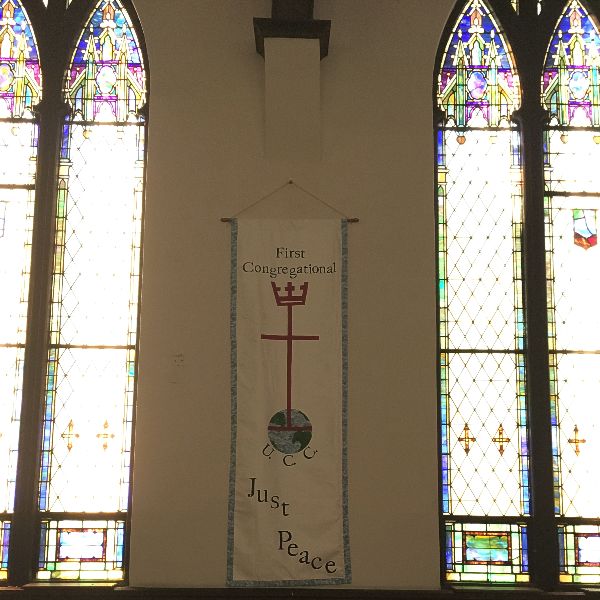
And I’ve got an idea about how to engage in that hopeful work.  The best means we have of moving forward, the idea and the vision that will hold us all together, the best way to nurture hope in ourselves, in our church, and in the world has been displayed on the wall for at least the whole time I’ve been here…right over there:  Just Peace.

I had planned to roll out the Just Peace theme last week–September 21 is World Peace Day…but I realized we’d need to lay some groundwork before getting into it. That’s what we did last week. Then I thought I’d roll it all out this week.  But I realized it would be pointless to talk about working for peace if there’s no hope it’s going to work.  So, today, we’ve talked about hopefulness.  Greta’s words on Monday crystallized the need to reflect some on hopefulness.

So…beyond naming the theme of Just Peace, there’s not much more we can do today…unless you want to stay in worship another hour or so? 🙂  I do invite you to do some research about that banner.  Where did it come from?  Who made it?  Why is it there?  What does it mean?  The book I mentioned earlier–the one that gave me hope after my sleepless night?–is called “A Just Peace Church.”  You might like to check that out.  Or peruse the UCC website–ucc.org–to see what’s there on Just Peace.  Reacquainting ourselves with our Just Peace covenant is going to take some time.  We’ll take that time over the next few weeks.

Today, we’re going to stay focused on hope.  When you look at the world and see all that’s happening, what gives you hope?  What isn’t yet reality, but feels like it could be?  What feels attainable, possible, doable?

After some time for reflection, we’ll transition to our prayer time.  In addition to Joys and Concerns, I invite us also to name our hopes.  When you’ve named your hope, you may say “This is my hope.”  We’ll respond, “Your hope is now our hope.”  What a resource we have, this hope!  We can change this world with hope…if we dare!

In the name of our God, who creates us, redeems us, sustains us, and hopes for our wholeness.  Amen


Posted in Uncategorized | Leave a comment

Sermon: “Not the Sermon I Planned to Preach” (Proverbs 8:22-31) [9/22/19]


How good it is to be back with you…especially in the pulpit!  And not just because it means my foot is healing; or because I really like you all; or because Allen has begged me to, please, please, please, preach to someone else for a change.

I’m glad to be back with you today because, while I was laid up from foot surgery, I had some time to think.  I’ve been chomping at the bit to share the insights that emerged from that thinking.  And look!  Here I am.  There you are.  It’s time!       …or so I thought.

My initial plan for this sermon was to roll out our new church theme.  But when I sat down to write the sermon, the sermon I’d planned to preach isn’t what came out.  When I saw what appeared on the laptop’s screen, though, I realized I’d been jumping the gun.  Just like you can’t rush the healing process after foot surgery (Yes.  I’ve tried that, too.), you can’t rush forging ahead into the future.

As we heard last week, the best way to move forward is to focus on the present.  If we cling to the past, we can’t move forward.  If we naively hope for an ideal future with no plan to get there, we’re can’t move forward, either.  The only way to begin to move forward in healthy and whole-making ways is to take stock of where we are right now.  From the vantage point of now, we can look back at where we’ve been–with gratitude and objectivity.  From the vantage point of now, we can look hopefully to the future and make realistic plans for getting there.

So, the big rollout for our new theme—a new vision for moving forward together as a church—will happen next week. I think. Today, I invite us to reflect on where we are right now.

So, where are we?  As I’ve reflected the past few weeks, I’ve begun to wonder if we’ve been spinning our wheels a little.  For the past several years, the community’s focus has been clear. For a couple of those years, it was the important work for marriage equality.  Certainly, other ministries were continuing during that time, but the main focus was marriage equality.

Shortly after the Supreme Court green-lighted marriage equality, things started getting rocky here at church.  The departure of some staff members, including your pastor.  Hiring an Interim.  Losing long-time members because of the conflict.  Processing what had happened.  Beginning the work of healing.  Adopting a new model for governance and ministry.

You know those “How stressed are you?” quizzes?  A couple of years ago, this congregation would have aced that quiz.  A-PLUS!  YES, WE’RE STRESSED!

And, as if you weren’t stressed enough already, you began the long process of searching for a new Senior Minister.  When I came on board in February 2018, the community’s focus shifted to settling into the new relationship between congregation and pastor.  The first year we were married, Allen and I were asked over and over, “So, how’s married life?”  There’s no way you can answer that in your first year of marriage!  For the first six months, you wake up every morning, look to the other side of the bed and say with surprise, ‘Oh, yeah!  I’m married!’  That’s pretty much what we’ve been doing here at FCUCC.  We come every Sunday and say, ‘Oh, yeah!  She’s our pastor now!  Oh, yeah!  This is my congregation now!’  It takes a long time to settle into a relationship.  Someday, I might even stop calling this town Atlanta. J

A common dynamic in the first few months–or even the first couple of years–of a new pastorate, is the assumption that, ‘Ah!  Now that we have a new pastor, we’ll be able to get back to where we were five years ago, back when everything was working well!  Back before all the unpleasantness.  All the people who left will return!  Worship will be just like it was.  Oh, it’ll take us a few weeks–maybe a couple of months–to settle in, but then we’ll be just who we were back in the good old days!’

Except that we’re a different congregation now.  Many of us weren’t even here five years ago.  And those of us who’ve been here longer likely are in a different place than we were five, ten, or 20 years ago.  If we aren’t who we were as a congregation, who are we?

Here’s what I think.  I think we’ve been working hard to settle into our life together as pastor and congregation.  We’ve worked hard to settle into the new model for governance and ministry.  We’ve continued tending to our healing.  We’ve begun living into a new Music Vision.  We’ve worked to complete renovations that began over a decade ago.  We’ve worked hard to close the chapter on what has been.  You have worked so hard.  We have worked so hard.  All that work has been so important.  It’s laid the foundation for whatever is going to come next.

Here’s what I’ve realized in the last couple of weeks, though:  I don’t think we’re clear about what comes next.  We haven’t yet caught a new vision for where we’re headed.  That’s not a judgment.  Not at all.  In fact, it would be surprising if, a year and a half into a new pastorate, a congregation knew precisely where it was heading–especially a congregation that was still living into a new model for governance and ministry, that had experienced a lot of transition, and that was still actively engaged in a healing process, even as it continues to welcome newcomers.

So, where are we today, September 22, 2019?  Here’s where I think we are.  I think we are in a place of strength.  That strength has many sources–our love for each other, our compassion for the world, our passion in equal parts for prayer and justice, and our diligent attention dealing with difficulties head-on and working them through.

Now that we have done that work, now that we are stronger, we are ready.  We are primed to catch a new vision, one that will help us focus the work we do together and the diverse work we do through this congregation.  We are ready to stop spinning our wheels, to gain some traction, to plant our feet and push off into a future of acting the world into wellbeing.

Ready to hear the vision?  Excellent!  Come next week and I’ll roll it all out for you.  J

As we prepare to catch this new vision of who we are and where we’re going, it’ll help to set the context. Today’s reading from Proverbs identifies that context:  the entire universe.

Image result for pictures universe

It sounds like a smart aleck answer. After all, everything happens in the context of the universe.  But today’s reading from Proverbs invites us to see the universe through a unique lens.

The first 9 chapters of Proverbs are spoken by Wisdom in first person.  In today’s text, Wisdom says that God gave birth to her, even before the first acts of creation. From the beginning of all that exists, Wisdom was there.  Thus, Wisdom attended—midwifed—the birth of everything that exists.  All creation—the entire universe—is shot through with wisdom…

…the wisdom of being only what and who one is created to be… the wisdom of diversity and interdependence…the wisdom, as poet Mary Oliver wrote, of “knowing our place in the family of things.”

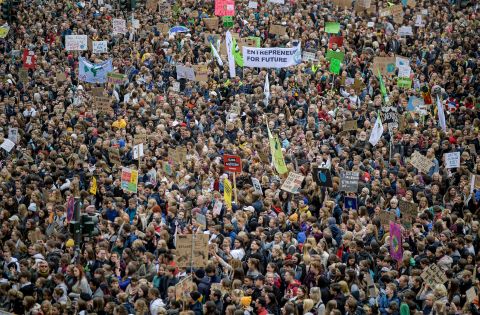
The wisdom of creation was on full display this past Friday.  Have you seen the pictures?  Did you march?  Millions of people—most of them young—marching for climate health.  Will we, like all those young people, listen to creation’s wisdom?  Will we be no less and no more than who we are created to be?  Will we live as if our very existence depends on the diversity of creation and the interdependence of all life forms?  Will we settle into our own unique place in the universe?  Will we do what we can to act all of creation into wellbeing?

Regardless of what theme we name next week, creation is going to be the context.  The circumstances of climate change, the devastating consequences of unchecked consumption…any theme that doesn’t factor in our suffering planet is going to be utterly useless. Several years ago, I heard the Massachusetts Conference Minister say, “Preach creation care once a month now.  If we don’t do that now, circumstances will become so dire that we’ll have no choice but to preach creation care every Sunday.”  I think we’re pretty close to that time.

So, here’s your homework to prepare for next week: think about creation.  Think about its diversity.  Think about how all living things are interconnected.  Think about the universe as the context for anything we do.  Think about the connection between acting the world into wellbeing and acting Earth into wellbeing.  If it helps to do this thinking out in nature somewhere, go for it!

I’ll leave you with a couple of quotes to inspire your homework.  Carl Sagan: “The nitrogen in our DNA, the calcium in our teeth, the iron in our blood, the carbon in our apple pies were made in the interiors of collapsing stars. We are made of starstuff.”  Neil de Grasse Tyson:  “We are biologically connected to every other living thing in the world. We are chemically connected to all molecules on Earth. And we are atomically connected to all atoms in the universe. We are not figuratively, but literally stardust.”

Last week during prayer time, Carol Austin-Janssen shared a vision she had during the silence that began worship.  “I saw a light cloud descending on the room…and it all turned into sparkles.  And I thought, ‘Oh, God!  Just let those sparkles fall on everyone!’  And I can see those sparkles now!”  At that point, I mouthed to Marika, “Stardust.”  Because today’s theme is the cosmos, I already had asked Marika to play “Stardust” in today’s service.  We are stardust.  We are connected to every living thing in the universe.  We are here to play our unique role in the whole of creation.  How will we live out that role in the context of this congregation?

Stay tuned…  (Play first verse and chorus of “Woodstock.”)


Kimberleigh Buchanan © 2019


Posted in Uncategorized | Leave a comment

Sermon: “Jonah” (The Book of Jonah) [8/18/19]

Sermon preached at Swannanoa Correctional Center for Women.

Have you ever ended up someplace you never intended to go?  Yeah.  That’s what happened to Jonah.  God told him to go one place; Jonah paid good money to go in the opposite direction.  Then the boat he’d booked passage on got caught in a giant storm.  Being superstitious, the crew thought Jonah had made the gods mad, who, in turn, had created the storm.  So, they didn’t want to do it, but they had no choice.  They threw Jonah overboard.

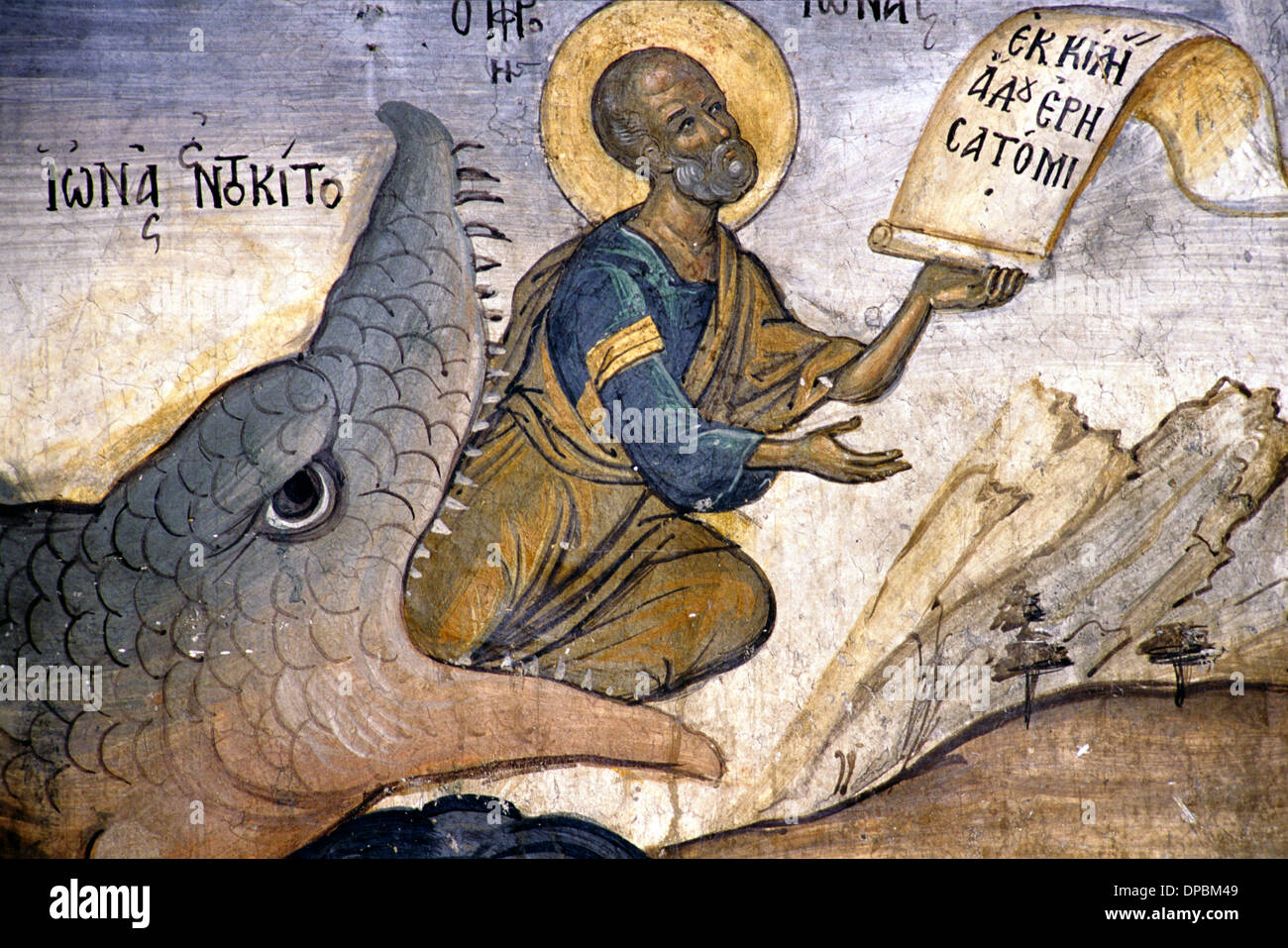
Then what happened?  Yeah.  Jonah got swallowed by a big fish.  So, after going in the exact opposite direction God had wanted him to go, and then getting caught, Jonah ends up– imprisoned, you might say–in a big fish.

Related image

He’s down there for three days.  Being inside that fish makes Jonah stop.  And think.  He prays.  I want to read the first part of that prayer to you.  See if it resonates.

Then Jonah prayed to God from the belly of the fish, saying, “I called to the Lord out of my distress, and he answered me; out of the belly of Sheol I cried, and you heard my voice. You cast me into the deep, into the heart of the seas, and the flood surrounded me; all your waves and your billows passed over me. Then I said, ‘I am driven away from your sight; how shall I look again upon your holy temple?’ The waters closed in over me; the deep surrounded me; weeds were wrapped around my head at the roots of the mountains. I went down to the land whose bars closed upon me forever; 

What about that prayer?  Does any of it resonate?  Being in the belly of Sheol…being sent to a place you didn’t want to go…being distressed about not being back home…How about that part about going “down to the land whose bars closed upon me?”  Did any of that resonate?

Part of what I love about this prayer is it’s just so real.  So honest.  It gets down to the nitty gritty details of being inside a big fish at the bottom of the sea.  There’s water.  There’s weeds being wrapped around his head.  I don’t even want to know what those weeds were.

How might you describe the nitty gritty details of your life?  Whatever those things are, you can pray them to God.  In fact, I suspect God delights when we get that specific.  Because if we’re praying the specifics, that means we’re inviting God into every single part of our lives… even the messy parts…even the parts we’re ashamed of.  God wants to come in to all the parts of our lives.

Why does God want to do that?  Because God wants to heal every single part of us.  Every single part of us.  And why does God want to heal every single part of us?  Because God loves us.  Period.

There’s a group of nuns I like to hang out with up in Indiana.  Those nuns have a phrase I love:  “Always, we begin again.”  The story goes that someone asked a monk one time, “What do you all do all day up there in the monastery?”  The monk responded, “We fall down, and we get up.  We fall down, and we get up.”

That’s pretty much what the faith life is all about–we fall down and we get up.  We fall down and we get up.  No matter who you are or where you live.  You fall down, you get up.  You fall down, you get up.

When that fish spits Jonah out on the beach, he gets back up.  He goes to the place God was trying to send him in the first place, a place called Ninevah.  He preaches to the people, just like God asked him to.  The people listen to Jonah.  They believe him.  They become believers in God.  Jonah did okay.  He made a mistake, paid for it in the belly of the fish, prayed his way out, then got back on the right path.  Jonah fell down–way down to the bottom of the sea.  Then he got back up.  Cool.  A really great ending to a really great ending.

Except there’s one more chapter.  Want to know what happens after Jonah brings all those people to God?  Y’all aren’t going to believe this.  I’m going to have to read it to you.

That the people in Ninevah turned their lives around “was very displeasing to Jonah and he became angry. He prayed and said, “O Lord! Is not this what I said while I was still in my own country? That is why I fled to Tarshish at the beginning; for I knew that you are a gracious God and merciful, slow to anger, and abounding in steadfast love, and ready to relent from punishing. And now, O Lord, please take my life from me, for it is better for me to die than to live.” 

Can you believe this guy?  Jonah is pouting because God won’t destroy the people of Ninevah.  He’d rather die than look on those people with the same compassion God shows them.  God asks Jonah:  “Is it right for you to be angry?”

But wait!  There’s more.

Then Jonah went out of the city and made a booth for himself there. He sat under it in the shade, waiting to see what would become of the city. (Maybe he was still hoping for God to rain down fire or something.)  God appointed a bush, and made it come up over Jonah, to give shade over his head, to save him from his discomfort; so Jonah was very happy about the bush.”

But wait!  There’s more.

But when dawn came the next day, God appointed a worm that attacked the bush, so that it withered. When the sun rose, God prepared a sultry east wind, and the sun beat down on the head of Jonah so that he was faint and asked that he might die. He said, “It is better for me to die than to live.”   (Jonah’s one of those guys who loves the drama…know what I mean?)

So, God asked Jonah, “Is it right for you to be angry about the bush?” And he said, “Yes, angry enough to die.” Then God said, “You are concerned about the bush, for which you did not labor and which you did not grow; it came into being in a night and perished in a night. And should I not be concerned about Nineveh, that great city, in which there are more than a hundred and twenty thousand persons who do not know their right hand from their left, and also many animals?”  The end.  Weirdest ending to any book in the Bible.

Here’s what’s great about this last chapter of Jonah.  If the story ended with ch. 3, we’d all think, “Okay.  Make a mistake, turn it all around, then everything is hunky dory.  But that’s not how life goes, is it?  No…We fall down, and we get up.  We fall down, and we get up.

And every time we do–every time we fall down, every time we get up–wherever we are, whatever we do, God is there hoping to heal us in every nitty gritty detail of our lives…in Ninevah, in Raleigh, in Swannanoa, in the belly of a fish…wherever we are, God is there, every minute of every day…hoping for our wholeness.  To this I say, “Thanks be to God!”

In the name of our God, who creates us, redeems us, sustains us, and hopes for our wholeness.  Amen.

Kimberleigh Buchanan  © 2019


Posted in Uncategorized | Leave a comment

Sermon: “If Not Now…” (Luke 12:49-56) [8/18/19]


We talk a lot here at FCUCC about acting the world into wellbeing.  The phrase comes from Christian ethicist Beverly Harrison, who described love as “the power to act each other into wellbeing.”  I confess that, until I read that description, love didn’t make a lot of sense to me.  It just seemed so sugary and emotional.  But Beverly’s description invited me to see that loving someone means having profound respect and compassion for them…enough that you will do whatever you can to make sure that person has everything they need to survive…and to flourish.  The call of the Gospel is to extend that kind of love to the whole world.

There are many ways the FCUCC community has and does act the world into wellbeing.  Several years ago, when I lived in Georgia, I was inspired to read about some upstart church in Asheville that was working for marriage equality.  Our ministries with refugees, school children, folks without permanent housing, the women out at the prison, the conversation we’ll be having after worship about healthy eating and how that impacts us and others, too…those are all ways we have of acting the world into wellbeing through this community.  All of that’s good.

But “acting the world into wellbeing”—as good a sound bite as it is—isn’t going to mean much if we don’t get into specifics.  And even if we do get into specifics–like I need to be at the prison at 6:00 tonight to preach for the women–if we’re all going off in different directions, then it’s not really our FCUCC community that is acting the world into wellbeing, but individuals who just happen to gather here once a week for worship.

When there’s an issue so big and obvious that everyone is on board with it–like marriage equality was–it’s clear what the community can, and even should, be doing to show love.  When there isn’t one single glaring issue like that, though–or when there is an abundance of glaring issues, as there are these days–it’s hard to know where to start.  As individuals, each of us acts on issues we feel called to address.  But how do we do that as a community?

As a community, will we address– climate change?  Immigration?  Healthy food?  Housing the homeless?  Income inequality?  Peacemaking?  Racism?  Sexism?  Homophobia?  As a community, how do we decide where to expend our resources in acting the world into wellbeing…especially when so many people are so desperate for healing and wholeness?

The first thing we have to do–even before deciding where we’ll use our resources–is figure out what those resources are.  That’s what we’ve been doing this summer.  Since June, we’ve been considering many of the resources we have here at FCUCC–the gift of God’s Spirit, our humanity, the lessons of mentors, each other and our sense of community, we have the great commandment to love our neighbors, we have the gift of singing together, the gift of hospitality, prayer, material resources, and children and teenagers.

Are these the only resources we have?  This list doesn’t even scratch the surface.  It does contain many of the gifts we receive from our faith, though.

The next step is to identify specific resources within the community.  The Ministry Fair on September 15th will help us discern some of the specifics of acting the world into wellbeing.  The Ministry Fair planning team and Ministry Area Captains have been working on the fair since May.  Each ministry area will have a display with lists of opportunities for service, as well as people to answer questions about them.

Here’s one way to approach the Ministry Fair.  As you stroll through the displays and learn about opportunities for service in each area, take stock of how you feel when you pass by.  What sparks your fancy?  What tugs on your heart strings?  What repels you?  Paying attention to what’s going on inside you as you make your way through the Ministry Fair will help you discern what parts of the FCUCC community and the world you’re feeling called to act into wellbeing.  Discerning our individual gifts and sharing those gifts with the rest of the community will help us–as a community–to discern with greater clarity where and how we’ll use our resources to act the world into wellbeing.  Oh, it’s going to be fun!

Have you noticed how assiduously I’ve avoided talking about today’s Scripture?  Here I am on p.3 and haven’t even mentioned it yet!  Oh, I’m good.

Image result for picture Luke 12:49-56

“I’ve come to light a fire on the earth.  I wish it already had been lit.”  Then Jesus says: “Do you think I’m here to bring peace on earth?”  Um, yeah, Jesus.  That is what I think!  The angels sang it when you were born:  “Peace on Earth, good will to all.”  But no.  “I tell you,” Jesus says.  “The opposite is true: I’ve come to bring division.”  Then he names every possible familial relationship there is and says he’s come to split them up.

Well, this isn’t the Jesus I learned about in Sunday School!  What are we to make of this?  Sounds like the exact opposite of acting the world into wellbeing.  What’s going on here?

It might be helpful to look at this statement in the larger narrative context.  The big pivot point in the Gospel of Luke is 9:51. There, we’re told that Jesus “sets his face toward Jerusalem.”  To that point, he’s been preaching and teaching.  He’s stirred things up enough that he suspects when he goes up to Jerusalem for Passover, things aren’t going to go well for him.

So, when Jesus “turns his face toward Jerusalem,” it means he’s now fully prepared to meet his fate.  It doesn’t mean he’s not distressed about it.  He says as much in today’s passage.  It does mean, though, that he understands that challenging the status quo as he has done in his ministry is likely not to end well for him.

If we consider today’s words from chapter 12 in the context of Jesus already having “turned his face toward Jerusalem,” things get clearer.  Let’s say Jesus had planned to bring peace…just like the angels proclaimed.  But creating peace for everyone….when you get down to the logistics of that, it’s going to make very powerful people very unhappy.

We see it in our own world.  The power of a few often depends on disempowering the many, particularly the least of these.  If you go around saying God loves everyone and that everyone should have enough food to eat, a place to live, access to healthcare and a living wage, the people who profit–literally–from denying those things to others are going to get mad.  And when people with disproportionate power get mad, the folks who are challenging their power get shut down.  And worse.  Jesus could see the handwriting on the wall for himself.

It also sounds like he was getting clear about what living the gospel was going to be like for his followers after he was gone.

Acting the whole world into wellbeing means working to ensure that every person has what they need to live healthy and whole lives.  For that work to be effective, systems have to change, power structures have to be altered.  It is the nature of power that those who hold it do not want to let it go.  People in power will go to great lengths to hang onto that power.

So, when Jesus says he’s come to divide, it’s not so much prescriptive, as in, “This was my original plan.  Let me come to earth and see how much damage I can do.”  It’s more likely Jesus meant these words to be descriptive.  “If you follow me, if you care for the least of these, if you act the whole world into wellbeing…if you’re effective in this work, current power structures will be disrupted.  When current power structures are disrupted, those who hold the power won’t be happy…which means they will not be on your side.”

Dividing people wasn’t Jesus’ intent.  But following Jesus–because of all that entails–cannot help but to divide people.  That’s what happened with marriage equality.  That’s what’s happening with activists at the border.  I suspect you’ll hear more from Hillary in a couple of weeks about some of the resistance The Steady Collective faces, as well.

There’s a sense in which, if you’re not divided from somebody, you’re probably not following Jesus….or not wholeheartedly.

After Jesus talks about dividing up all these family relationships, he talks about being able to predict the weather by looking at the sky.  Then he asks:  “If you can interpret the portents of earth and sky, why can’t you interpret the present time?”

You feel Jesus’ urgency here.  He’s already turned his face toward Jerusalem.  He likely senses he’s not going to be with them much longer.  His followers have to wake up!  They have to wake up NOW.  They have to look at the world as it is.  They have to watch what’s happening with their eyes wide open.  There is no time to make excuses.

All of us have exactly what we need to read the times…and we need to read them.  Jesus isn’t here to do that for us.  We have to do that for ourselves.  So, let’s do it!  Let’s read the times.  Let’s open our eyes wide to all that’s going on around us.  Now that we have identified all these resources that come from our faith, let’s figure out—as a community—how to use them to act the world into wellbeing.  How are we going to use the gift of God’s Spirit, our humanity, the lessons of mentors, our sense of community, the commandment to love our neighbors, the gift of singing together, the gift of hospitality, prayer, our material resources, the children in our midst…How might our community use these myriad resources to act our broken world into wellbeing?  And what other resources might we have to use in this important work?

The summer theme is ending today…but our work has just begun.

In the name of our God, who creates us, redeems us, sustains us, and hopes for our wholeness.  Amen.

Kimberleigh Buchanan  ©2019

Posted in Uncategorized | Leave a comment

Sermon: “Treasuring Our Children” (Is. 1:16-17; Luke 12:32-34) [8/11/19]


“For wherever your treasure is, that’s where your heart will be also.”  What do you treasure?  What has hold of your heart?  On this day when children and teenagers are leading worship, it seems appropriate to consider how we treasure the young people in our lives, those who have a hold on our hearts.

Treasuring–caring for, protecting, loving, respecting… How are we doing caring for and protecting our children?  Nationally, not so great.  A week ago, yet more children were separated from their parents in an ICE raid in Mississippi.  And the two mass shootings last week must–again–raise the pointed question for every parent and other adult who treasures children: How do we keep our children safe?

The dangers in our world grow exponentially every day.  If you’re like me, those dangers occupy my mind a lot.  The rise of domestic terrorism.  The unwillingness of our legislators to do something as basic as reinstate the ban on assault weapons.  The painful irony that, as oceans fill with run-off from melted polar ice, potable water supplies around the globe are shrinking.

If you’re like me, it’s getting harder these days to nurture hope…that is, until I spend time with children and teenagers.

I had the great joy of dropping in on MAD Camp a couple of times this week.  Such energy…enthusiasm…playfulness…creativity!  You’ve seen evidence of that this morning.

There’s something about being young that creates space for possibilities.  Maybe it’s magical thinking, maybe it’s naivete…or maybe it’s because the young are able to see much farther into the future than us older folks.  For whatever reason, young people are showing us many possibilities for a more hopeful future, even from where we’re standing right now.  Many are taking actions listed by the prophet today:  these young people are seeking justice, rescuing the oppressed, defending orphans, and pleading for widows.

They’re acting the world into wellbeing in other ways, as well.

People like 16-year-old Greta Thunberg of Sweden, who is speaking eloquently around the globe about the climate crisis.  Talk about speaking truth to power.


People like 19-year-old Emma Gonzalez, a student who survived the Parkland School mass shooting last year in Florida…Emma continues to work for common sense gun legislation.


People like 11-year-old Rubin Martinez, who lives in El Paso.  Distraught about the shooting that happened there last week, Rubin talked with his mom.  She suggested that he think of something good to do in response to the shooting.  Rubin started #elpasochallenge.  He challenged every person in El Paso to do one act of kindness for every person who died in the shooting–22 in all.


The theme for MAD Camp this week was “Super Heroes…”  The children explored what it means to have superpowers…not so much superpowers like “leaping over tall buildings in a single bound”…more like the power to act other people and the planet into wellbeing.  Each child considered what her or his special powers were in doing that important work.

At the tender age of four, Austin Perine in Birmingham, Alabama, has discovered his superpower.  Once a week, Austin dons a silky red cape, buys some chicken sandwiches with his dad, then takes the sandwiches to folks who are homeless.  Austin’s superpower is feeding the homeless.  As he hands a sandwich to each person, this caped superhero says, “Don’t forget to show love!”


Don’t forget to show love, Austin says.  Here’s what I say:  Don’t forget to treasure all the young people in your life…not just because they are amazing and deserving of all the love and care we can give them.  Treasure young people because, at the end of the day, they are the greatest resource we have in acting the world into wellbeing.  (Recording:  “Your Children,” by Sweet Honey in the Rock)


Your children are not your children.

They are the sons and daughters of Life’s longing for itself.

They come through you but not from you,

And though they are with you yet they belong not to you.


You may give them your love but not your thoughts,

For they have their own thoughts.

You may house their bodies but not their souls,

For their souls dwell in the house of tomorrow, which you cannot

visit, not even in your dreams.

You may strive to be like them, but seek not to make them like you.


In the name of our God, who creates us, redeems us, sustains us, and hopes for our wholeness.  Amen.


Kimberleigh Buchanan © 2019


Posted in Uncategorized | Leave a comment

Sermon: “Welcoming the World into Wellbeing” (Luke 10:38-42) [7/21/19]

[Larry Burke sings, “Deportees”] 


“32 Are Killed in California Plane Crash;  28 Mexican Deportees, Crew, and Guard Victims in Coastal Range Disaster.  Fresno, California, January 28, 1948.  Associated Press.  

            “A chartered Immigration Service plane crashed and burned in western Fresno County today, killing 28 Mexican deportees, the crew of 3, and an immigration guard.

            “An hour after the airliner appeared to explode over Los Gatos canyon near Coalinga, shortly after 10:30 a.m., 19 bodies had been recovered from the smoldering wreckage…

            “Irving F. Wixon, director of the U.S. Immigration Service at San Francisco, said the Mexican nationals were being flown to the deportation center at El Centro, California, for their return to Mexico.”   


            Subsequent newspaper articles named the pilot, co-pilot, flight attendant, and guard:  Frank Atkinson, Marion Ewing, Bobbie Atkinson, and Frank E. Chaffin. In the days after the crash, a couple of articles attempted to name the other 28 who died, but lists were inconsistent; mistakes were rampant.  After that, the 28 remaining passengers who died in the crash were listed only as “Deportees.”

Image result for 28 mexican citizens picture memorial

Seeing one of those articles, poet and songwriter, Woody Guthrie, seethed that no one cared enough about the humanity of those 28 people to learn the most fundamental piece of their humanity–their names.  Guthrie poured his anger into the poem that became the song Larry just sang.  (Guthrie’s words were later set to music by Martin Hoffman.)  “All they will call you will be deportees.”

We’re seeing so many images from the border these days.  The two that have lodged in my brain are the ones of children in cages and hundreds of people standing around in enclosures underneath overpasses.  Each of those people, each of those children has a name.  Each has a story.  None would have chosen to be held behind chain-link fencing.  Had conditions been livable and safe, it’s likely they would much rather have stayed in their home countries.  But they have fled in terror.  Only to meet a different kind of terror thousands of miles from home.

Each one has a name.  Each one has a story.  Each one is as much a human being as any other person.  Each one is as much a human being as any of us here today.

The familiar story of Martha and Mary’s welcoming of Jesus in today’s Gospel story has gotten lots of press over the years.  Some folks fault Martha for focusing only on the details of cleaning.  Indeed, Jesus encourages her to soften her obsession with being a good host.  Other folks (likely from Martha’s spiritual tribe) fault Mary for shirking her hosting duties to sit at Jesus’ feet and learn from him.

While Jesus seems to favor Mary’s approach in this story (“She has chosen the better part”), it’s clear that both approaches to hospitality are needed.  A case in point:  Friendship Time. What happens here in worship is important.  But the really important stuff happens downstairs after worship.  We visit with each other.  Back in the Baptist church, we didn’t have friendship time.  After becoming a pastor in the UCC, I learned how IMPORTANT coffee hour is to congregationalists.  It’s, like, IMPORTANT.  It’s important because it gives us a chance to get to know each other, to check in with each other, to spend informal time together, plotting, planning, laughing, sharing.

But what happens when the details aren’t attended to?  What happens when the Kuerigs aren’t brought out, or we run out of cups or creamer?  What happens when no one stays to clean up?  If all the little nuts and bolts of the snack part of Friendship Time aren’t attended, the anxiety level in the room rachets up.  As the anxiety goes up, the quality of the visiting goes down.  In order for the visiting part of Friendship Time to go well, the many details of the snack part must be attended.

And, of course, if we only come down to ooh and aah over the well-appointed refreshment tables and efficient clean-up crew, then we’ve missed the point of Friendship Time all together, which is to visit.

Friendship Time needs both Marys AND Marthas.  For all of it to work, we need both attention to the details of snacking as well as a willingness to share our lives with each other.

Perhaps what’s good for Friendship Time also will be good for our country’s immigration policy.  As I mentioned a couple of weeks ago, our country’s immigration issues right now are very complex.  We can’t simply open our borders willy-nilly.  We’ve got to have laws governing how people come into our country.  I suspect Martha would be closely involved with that aspect of immigration.

At the same time, though, like Mary, we also must stay tuned in to the humanity of every person who appears at our border.  Mary sat at Jesus’ feet and soaked up every word he said.  She opened her mind and her heart to Jesus.  If our immigration laws and practices do not honor the humanity of emigrees and refugees, if we don’t expend the effort to learn people’s stories, their reasons for seeking asylum, if we don’t care enough to learn people’s names…

…when we don’t acknowledge and honor the humanity of other people…do you see that when we ignore the humanity of other people, we lose a little of our own?  Do you see that?  A key part of what it means to be a human being is to acknowledge the humanity of other people…of all other people.

In my newsletter article this week, I invited you to wear clothing in shades of brown and black today…as a way–especially for those of us who are white–to remind ourselves of the humanity of those whose skin is darker than our own.  It grieves me to say this, but we all know it’s true–our world runs on color.  Anywhere you go, the lighter the skin, the greater the privilege.

At music camp last week, a young woman who was born and raised solidly middle-class in Rio de Janeiro, teared up as she told us what it’s like to go from being white in her native Brazil to becoming “just another brown-skinned latina” in our country.  Her skin tone is exactly the same.  But the perception of color in our country means that she is treated differently here.

In a recent Facebook post, a singer-songwriter friend wrote, “As a citizen of this nation, a Black male traveling musician, I have NEVER felt as unsafe and needful of being aware, cautious and on point as I now do since…unexpressed demons of hate and prejudice have been unleashed in our nation. The anger and uncompromising acts of rage have increased exponentially in the wake of non-stop assaults on people of color, women, and people from the LGBTQ community.  The looks I get from people in rest stops and stores are unbelievable.”

Our world runs on color.  It sorts us into categories of worthiness based on something as arbitrary as the amount of melatonin in our skin cells.  It’s absurd.  And it’s real.

We spend a lot of time in our Racial Justice Team meetings talking about how helpless we feel in addressing racial injustice.  The problems are so huge, so intractable…and for most of us, our skin is so white.  What can we possibly do to act people of all melatonin distribution levels into wellbeing?

Today, we’ll start by reading aloud the names of the 28 initially unnamed people in reports of the Los Gatos plane crash in January 1948.  Thanks to the investigative work of author Tim Hernandez, those 28 people have been identified.  In 2013, the original memorial plaque that read, “28 Mexican Citizens who died in an airplane accident near Coalinga, California, January 28, 1948. R.I.P.” was replaced with a new plaque.  This new plaque now includes 28 names.

A 2013 editorial in the New York Times ended with these words:  “America has changed a lot in 65 years, but not enough. We are still a country that eagerly, if not desperately, accepts the labor of immigrants but is slow to acknowledge their humanity. When singers perform Guthrie’s song today, not a word is out of date.”  (NY Times editorial, 9/7/13)

We’ll end today by speaking aloud the names of all 32 people who died in the crash on January 28, 1948.  We say their names to acknowledge their humanity…and to remind ourselves that every person in detention at our southern border, every parent carrying children through the Mexican desert desperate for a better life, every child who cries herself to sleep at night in a strange home wondering if she’ll ever see her mother again…we say these names to remind ourselves of the humanity of us all.

Related image


Miguel Negroros Alvarez.  Francisco Llamas Duram.  Santiago Garcia Elizondo.  Rosalio Padilla Estrada.  Tomasa Avena De Garcia.  Bernabe Lopez Garcia.  Salvador Sandoval Hernandez.  Severo Medina Lara.  Elias Trujillo Macias.  Jose Rodriguez Macias.  Tomas Padilla Marquez.  Luis Lopez Medina.  Manuel Calderon Merino.  Luis Cuevas Miranda.  Martin Razo Navarro.  Ygnacio Perez Navarro.  Roman Ochoa Ochoa.  Ramon Ramirez Paredes.  Apolonio Ramirez Placencia.  Guadalupe Laura Ramirez. Alberto Carlos Raygoza.  Guadalupe Hernandez Rodriguez.  Maria Santana Rodriguez.  Juan Valenzuela Ruiz. Wencealado Ruiz.  Jose Valdivia Sanchez.  Jesus Meza Santos.  Baldomero Marcas Torres. 

Francis “Frank” Atkinson, pilot.  Marion Harlow Ewing, co-pilot.  Lillian “Bobbie” Atkinson, flight attendant.  Frank E. Chaffin, immigration guard.

In Fresno, Calif., a new gravestone lists 28 Mexican victims of a plane crash, unidentified for 65 years.


Descansa en paz.  Amen.


Kimberleigh Buchanan  ©2019


Posted in Uncategorized | Leave a comment

Ordination: 20th Anniversary!

Twenty years ago today, I was ordained by Virginia-Highland Baptist Church in Atlanta, Georgia.  As a Southern Baptist girl and woman, the journey to ordination was arduous. In 1988, I went to seminary to become a children’s minister…because that’s all I’d seen women do in church.  By the time I graduated, I had embraced my calling to pastoral ministry. But in 1992, the SBC was taking yet another hard right turn. Finding a church to pastor wasn’t an option.


I entered the PhD program at Emory University.  A year after I moved to Atlanta, the saint of a man who would become my husband, Allen Mullinax, moved down.  He became the Minister of Music at Virginia-Highland. After we married in 1995, I began attending Virginia-Highland, as well.

Image result for virginia highland baptist church atlanta pictures


At that point, the congregation was small…but, oh, how they loved me!  And helped me to affirm my gifts for ministry and my call to pastor. I will forever be grateful to Rev. Tim Shirley, who gave me numerous opportunities to “practice” ministry.  And I’ll always be grateful to Virginia-Highland for ordaining me.


In 20 years of ministry, I’ve been blessed to serve three congregations.  I served a year and a half at Virginia-Highland as its Associate Minister for Christian Nurture.  It was part time, but very fulfilling. It’s also the first time Allen and I served on church staff together, which was a joy.


In 2001, I was called to my first full-time pastorate, Pilgrimage UCC in Marietta, Georgia.  In so many ways, I became a pastor at Pilgrimage.  I learned so much from those good and loving people!  And for 11 of the 16 years I served there, Allen and I worked together…which was another deep joy.  


As I reflect on my time at Pilgrimage, two things stand out.  First, I learned a lot about what it means to navigate the world as a transgender person.  I’ll always be grateful to the members who shared their lives with me and with our congregation and taught us so much.  The second big thing I learned–was just how beautiful and inspiring stained glass windows can be.

No photo description available.


I moved to my current call a year and a half ago.  When I came to First Congregational UCC in Asheville, NC, I thought I’d learned all there was to learn in my 18 and a half years of ordained ministry.  I know now that I was just getting started! The generosity of the folks at FCUCC, the creativity, the support, the strong commitment to social justice and peacemaking…I am growing as a pastor in my work at First…we are growing together as a congregation.  I am DEEPLY blessed.


On this 20th anniversary of my ordination, I am awash in gratitude.  What grace! What love! What joy!


Kim

Posted in Uncategorized | 1 Comment

Sermon: “Acting the World into Wellbeing…Together” (2 Kings 2:1-14) [7/7/19]

A pious man once was caught in rising floodwaters.  He climbed onto the roof of his house and trusted God to rescue him.  A neighbor came by in a canoe and said, “The waters will soon be above your house. Hop in and we’ll paddle to safety.”  “No thanks” replied the pious man. “I’ve prayed to God and I’m sure God will save me”

A short time later the police came by in a boat. “The waters will soon be above your house.  Hop in and we’ll take you to safety.” “No thanks” replied the pious man. “I’ve prayed to God and I’m sure God will save me”

Eventually, a rescue services helicopter hovered overhead, let down a rope ladder and said,“The waters will soon be above your house. Climb the ladder and we’ll fly you to safety.” “No thanks” replied the pious man. “I’ve prayed to God and I’m sure God will save me”

All this time the floodwaters continued to rise, until soon they reached above the roof and the pious man drowned.  When he arrived at heaven he demanded an audience with God. Ushered into God’s throne room he said, “Why am I here in heaven? I prayed for you to save me, I trusted you to save me from that flood.”

“Yes you did my child” God replied. “And I sent you a canoe, a boat, and a helicopter. But you never got in.”  https://storiesforpreaching.com/i-sent-you-a-rowboat/

It’s an old story…but it describes Namaan to a T.  He was a strong man, important in his country…and he had leprosy, some sort of skin disease.  A young girl who’d been taken as a slave from Israel spoke to her mistress saying, “There’s a prophet back home who could heal him.”  The woman tells Namaan, who tells the king, who writes a letter asking the king of Israel to ask the prophet of Israel–Elisha–to heal Namaan.

Namaan travels to Israel and gives his king’s letter to the king of Israel.  The king of Israel thinks it’s a ploy, an excuse for the king of Aram to come conquer them.  Elisha hears about it and tells the king to send Namaan his way.  “Let him know that there’s a prophet in Israel.”

So, Naaman comes with his horses and chariots, and halts at the entrance of Elisha’s house. Elisha sends a messenger to him, saying, “Go, wash in the Jordan seven times, and your flesh shall be restored and you shall be clean.”  But Naaman becomes enraged and stomps off, saying, “I thought that for me he surely would come out, and stand and call on the name of his God, and would wave his hand over the spot, and cure the leprosy! Are not the rivers of Damascus better than all the waters of Israel? Could I not wash in them, and be clean?”

What a great image.  This foreign military leader arriving at the prophet’s house with all his horses and chariots and the people on them, suffering with leprosy, on a wild goose chase to get healed, a goose chase started by a little girl…he’s finally gotten an audience with the man who can heal him, he comes with all his horses, chariots, and people…and the prophet can’t deign to come to the door?  He sends a messenger to tell him what to do?

“God, why didn’t you heal my leprosy?”  “Ah,” says God.  “I sent you a little girl, I sent you to Israel, I sent you to the prophet of Israel’s house.  He sent you the instructions on how to be healed.  But because the help didn’t come in the precise way you wanted it to come, you became enraged and refused the help.”

Fortunately, Namaan had something the man in the flood story didn’t have–wise people, servants, at his side, basically, to help Namaan get over himself.  “If the prophet had commanded you to do something difficult, would you not have done it?” his servants say.  “How much more, when all he said to you was, ‘Wash, and be clean’?”  So what if the prophet didn’t come to the door himself?  It’s such a simple thing.  Why not try it?

So, Namaan goes down and immerses himself seven times in the Jordan, according to the word of the man of God; his flesh was restored like the flesh of a young boy, and he was clean.

In my newsletter article this week, I suggested that one of the greatest gifts the church has to give to the world is the gift of community.  Thankfully, many people across the globe, through activism and service, are acting the world into wellbeing.  The difference for us followers of Jesus is that we engage in activism and service from the context of a faith community.  Our actions are rooted in prayer; our activism is a spiritual practice.  And we have the nurture and support of a community as we engage in that activism and service.  In a society that seems intent on splintering, a big gift we followers of Jesus can give is a demonstration of what community, what the common good looks like.

Perhaps the most striking thing about the story of Namaan is that it took a village to get him healed.  It took a foreign enslaved child, it took her mistress, it took two kings and a prophet, it took more servants…If Namaan–with all his horses and chariots and power–could have healed himself, he would have.  But for all the things he could do, he couldn’t do that.  To heal, he needed the community around him.

That’s what’s so vital about what we do here each week.  If we are to be strong in our activism, if we are to sustain the action out there that is so needed, we have to nurture our own spirits, we have to nurture our own community.  What happens in this community–the internal spiritual work we do, the ways in which we care for each other–is vital to the work of acting the community out there into wellbeing.  And–as Namaan’s story suggests–every person in the community plays a role.  Had Namaan not listened to the children, the women, the slaves, the servants, the foreigners, he would not have found the healing he so desperately needed.

Do you listen to everyone in the community?  Do we as a community listen to everyone?  It’s human nature to listen mostly to “PLU”–people like us.  PLU get us.  They say the things we like to hear in the way we like to hear them.  But sometimes, the healing word comes from someone not like us.  Sometimes, the healing word comes from someone who’s been there all along, but whom we’ve never really seen.  Every person in a community is vital.  Every single person, regardless of status or ability or likability, every single person in the community holds a precious piece of this community we’re all a part of.

The cathedral in Winchester, England, is known for its exquisite stained glass windows, particularly the Great West window.  In 1642, the anti-King factions that were terrorizing the country came to Winchester.  After they had defeated the town, the soldiers–for spite–took their muskets into the cathedral and shot out its beautiful stained glass windows.  The townsfolk were devastated.

Related image

In their despondence, they did an audacious thing.  Quietly, carefully, and without drawing too much attention from the soldiers, the people salvaged what they could from the destruction. Pieces of glass were carefully collected and stored, ready for the day when the fighting would end and peace would return. 

For two decades, the Cathedral was an empty shell with holes in the roof and no glass in the windows. Wind and rain blew through adding to the feeling of sadness and desolation. In Parliament the subject of Winchester Cathedral was discussed. Some thought it beyond repair. ‘Knock it down!’ they said.  But the people of Winchester loved their Cathedral. Yes, it was damaged, but it was their cathedral!  They set out to repair it. 

Diamonds of clear glass were cut and fixed into place in the window spaces around the Cathedral, blending in with areas of old glass which had managed to survive. Pieces of glass of all shapes, sizes and colors were collected and fixed together and placed in the frame of the old west window, bringing the Cathedral to life again. 

Related image

Careful examination of the window would reveal the faces of angels, disciples and kings, all jumbled up with pieces of colored glass. Small fragments of writing in Latin, next to drawings on glass of clothes, hands and feet. Bit by bit the window space was filled in with old glass until the window was completed. A feast for the eyes, and a thing of beauty. https://www.winchester-cathedral.org.uk/wp-content/uploads/The-Story-of-the-Great-West-Window-web-version.pdf

Joyce Rhymer’s son visited Winchester Cathedral a few weeks ago.  When she shared this story with me a couple of Sundays ago, I immediately thought of today’s sermon.  It is a remarkable image.  Every member of the community, holding one precious piece of glass, one precious piece of the community.  Keeping that piece safe until the time came to gather the pieces together again, to put their church back together again.

Image result for great west window winchester cathedral

The image is so great, in fact, we’re each going to get a piece of colored glass.  (Distribute pieces of glass.)  May it remind us that each of us holds one precious part of our FCUCC community…and that healing can come from any one of us.  May it remind us to care well for our one precious part.  May it remind us of the beauty that can be created when we join our bits of glass together.  May this tiny piece of glass remind us that we are not alone.  And may it remind us that our FCUCC community is among the greatest resources we have for acting the world into wellbeing.  May it remind us that, as followers of Jesus, we are called to act the world into wellbeing together.

In the name of our God, who creates us, redeems us, sustains us, and hopes for our wholeness.  Amen.

Kimberleigh Buchanan ©2019


Posted in Uncategorized | Leave a comment

Sermon: “Picking Up the Mantle” (2 Kings 2:1-2, 6-14) [June 30, 3019]

            In last week’s episode, the prophet of Israel—Elijah—defeated the prophets of Baal.  The powers that be were not pleased.  They set out to kill Elijah.  Elijah ran.  He slept.  He ate.  He whined.  Eventually, he found God in the sound of sheer silence then got called to his next assignment.  It might not have been Elijah’s brightest moment, but even in his weakness, Elijah did the important prophetic work to which God had called him.

Now, Elijah is getting up in years.  It’s time to train his successor.  In his prophetic work, Elijah has planted the seeds of trees in whose shade he will not sit.  Elijah understands all this….

…which is why he takes a younger prophet, Elisha, under his wing.  Through several seasons, Elijah mentors Elisha.  Elijah teaches his protégé how to read and interpret Scripture and the political and social conditions in which they live.  Elisha has observed the prophetic actions Elijah has taken.  He’s been soaking it all up….learning, learning, learning…

But now, Elijah knows it’s time for him to leave the scene, which means it’s time to pass the torch.  The time has come to anoint Elisha as the new prophet of Israel.

But Elisha isn’t having it.  The shift from protégé to prophet is a big one.  Doing what someone tells you to do is so much easier than figuring out for yourself what needs to be done.  And working with a mentor… Have you had a mentor?  It’s such an intimate, sacred relationship, isn’t it?  Mentors see things in us we can’t see ourselves.  From their wisdom, they teach us.  They point out where growth is still needed.  They walk alongside us as we grow.

It wasn’t for very long, but I am profoundly grateful to have been mentored by Paul Gillespie until he died last April.  Those of you who knew Paul know he wasn’t one to hold back feedback.  If he saw you doing something that wasn’t productive, he told you quickly and clearly what he thought.  Then, as you were leaving the conversation, he often would say, “I love you!”  I took all the feedback Paul gave me because I knew he only wanted me to be the best pastor it’s in me to be….and because I knew he loved me.  I miss Paul.

The prospect of losing Elijah makes Elisha reluctant to say goodbye.  As they’re walking along, Elijah keeps trying to fake Elisha out.  “You stay here while I run over there for a minute…”  he says.  But Elijah has done his work too well; he’s taught Elisha how to read and interpret the present circumstances.  Elisha knows what’s going to happen… which is why he refuses to leave his mentor’s side.

Finally, they get to the Jordan River.  On the bank, Elijah takes his mantle, rolls it up, and strikes the water.  The water parts and the two of them cross over on dry ground.  Sounds like what happens in the Exodus story, right?  When the Egyptians were after the Israelites and the refugees arrived at the Reed Sea, Moses raised his arms and the sea parted.

This time, Elijah parts the river with his mantle–the symbol of his wisdom and teaching.  The wisdom of the mentor is what creates the path for Elijah and Elisha to follow.  They follow the path to the far side of the river.  They—literally—enter new territory.

When the Israelites entered new territory, their identity shifted.  No longer were they enslaved individuals; now, they were a free people.  When Elijah and Elisha cross the river, Elijah moves to retirement; Elisha transitions from protégé to prophet.

As their roles are reversing, Elijah asks Elisha:  “What do you want me to do for you?”  To that point, the question always had gone the other direction.  Now, as protégé becomes prophet, it falls on Elisha to assess what’s going on and make a plan for moving forward.

Here’s his plan.  He asks for a double portion of Elijah’s spirit.  Elisha knew that doing what Elijah did was going to require twice as much of whatever Elijah had to do it.  Elijah says it’s a hard request, then tells Elisha:  “Yet, if you see me as I am being taken from you, it will be granted you; if not, it will not.”

This is significant.  Elisha will get what he needs to do the work that must be done if–and only if–he sees his teacher leave.  If he doesn’t witness the departure, he can always imagine that Elijah is just in the next room.  If Elijah is just in the next room, there really isn’t a need for Elisha to claim his own power to do what needs to be done.  He needs to see Elijah leave the scene so he can understand completely that the work is now on his shoulders.  He might feel inadequate, but the work now rests solely on him, regardless of how he feels.

As gut-wrenching as it must have been to watch his beloved mentor be carried away in the chariot, watching the departure was vital to Elisha’s being able to answer his call to act the world into wellbeing.  Elisha grieves, to be sure.  When the chariot is finally out of sight, he falls down and tears his clothes, a sign of deep mourning.

Once his mourning is done, though, Elisha picks up his mentor’s mantle.  That image—of picking up the mantle—is so clear, so powerful in this story, that it’s become a near-universal symbol of carrying on a mentor’s work.  Like so many people have picked up the mantle for LGBTQ rights from the people who were present at the Stonewall Inn 50 years ago this week.  Like the leaders of the Black Lives Matter movement have picked up the mantle from the Civil Rights leaders who came before them.  Like Matt Watroba, who will be with us in a couple of weeks, has picked up the mantle of community singing from Pete Seeger.

Once Elisha picks up the mantle, he does the same thing his mentor had done just a little bit before, he rolls up the mantle up and strikes the water.  The water parts again, and Elisha crosses the river back into Israel.  He left Israel as a protégé.  He returns as a prophet.

All week, as I reflected on these crossings of the Jordan River, I couldn’t get another image out of my mind.  I’m sure you’ve seen it.  The haunting image of that young father and his daughter who drowned trying to cross the Rio Grande.  Where was the mantle that would have made it possible for that father and his 23 month old daughter to cross the Rio Grande safely last Sunday?  Where was the wisdom that would have made a path for them?

It’s a challenge knowing how to preach each week.  There are so many places of brokenness in our world, so many people who need to be acted into wellbeing.  And because so many of the changes that need to happen are systemic, the fixes aren’t quick and easy.  Adequately addressing issues like poverty and climate change and racism…I can talk about those issues, but if we don’t take action, then sermons are nothing more than brokenness reports.

But offering brokenness reports isn’t enough.  We must take action.  And I know we can’t take action to address all the brokenness in the world…we’re a small congregation with only so many resources.

But when I saw that picture…When I see reports of how our country is treating children and families…Isn’t depriving detainees of food a form of torture?  Isn’t forcibly taking children from their parents and taking them to undisclosed locations kidnapping?  Isn’t putting people in cages inhumane?  When I saw that picture this week, something inside me broke.  Something inside me said, Enough!  Something inside me said I wouldn’t be doing my job if I didn’t say what is happening to children at our border is insane.  And cruel.  And evil.

And.  We.  Must.  Do.  Something.  We cannot call ourselves followers of Jesus if we don’t.  It’s as simple as that.  I know there are lots of other places of brokenness in our world that need attention and care and justice.  I know many of us are working in some of those other places.  I know we need to continue that important work.

But this cruel treatment of children at our border must stop.  Now.  If we Americans allow our government to perpetrate this kind of action against children, we have lost our sense of justice, we have lost our compassion, we have lost our souls.

Have we?  Have we lost our souls?  Did anyone just hear Paul Gillespie shout “NO!” At Paul’s memorial service, I invited us to live our lives in ways that would elicit one of those full-throated “Amens!” from Paul.  I suggested that might be a way of continuing to feel close to Paul.  I know we lost Paul before any of us was ready to let him go, but in his time with us, Paul Gillespie mentored us well.  He taught us what it meant to be a follower of Jesus.  He showed us how to stand up to injustice.  He saw things inside us and inside this church that we couldn’t see for ourselves.  Paul isn’t here anymore.  Paul hasn’t seen the disturbing photo we’ve seen this week…But as our mentor, Paul gave us what we need to continue the important work of justice.  Paul gave us what we need to address the cruelty being perpetrated by our government at our country’s southern border.  And when Paul died, he laid down his mentor’s mantle.

We’re going to take a moment of silence to reflect.  Reflect on everything you’ve heard about what’s happening at the border.  And reflect on everything you learned from Paul while he was with us.  If you didn’t know Paul, reflect on a mentor you’ve had, one who’s no longer here but who you wish was here to help us figure out how to respond to what’s happening at the border.

As you reflect, think of what Paul—or your mentor—would say in response to what’s happening at our border.  Then think, based on all you learned from your mentor, how you would respond.  How you will respond.  What can you do, what can we do as a community in response to what’s happening at our border that will elicit a full-throated “Amen!” from Paul?

In the silence, let us reflect.  (Silence)

In the name of our God, who creates us, redeems us, sustains us, and hopes for our wholeness.  Amen.

Posted in Uncategorized | Leave a comment